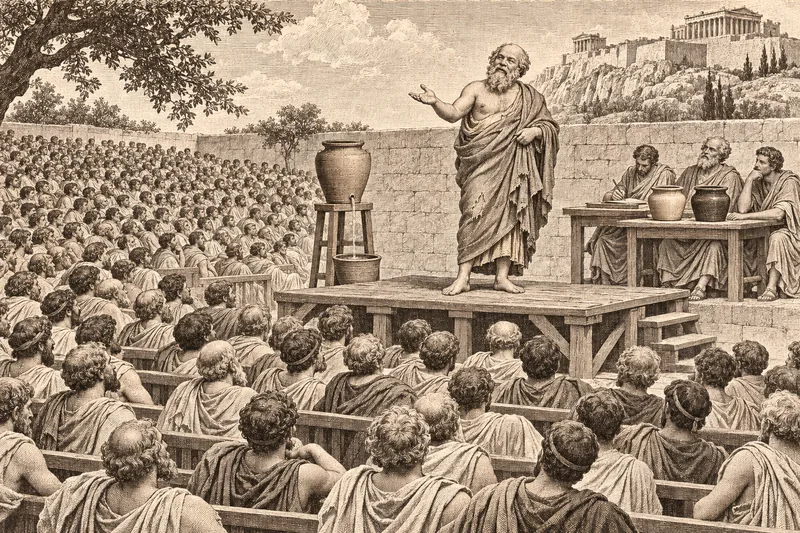
17a Men of Athens, I do not know what effect my accusers have had on you, but their words were so persuasive that even I almost forgot who I was.
Yet scarcely anything they said was true.
Among their many lies, one surprised me most: their warning that you must take care I did not deceive you, because I was a formidable speaker.
What struck me as most shameless was their lack of shame at making a claim I would immediately disprove in practice, once I showed myself to be no sort of formidable speaker—unless they call someone who tells the truth a formidable speaker. If that is their meaning, I would admit to being an orator, though not in their way.
So, as I say, they have told you little truth, if any. But you will hear the whole truth from me—not, by Zeus1, men of Athens, speeches like theirs, dressed up in elegant words and phrases and carefully arranged, but things said as they occur to me, in whatever words come to mind. After all, I am confident that my words are just, and none of you should expect anything else.
Surely, gentlemen, it would be unseemly at my age to appear before you like a young man making up speeches.
And there is something I earnestly ask and beg of you, men of Athens. If you hear me defending myself in the same language I ordinarily use in the marketplace2 at the bankers’ tables, where many of you have heard me, or anywhere else, do not be surprised or interrupt me for it.
This is how things stand: I am seventy years old, and this is my first appearance in court.3 So the way people speak here is completely foreign to me.
18a So, just as you would surely forgive me, if I really were a foreigner, for speaking in the language and manner I grew up with, I now make what seems to me a fair request. Leave aside how I speak—it may be worse, it may be better—and give your attention to this alone, whether my words are just or not.
For that is a juror’s excellence, while a speaker’s is to tell the truth.
First, then, men of Athens, I ought to defend myself against the earlier false accusations and the earlier accusers, and then against the later accusations and accusers.
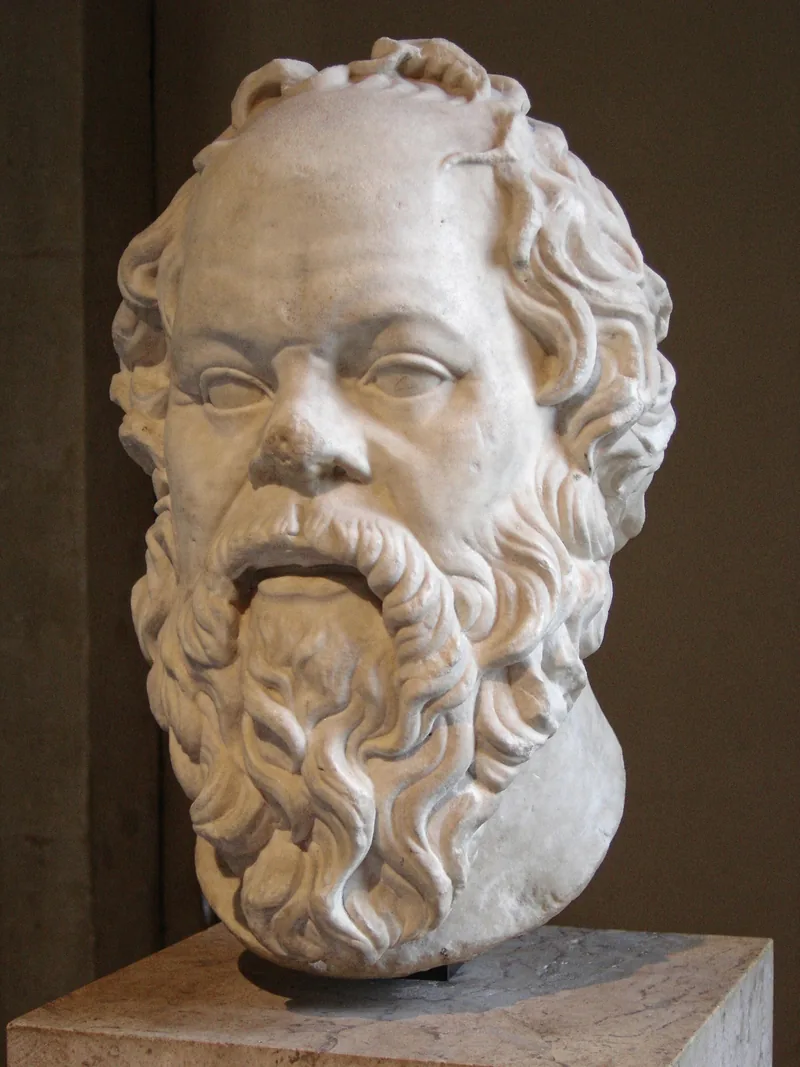
You see, many men have accused me before you over many years now without telling any truth, and I fear them more than Anytus4 and his associates, dangerous though these men also are. But the earlier men are more dangerous, gentlemen. They took most of you in hand as children and persuaded you with accusations no truer than these—that there is a certain Socrates,5 a wise man who ponders things in the sky, has searched out everything beneath the earth, and makes the weaker argument stronger.
Men of Athens, the people who spread this story are my dangerous accusers, because their listeners suppose that anyone investigating such things does not even believe in gods.
Besides, these accusers are numerous, their accusations go back many years, and they were speaking to you at your most trusting age, when some of you were children and others adolescents; they were simply prosecuting their case with nobody there to defend me.
And most absurd of all, I cannot even know their names and tell you who they are, except where one happens to be a comic playwright.
All those who won you over through envy and slander, and those who were persuaded themselves and then persuaded others, are the hardest to deal with: I cannot bring any of them up here and question him, but must simply fight shadows in my defense, putting questions that nobody answers.
So please accept my account of two sets of accusers: those who have just accused me, and the earlier ones I have been describing. And agree that I must reply to those earlier men first, for you heard far more of their accusations, and heard them before those of these later men.
19a Well then, men of Athens, I must offer a defense and try, in so little time, to dislodge the slander you have absorbed over so many years.
I would wish to succeed, if that would be any better for you and me, and to achieve something by my defense; but I think it is difficult, and I am well aware of what it involves.
Still, let events go as the god6 wishes; I must obey the law and defend myself.
Let us go back to the beginning, then: what is the charge that gave rise to the slander against me, and on which Meletus7 relied in bringing this indictment? Very well: what did those slandering me say?
I must read out their sworn statement8, so to speak, as though they were prosecutors: “Socrates does wrong and meddles by investigating things below ground and in the heavens, making the weaker argument stronger, and teaching these same things to others.”
It runs something like that.
After all, this is what you saw yourselves in Aristophanes’s9 comedy: a Socrates being swung about up there, claiming to walk on air and spouting plenty of other nonsense about matters of which I know nothing whatever.
I do not say this to belittle knowledge of that kind, if anyone is wise in such matters—I hope Meletus will not bring so many charges against mea—but I have no part in any of this, men of Athens.
I call most of you as witnesses, and I ask all of you who have ever heard me in conversation—there are many of you—to tell one another what you know. Tell each other, then, whether any of you has ever heard me discuss such things, at length or briefly, and you will see from this that the other reports about me are of the same kind.
But none of it is true; nor is the claim, if you have heard it, that I undertake to educate people and charge money for it.
And yet this too seems to me a fine thing, if someone can educate people, as Gorgias of Leontini10, Prodicus of Ceos, and Hippias of Elis can.
20a For each of these men, gentlemen, can travel from city to city and persuade young people—who are free to spend time with whichever of their fellow citizens they choose, without payment—to leave that company and spend time with him, paying him and thanking him besides.
And there is another wise man here, from Paros,11 who I learned was visiting the city; for I happened to meet Callias, Hipponicus’s son, a man who has spent more on sophists than everyone else put together. I therefore asked him—for he has two sons:
“Callias,” I said, “if your two sons had been colts or calves, we could have found and hired an overseer12 to make them fine and good by the standard of excellence proper to their kind—a horse trainer or a farmer. But since they are human beings, whom do you intend to appoint as their overseer? Who understands excellence of this sort, the excellence of a human being and a citizen? I suppose you have considered it, since you have sons. Is there someone,” I asked, “or isn’t there?”
“Certainly,” he said.
“Who?” I asked. “Where does he come from, and how much does he charge to teach?”
“Evenus13 from Paros, Socrates,” he said, “for five minas.”
I thought Evenus fortunate, if he really possessed this skill and taught at such a modest price.
I too would certainly be proud and conceited if I knew these things; but I do not, men of Athens.
Now one of you might perhaps object: “But Socrates, what is it you actually do? Where has all this slander come from? Surely all this rumor and talk about you would never have arisen if you had been doing nothing more unusual than anyone else, if you had not been behaving differently from most people. So tell us what it is, so that we do not judge you by guesswork.”
Whoever says this is, I think, speaking fairly, and I shall try to show you exactly what has brought me both my reputation and this slander. Listen, then.
Some of you may think I am joking, but be sure that I shall tell you the entire truth.
Men of Athens, I have acquired this reputation through nothing but a certain wisdom. What sort of wisdom? Perhaps human wisdom, since it seems that I really am wise in this way.
Those men I mentioned just now may possess a wisdom greater than human wisdom, or I do not know what to call it; for I certainly have no knowledge of it, and anyone who says I do is lying to slander me.
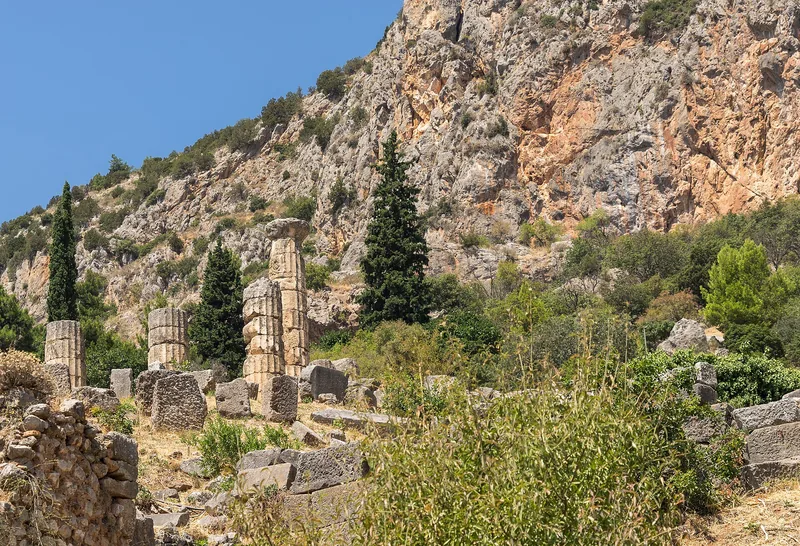
And please do not interrupt me, men of Athens, even if I seem to be making a grand claim. You see, the statement I am about to make is not my own; I shall name its author, someone you can trust. I shall call the god at Delphi14 as a witness to my wisdom—if I have any—and to what sort it is.
For you know Chaerephon,15 surely.
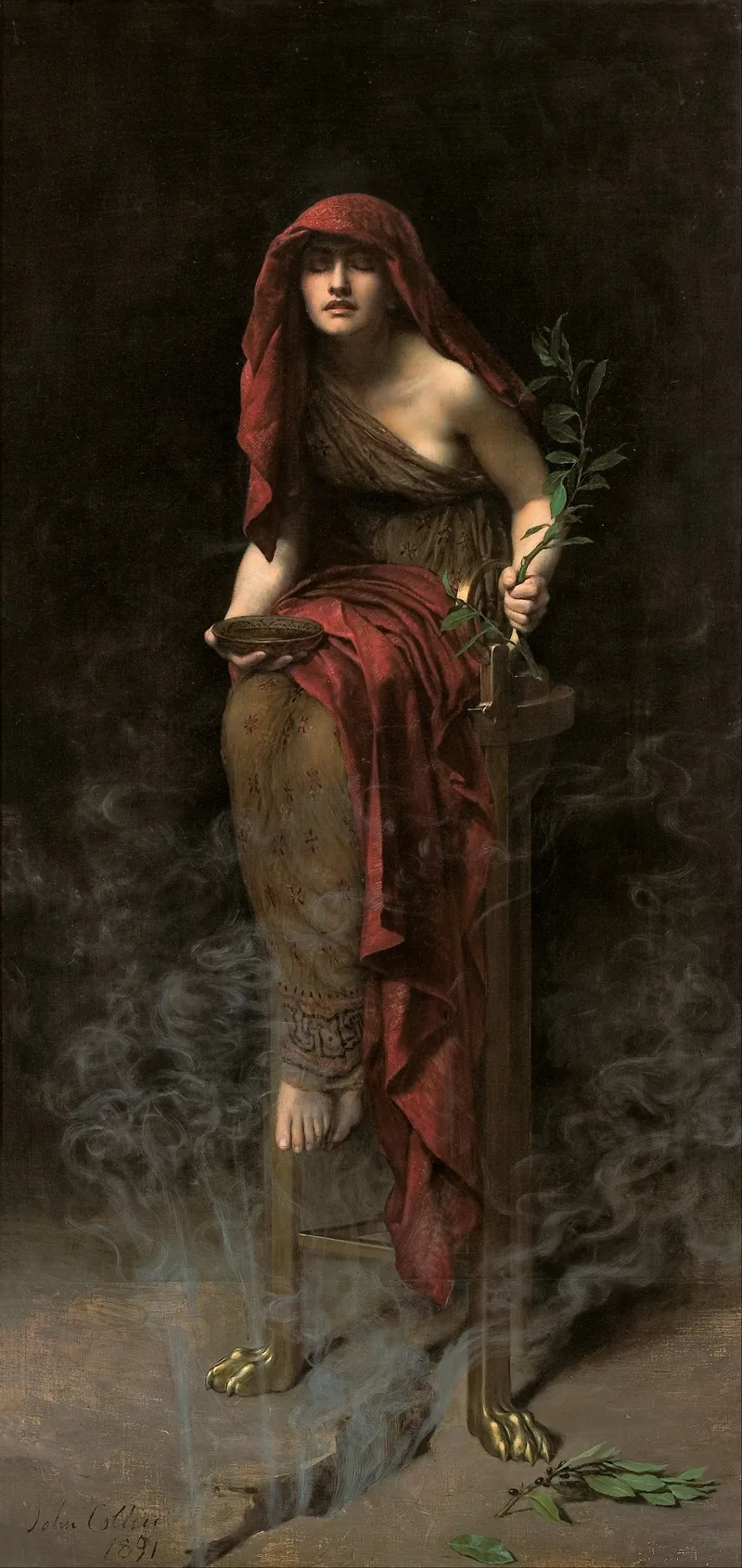
21a He had been my friend since youth, and he was a friend of you democrats16; he shared that exile of yours and returned with you. And you know what Chaerephon was like, how impetuously he threw himself into anything he undertook.
Once he went to Delphi and dared to put this question to the oracle—and, gentlemen, as I say, please do not interrupt—for he asked whether anyone was wiser than I was. So the Pythia17 answered that nobody was wiser.
His brother here will testify to this for you, since Chaerephon has died.
Now consider why I am telling you this, for I am about to show you where the slander against me came from.
When I heard the answer, I reflected: “What can the god be saying? What riddle is he setting? For I am conscious of no wisdom in myself, either little or great. What can he mean, then, by declaring me the wisest? He surely cannot be lying, for he is not permitted to do so.”
For a long time I could not make sense of his words; then, with great difficulty, I turned to an investigation of this kind.
I went to someone reputed to be wise, thinking that here, if anywhere, I could refute the oracle and declare to it: “This man is wiser than I am, but you said I was.”
So I examined him in conversation—there is no need to name him; he was one of the public men—and this, men of Athens, was my impression: many people thought him wise, especially the man himself, but he was not. I then tried to show him that, although he supposed himself wise, he was not. That made him hate me, and many of the others there did too.
As I walked away, though, I reasoned with myself: “I am wiser than this man. For it seems that neither one of us knows anything fine and good, but he thinks he has knowledge when he has none, while I have none and do not think I have it. In this small respect, at any rate, I seem wiser than he is: I do not suppose I know what I do not know.”
From there I went to another man thought wiser still, and had the same impression; so he and many others came to hate me too.
So after that I continued from one to the next, aware of the hatred I was causing, pained by it and afraid, yet I felt I must put the god’s business first. So, to discover the meaning of the oracle, I had to visit everyone reputed to know something.
22a And by the dog,18 men of Athens—for I must tell you the truth—this is what I found as I investigated at the god’s direction: those with the greatest reputations seemed to me almost the least wise, while others held in less esteem seemed more sensible.
So I must describe these wanderings to you, the labors19 I undertook, as it were, so that the oracle would prove impossible for me to refute.
After the public men I visited the poets: writers of tragedy, dithyrambs,20 and the rest, expecting to catch myself out as more ignorant than they were. So I picked out the poems I thought they had worked hardest on and asked them what they meant, hoping to learn something from them at the same time.
I am ashamed to give you the truth, gentlemen, but I must: virtually everyone present, you might say, could have spoken better than they did about what the poets themselves had written.
Soon, then, I came to see this about the poets too: they produced their poems not through wisdom but through a sort of natural gift and divine inspiration, like diviners and chanters of oracles; for these too say many fine things but know nothing of what they say.
The poets seemed to me to be in much the same state, and I also realized that their poetry led them to consider themselves wisest of all in other matters too, where they were not. So I left them as well, thinking I had the same advantage over them as over the public men.
Finally I went to the craftsmen: I knew that my own knowledge was next to nothing, but I was certain I would find that they knew many fine things.
And here I was right: they understood things I did not, and in this respect their wisdom was greater than mine.
But the good craftsmen too, men of Athens, seemed to me to make exactly the poets’ mistake: because each practiced his craft well, he thought himself wisest in the other, most important matters too, and this error obscured their wisdom.
So, on the oracle’s behalf, I asked myself whether I would prefer to remain as I was, with neither their wisdom nor their ignorance, or to possess both as they did. So I answered both myself and the oracle that it was to my advantage to stay as I was.
23a This questioning, men of Athens, has earned me the fiercest, bitterest hatred from many people, and their hatred has produced much slander, while I have also acquired the reputation of being wise; for listeners always credit me with wisdom on the subjects where I refute someone else.
But in reality, gentlemen, it seems that the god is wise, and that this is what he is saying through the oracle: human wisdom has little value, or none.
He seems to be speaking of Socrates here, but to have used my name to make me an example, as though he were saying: “The wisest among you, human beings, is whoever, like Socrates, has recognized that he is really worth nothing when it comes to wisdom.”b
So even now I still go about, following the god, searching and testing anyone I take to be wise, citizen or foreigner; and when he does not seem wise to me, I come to the god’s aid by demonstrating that he is not.
This work has left me no leisure to do anything worth mentioning in public affairs or my own, but I live in extreme poverty because of my service to the god.
On top of this, young men who have the most leisure, sons of the wealthiest men, follow me of their own accord and enjoy listening to people being questioned.
Often they imitate me themselves and try questioning others. Then, I imagine, they discover a great abundance of people who think they know something, when they know little or nothing.
At that, the people they question become angry with me, not themselves, and say that there is a certain Socrates, an utterly vile man, who corrupts the young.
And when someone asks what I do and what I teach, they have no answer: they do not know.
But to avoid seeming at a loss, they repeat the stock accusations against anyone who practices philosophy—things in the sky and under the earth, disbelief in gods, and making the weaker argument stronger.
For I suppose they would not care to tell the truth: that they have been clearly exposed as pretending to know while knowing nothing.
So, I suppose, because they are ambitious, vehement, and numerous, and speak about me forcefully and persuasively, they have long been filling your ears with vehement slander.c
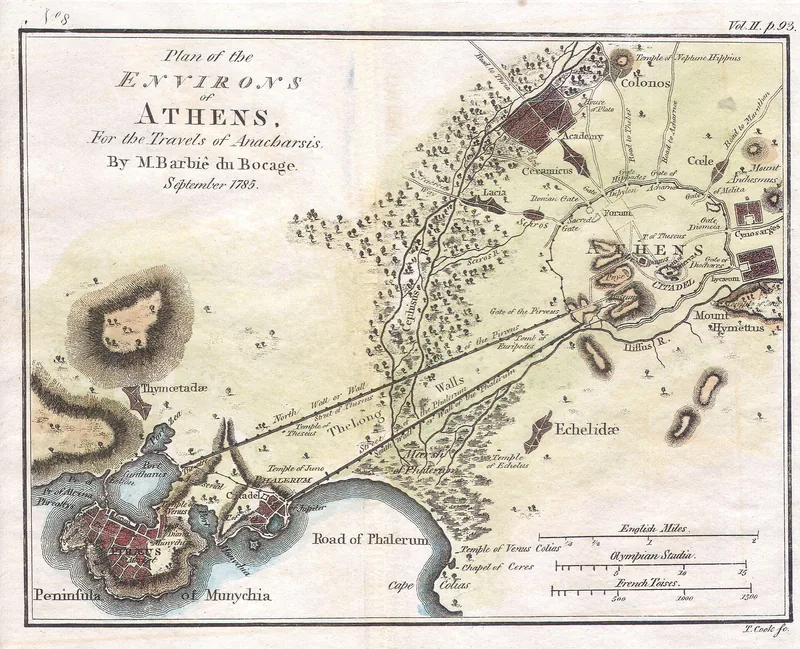
24a This is why Meletus, Anytus, and Lycon21 have attacked me: Meletus resents me on behalf of the poets, Anytus on behalf of craftsmen and public men, and Lycon on behalf of the orators.
So, as I said when I began, I would be surprised if I could clear so much accumulated slander from your minds in so little time.
That, men of Athens, is the truth, and I tell it without concealing or holding back anything at all, great or small.
Yet I am almost certain that this very conduct makes them hate me, which is also evidence that I am telling the truth, that this is the slander against me, and that these are its causes. You will find it so whenever you investigate this, now or later.
Let that be enough, then, for my defense against the accusations made by my earlier accusers; I shall now try to defend myself against Meletus, a good man and a patriot, as he says, and my later accusers.
Let us take up their sworn statement in turn, treating them as another set of accusers. It runs something like this: “Socrates does wrong by corrupting the young and by not acknowledging the gods the city acknowledges, but other, new spiritual things.22d”
That is the accusation; let us examine it item by item: he claims that I do wrong by corrupting the young, whereas I claim, men of Athens, that Meletus does wrong by making a game of serious matters, casually bringing people to trial and pretending deep concern and care for things he has never cared about at all. I will try to show you too that this is so.
Come here, Meletus, and tell me: don’t you think it most important that the young should become as good as possible?
“I do.”
Then tell these men who makes them better—you clearly know, since you care about them. You have, after all, tracked down the man who corrupts them, as you claim—me—and you bring me before these men to accuse me; come, then, name the person who makes them better and tell them who he is.
Do you see, Meletus, that you say nothing and have no answer? Does that not strike you as shameful, and sufficient proof of my point—that you have never cared?
But tell us, my good man, who makes them better?
“The laws.”
But that is not my question, my fine fellow: which person, with knowledge of the laws to begin with, makes them better?
“These men here, Socrates, the jurors.”
What do you mean, Meletus? Can these men educate the young, and do they make them better?
“Certainly.”
Every one of them, or do some do it and others not?
“Every one.”
By Hera,23 that is a fine answer, and you have given us an abundance of people who benefit them.
25a What about the people listening here? Do they make them better or not?
“They do too.”
And the members of the Council?24
“The Council members too.”
But surely, Meletus, the people in the Assembly,25 its members, do not corrupt the young? Or do they all make them better as well?
“They do too.”
So, it seems, every Athenian makes them fine and good except me: I alone corrupt them. Is that your claim?
“Yes, most definitely.”
What terrible bad luck you have found me guilty of!
But answer me this: do you think the same holds for horses—that everyone makes them better and just one man corrupts them? Or is the exact reverse true: one person, or very few—the horse trainers—can make them better, while most people corrupt them if they handle and use them? Isn’t that how it is, Meletus, with horses and every other animal?
Of course it is, whether you and Anytus agree or deny it, for the young would be wonderfully fortunate if just one man corrupted them and everyone else benefited them.
But you have made it quite clear, Meletus, that you have never thought about the young; you plainly reveal your lack of care, that you have cared nothing about the matters for which you bring me to trial.
Tell us something else, Meletus, by Zeus: is it better to live among decent citizens or wicked ones? Answer, man, for I ask you nothing difficult. Don’t wicked people always do some harm to those nearest to them, while good people do them some good?
“Certainly.”
Then is there anyone who wants harm, rather than benefit, from the people he spends time with? Answer, my good man, for the law requires an answer. Does anyone want to be harmed?
“Of course not.”
Well then, in bringing me here for corrupting young people and making them worse, do you claim I do it deliberately or unintentionally?
“Deliberately, I say.”
So, Meletus, are you, at your age, so much wiser than I am at mine that you understand how bad people always harm those closest to them, while good people do good? And am I so deeply ignorant that I fail to understand that if I make one of my companions wicked, I risk harm from him, and so I deliberately cause this great harm, as you claim?
26a You do not convince me of that, Meletus, and I do not think you convince anyone else either; but either I do not corrupt them at all, or, if I do, it is unintentional, so you are lying whichever it is.e
If I corrupt them unintentionally, the law does not call for bringing people to court over mistakes of this kind, made without intent, but for taking them aside in private to teach and warn them. For it is clear that if I learn, I will stop doing what I do without intending it.
You kept away and would not meet with me to teach me, yet you bring me here, where the law calls for bringing those who need punishment rather than instruction.
But, men of Athens, what I said is now clear: Meletus has never cared about these things in the slightest.
Still, tell us, Meletus: how do you say I corrupt the young? Or is it clear from the indictment you filed that you mean by teaching them not to acknowledge the gods the city acknowledges, but other, new spiritual things? Isn’t this the teaching by which you say I corrupt them?
“Yes, most emphatically.”
Then, Meletus, by those very gods we are discussing, explain yourself more clearly to me and these men. For I cannot tell whether you say that I teach people to believe in some gods, though different ones from those the city acknowledges, or whether you say I myself believe in no gods whatever and teach others the same. In the first case, I myself believe in gods and am not utterly godless, and I do no wrong on that score; what you charge me with is that the gods are different.
“That is my claim: you believe in no gods whatever.”
Meletus, you extraordinary man, why say such things? So I do not even believe that the sun26 and moon are gods, as other people do?
“No, by Zeus, jurors, for he says the sun is a stone and the moon earth.”
My dear Meletus, do you think you are prosecuting Anaxagoras,27 and do you hold these men in such contempt and think them so ignorant of books that they do not know how full the books of Anaxagoras of Clazomenae are of these arguments? And the young learn these things from me, do they, when they can sometimes buy them for a drachma28 at the very most in the orchestra29 and laugh at Socrates if he pretends they are his own—particularly when they are so strange?
But by Zeus, is this really your opinion of me: that I believe no god exists?
“By Zeus, you believe in none at all.”
You are unconvincing, Meletus—even to yourself, I think.
You see, men of Athens, I think this man is thoroughly insolent and unrestrained, and has brought this indictment simply because of his insolence, lack of restraint, and youth.
27a After all, he seems to be setting a riddle to test me: “Will the wise Socrates notice that I am playing a joke and contradicting myself, or shall I fool him and everyone listening?”
For he seems to me to contradict himself in his indictment, as though he were saying: “Socrates does wrong by not believing in gods and yet believing in gods.” That is someone playing a game.
Consider with me, then, gentlemen, how I think he contradicts himself. And you, Meletus, answer us.
As for the rest of you, remember my opening request: do not interrupt me if I speak in my usual way.
Is there anyone, Meletus, who believes in things to do with human beings but not in human beings?
Let him answer, gentlemen, instead of raising one commotion after another.
Does anyone believe in things to do with horses without believing in horses, or in things to do with pipe-playing without believing in pipe players? No one does, my excellent fellow; if you will not answer, I will tell you and these other men myself.
But answer this next question: does anyone believe in spiritual things without believing in spirits?
“No.”
What a help you have been, finally answering under pressure from these men!
Now you say that I both believe in and teach spiritual things, whether new or old; at any rate, on your account I believe in spiritual things, and you have sworn to this in your indictment. But if I believe in spiritual things, I must also believe in spirits, surely. Isn’t that so? It is, for I take you to agree, since you give no answer.
Now don’t we regard spirits as either gods or children of gods? Yes or no?
“Certainly.”
Then, if I believe in spirits, as you say, and spirits are gods of some kind, that would be precisely the riddle and joke I say you are making: you say I disbelieve in gods and yet believe in gods, since I believe in spirits. But if spirits are illegitimate children of gods, born of nymphs30 or whatever other mothers they are said to have, who could believe that there are children of gods, but not that there are gods?
It would be just as strange if someone believed that the children of horses and donkeys—mules—existed, but not that horses and donkeys existed.
But, Meletus, you must have brought this indictment either to test us or because you could find no genuine wrongdoing to accuse me of.
But you will never persuade anyone with the slightest intelligence that the same person can believe in spiritual and divine things, yet believe in no spirits, gods, or heroes.31f
28a But, men of Athens, I do not think I need a lengthy defense to show that I have done no wrong on the terms of Meletus’s indictment. What I have said is enough. But be quite sure that what I said earlier is true: I have incurred a great deal of hatred, and from many people.
And this is what will bring me down, if I am brought down—not Meletus, not Anytus, but the slander and envy of the many.
Slander and envy have brought down many other good men, and I think they will bring down more; there is no danger that they will stop with me.
So someone might ask: “Aren’t you ashamed, Socrates, of pursuing a way of life that now puts you at risk of death?”
I could fairly answer him: “You are mistaken, sir, if you think a man worth anything at all should reckon up his chances of living or dying. Instead, whenever he acts, he should ask only whether he is doing right or wrong, acting as a good man or a bad one would.
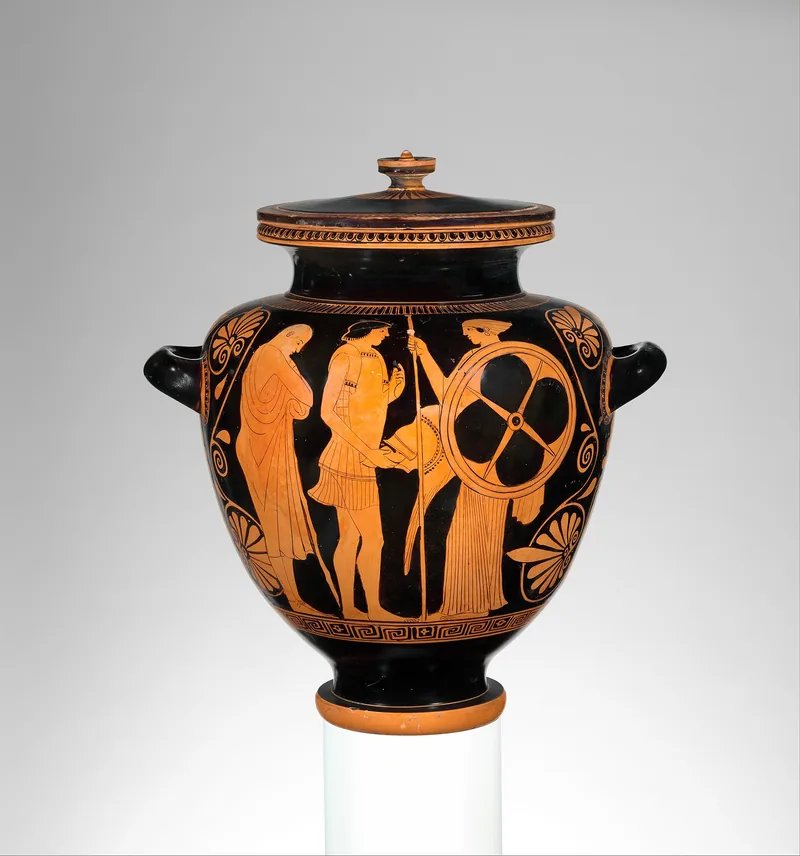
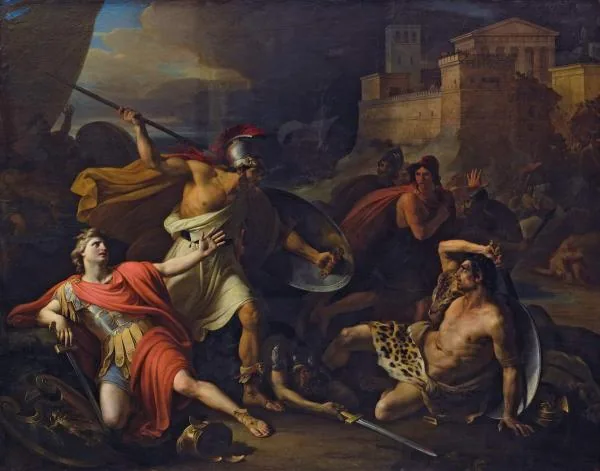
“For by your account the demigods who died at Troy32 would all be worthless, the son of Thetis among them.
When he was eager to kill Hector,33 his mother, a goddess, said to him something like this, I believe:
“‘My child, if you avenge the death of your friend Patroclus and kill Hector, you yourself will die—for your death is waiting just after Hector’s.’
“Yet when he heard this, he thought so little of danger beside the prospect of disgrace that he dismissed death and danger, fearing far more to live as a cowardg and leave his friends unavenged.
“‘Let me die at once,’ he said, ‘after punishing the wrongdoer, so I do not stay here a laughingstock beside the curved ships, a burden on the earth.’
“Do you suppose he gave any thought to death and danger?”
For this is how it truly stands, men of Athens: wherever a man posts himself because he thinks it best, or a commander posts him, there, in my view, he must stay and face the danger, giving neither death nor anything else more weight than disgrace.
And so, men of Athens, when the commanders you chose to lead me posted me at Potidaea,34 Amphipolis, and Delium, I stayed at my post like anyone else and faced the risk of death. But I would have done a terrible thing if, when the god posted me, as I believed and understood, to spend my life pursuing philosophy and examining myself and others, I deserted my post out of fear of death or anything else.
29a That would be terrible, and then someone really would have grounds to bring me before a court for not believing in gods: I would be disobeying the oracle, fearing death, and believing myself wise when I am not.
For fearing death, gentlemen, is simply believing yourself wise when you are not: it means believing you know what you do not know. Nobody knows about death, not even whether it may be the greatest good of all for a human being, yet people fear it as though they were certain it was the greatest evil. How can this be anything but the shameful kind of ignorance—believing you know what you do not know?
Perhaps here too, gentlemen, this is how I differ from most people: if I claimed to be wiser than anyone in any respect, it would be that I have no adequate knowledge of what happens in Hades,35 and do not imagine that I do.
But I know that doing wrong and disobeying someone better than myself, whether a god or a human being, is bad and shameful. So I will never fear or shun things that, for all I know, may be good, in preference to things I know are bad.
So suppose you even acquitted me now, refusing to accept what Anytus said: either I should never have come to court at all, or, once I had come, there could be no question of letting me live. He told you that, if I escaped, every one of your sons would be utterly corrupted by practicing what Socrates teaches.
Suppose you answered this by saying:
“Socrates, this time we will disregard Anytus and acquit you, but on this condition: you must stop spending your time on this inquiry and practicing philosophy. If we catch you doing it again, you will die.”
If, then, you acquitted me on those terms, as I said, I would answer:
“I respect you and love you, men of Athens, but I will obey the god rather than you. As long as I draw breath and have the strength, I will never stop practicing philosophy, urging you on and pointing things out to whichever of you I meet.
I will say what I usually say: ‘My dear man, you are an Athenian, a citizen of the greatest city, the one most renowned for wisdom and power. Aren’t you ashamed to care about accumulating as much money as possible, and about reputation and honor, while giving no care or thought to understanding, truth, or making your soul as good as it can be?’
30a “And if one of you disputes this and says that he does care, I will neither let him go straightaway nor leave him myself; I will question him, examine him, and challenge his answers. If he claims excellence but seems to me not to possess it, I will reproach him for treating what is worth most as least important, and giving greater importance to what is worth less.
I will do this with anyone I meet, young or old, foreigner or citizen, but especially with citizens, since you are more closely related to me.
“After all, this is what the god commands—be sure of that—and I believe nothing better has ever happened to you in this city than my service to him.
For all I do as I go about is urge you, young and old, to care neither for your bodies nor for your money before, or as much as, you care for making your soul as good as possible.
I tell you that money does not produce excellence; excellence produces money and every other good for human beings, in private life and in public.h
If saying this corrupts the young, then these things must be harmful; but anyone who claims that I say something different is talking nonsense.”
So I would say: “Men of Athens, believe Anytus or do not; acquit me or do not. But understand that I would do nothing differently, even if I had to die over and over.”
Do not interrupt, men of Athens, but keep to what I asked of you: listen to what I say without making a disturbance, since I think listening will benefit you. Now I am going to say some further things that may make you shout out, but please do nothing of the kind.
For you should understand that, if you kill me when I am the sort of man I say I am, the greater harm will fall on you, not on me. After all, neither Meletus nor Anytus could harm me at all—they could not do it—for I do not believe a worse man is allowed to harm a better one.
He might have me killed, or send me into exile, or strip away my civic rights; perhaps he and others consider these great evils, but I do not: I consider what he is doing now a far greater evil—trying to kill a man unjustly.
So now, men of Athens, far from defending myself for my own sake, as someone might suppose, I am defending myself for yours, to keep you from wronging the god’s gift to you by voting against me.
For if you kill me, you will not readily find anyone else whom the god has attached to the city in quite this way—ridiculous though it may sound—as to a large, well-bred horse, sluggish because of its size and needing a gadfly36 to rouse it. I think the god has attached me to this city as just such a creature: all day I never stop settling beside you wherever you are, rousing, urging, and reproaching every one of you.
31a So you will not readily get another like me, gentlemen, but if you listen to me, you will spare me.
But perhaps you will grow irritated, like people roused from a doze, and swat me; listening to Anytus, you could easily kill me and then spend your remaining lives asleep, unless the god, out of concern for you, sent someone else.
You can recognize from this that I am indeed the sort of person the god has given the city. It does not seem human to neglect all my own affairs and endure the neglect of my household for so many years, while constantly attending to yours, approaching each of you privately like a father or an older brother and urging you to care for excellence.
If I gained something from this and received payment for my encouragement, there would be some explanation for it. But you can see for yourselves that my accusers, shameless as they have been in every other accusation, could not reach the pitch of shamelessness needed to produce a witness that I ever charged anyone a fee or asked for one. I think I offer an adequate witness to my truthfulness: my poverty.
Perhaps it seems strange that I go around giving this advice privately and interfering in people’s affairs, but do not venture to address your assembly and advise the city publicly. The reason is something you have often heard me mention in many places: something divine and daimonic comes to me,37i a voice—the very thing Meletus made fun of when he included it in his indictment. This began in my childhood: a kind of voice comes to me, and whenever it does, it turns me away from whatever I am about to do, but never urges me forward.
This is what opposes my taking part in public affairs, and quite rightly, I think: you can be sure, men of Athens, that if I had entered public life long ago, I would have died long ago, without benefiting either you or myself.
And do not resent my telling you the truth: no one can survive who sincerely opposes you or any other body of citizens and prevents many unjust and unlawful acts in the city; anyone fighting in earnest for justice must remain a private citizen rather than enter public life, if he is to survive even a short time.

32a I will give you strong evidence for this: not words, but what you value—deeds. Listen to what happened to me, so you can see that fear of death would never make me yield to anyone against what is right, but that I would die rather than yield. What I have to tell you is tedious courtroom talk, but it is true.
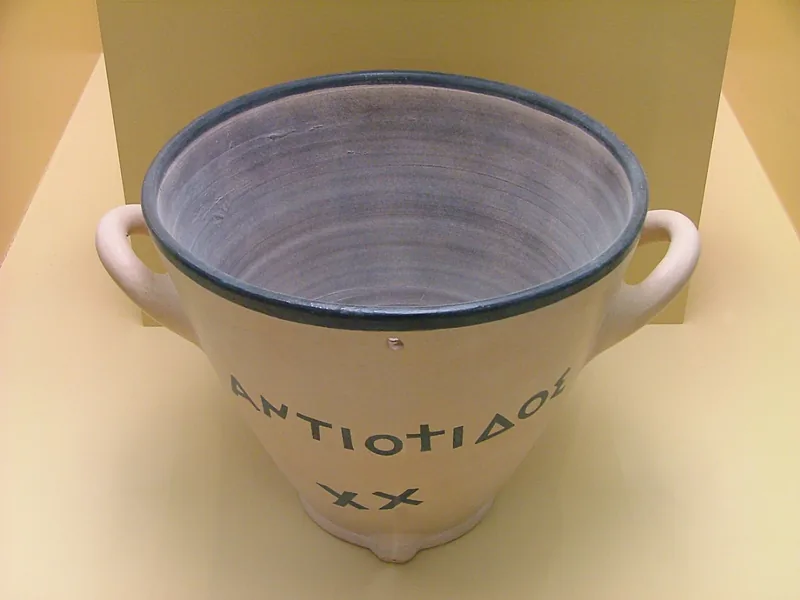
I have never held any other civic office, men of Athens, though I did serve on the Council. Our tribe, Antiochis,38 happened to be holding the presidency when you decided to try together the ten generals who had failed to recover the men after the sea battle—an illegal procedure, as you all later agreed. I alone among the presiding councilors opposed your acting against the laws and cast my vote against you. Although the speakers were ready to bring charges against me and arrest me, and you were shouting for them to do it, I thought I should face the danger with law and justice on my side, rather than join in your unjust decision for fear of imprisonment or death.
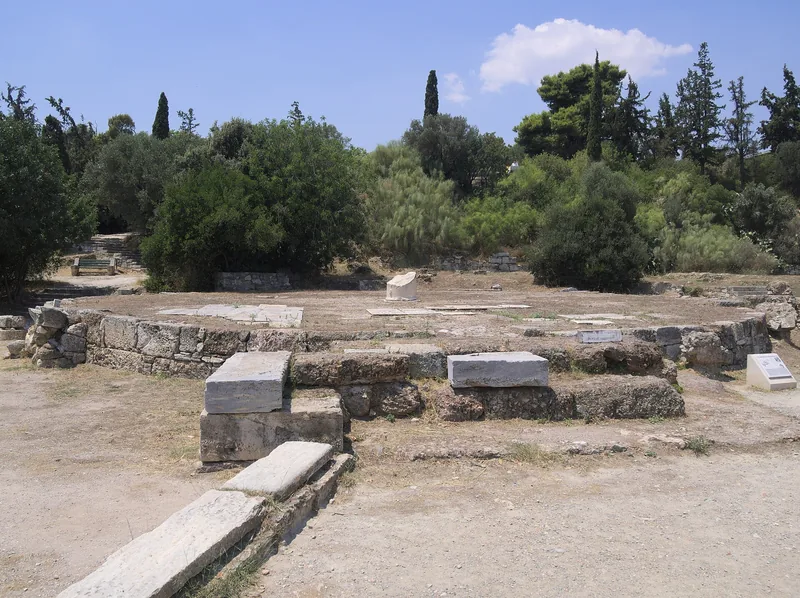
This was while the city was still a democracy, but when the oligarchy took over, the Thirty39 summoned me with four other men to the Tholos and ordered us to bring Leon of Salamis from Salamis for execution. They often gave such orders to many others too, wanting to implicate as many people as possible. Then again I showed by deeds, not words, that death meant absolutely nothing to me—if that is not too blunt an expression—but that avoiding any unjust or unholy act meant everything. For that government, powerful as it was, could not frighten me into doing anything unjust: when we left the Tholos, the other four went to Salamis and brought Leon back, while I went home. And I might have died for this, had the government not been overthrown soon afterward. You will find many witnesses to these events.
Do you think, then, that I could have survived all these years if I had engaged in public affairs and, acting as a good man should, supported justice and given it the highest importance? Certainly not, men of Athens; nor could anyone else.
33a But throughout my life you will find that I have been this same man in whatever public activity I undertook, and just the same in private: I have never conceded anything unjust to anyone, whether to someone else or to any of those whom my slanderers call my pupils.
I have never been anyone’s teacher. But if someone wants to listen while I speak and go about my work, young or old, I have never refused him. Nor do I converse when paid and otherwise refuse; I am equally willing to question rich and poor, and anyone who wishes can answer and listen to what I say.
Whether any of these people turns out well or badly, I cannot justly be held responsible, since I never promised any of them instruction or taught them anything. If someone says he ever learned or heard something from me privately that all the others did not hear as well, you can be sure he is not telling the truth.
But why do some people enjoy spending so much time with me? You have heard the reason, men of Athens; I told you the whole truth. They enjoy listening to the examination of people who believe themselves wise but are not—it is not unpleasant.
And this, I maintain, is what the god has ordered me to do through oracles, dreams, and every means by which any divine power has ever ordered a human being to do anything.
These statements, men of Athens, are true and easy to test. For if I am corrupting some of the young and have corrupted others, then any who have grown older and recognized that I once gave them bad advice in their youth should now come forward to accuse me and take revenge. If they were unwilling to act themselves, some of their relatives—fathers, brothers, or other family members—should now remember it and take revenge, if their relatives had suffered any harm from me.
At any rate, I can see many of them here: first Crito,40 who is my age and belongs to my deme, and is the father of Critobulus here. Then there is Lysanias41 of Sphettus, father of Aeschines here, and Antiphon of Cephisia here, the father of Epigenes. Here too are others whose brothers spent time in these pursuits: Nicostratus,42 son of Theozotides and brother of Theodotus—Theodotus is dead, so he, at any rate, could not plead with him—and Paralius here, son of Demodocus, whose brother was Theages. And here is Adeimantus,43 son of Ariston, whose brother is Plato here, and Aeantodorus, whose brother Apollodorus is here too.
34a I could name many others, and Meletus certainly ought to have produced one of them as a witness during his speech. If he forgot then, let him produce one now—I will give way—and let him speak if he has any evidence of this kind.
But you will find precisely the opposite, gentlemen: they are all ready to help me, the man who corrupts and harms their relatives, as Meletus and Anytus claim. The corrupted men themselves might have a reason to help me; but their uncorrupted relatives, older men now—what reason could they have for helping me except the right and just one, that they know Meletus is lying and I am telling the truth?
Well, gentlemen, that is more or less what I can say in my defense, with perhaps other things of the same kind.
But perhaps one of you will resent me when he remembers his own conduct. Even in a trial less serious than this, he begged and implored the jurors with floods of tears, brought his children44 forward to arouse as much pity as possible, and many other relatives and friends as well. Yet I will do none of this, although I apparently face the greatest danger of all. Perhaps someone who thinks of this will become more hostile toward me and cast an angry vote, angered by that very contrast.
If any of you feels this way—I do not suppose anyone does, but if so—I think I could fairly say to him:
“My dear man, I too have relatives. To quote Homer,45 I have not ‘sprung from oak or rock,’ but from human parents. So I have relatives, and three sons, men of Athens: one already a young man, the other two still children. Yet I will bring none of them forward here and beg you to acquit me.”
Why will I do none of this? It is not stubbornness, men of Athens, or disrespect for you. Whether or not I face death confidently is another question; but for the reputation of myself, of you, and of the whole city, I do not think it would be honorable to behave in this way, given my age and the reputation I have. Whether that reputation is true or false, people have at any rate decided that Socrates stands out from most men in some respect.
35a So if those of you who are thought to stand out in wisdom, courage, or any other kind of excellence behave like this, it would be disgraceful. I have often seen men of some reputation put on extraordinary displays during their trials, as though dying would be some terrible fate, and they would live forever if you did not have them killed. Such men, I think, bring disgrace on the city: a foreigner might conclude that the Athenians who stand out for their excellence, whom their fellow citizens select for offices and other honors, are no different from women.
Those of you who have any standing, men of Athens, ought not to behave this way. And if we do, you ought not to tolerate it, but should show that you are far more ready to condemn the man who stages these pitiful dramas and makes the city a laughingstock than the man who remains quiet.
Quite apart from reputation, gentlemen, I do not think it is right to beg a juror or secure an acquittal by begging; we should explain our case and persuade him. For a juror sits there to decide what is just, not to give it away as a favor. He has sworn46 to judge by the laws, not to favor whomever he pleases. So we should not train you to break your oaths, nor should you acquire the habit, for neither side would be acting piously.
Do not, then, expect me, men of Athens, to behave toward you in ways I consider neither honorable nor just nor holy—especially, by Zeus, when Meletus here is prosecuting me for impiety. For if I persuaded you and used my pleas to force you against your oaths, I would plainly be teaching you to reject the existence of gods, and in making my defense I would be accusing myself of not believing in them.
But that is far from the case: I believe in them, men of Athens, as none of my accusers does, and I leave the judgment about me to you and the god, to reach the best outcome for me and for you.
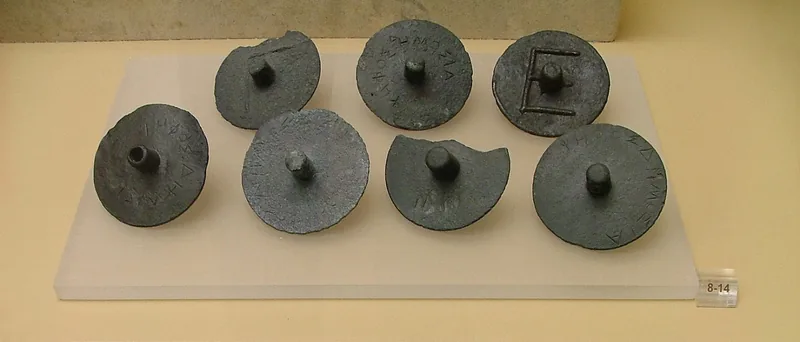
36a I have many reasons, men of Athens, for not resenting your vote to convict me,47 and one is that the result came as no surprise; rather, what surprises me far more is the tally on each side. I expected a wide margin, not such a narrow one; apparently a switch of just thirty votes would have acquitted me.
As far as Meletus is concerned, then, I think I have escaped already—and not just escaped: everyone can see that if Anytus and Lycon had not spoken against me, he would have had to pay a thousand drachmas48 for failing to win a fifth of the votes.
He proposes death as my penalty.49 Very well.
What alternative should I propose to you, men of Athens? Surely it should be what I deserve? What, then? What should I suffer or pay because I chose not to lead a quiet life, but neglected what most people pursue—making money, managing a household, military commands, speeches in the assembly, other offices, sworn political clubs50 and factions in the city? You see, I considered myself in fact too decent a man to take part in these things and survive.
I kept away from activities in which I would be of no use either to you or to myself, and instead went to each of you privately to do him what I regard as the greatest service. I tried to persuade each of you not to care for anything belonging to him before caring for himself, so that he becomes as good and wise as possible; not to care for the affairs of the city before the city itself; and to follow that same order in caring for everything else.
What, then, should be done to me for being such a man? Something good, men of Athens, if the proposal is really to match what I deserve—and something good that would suit me. What suits a poor benefactor who needs leisure to encourage you?
Nothing would be more fitting, men of Athens, than meals in the Prytaneum51 for such a man—far more fitting than for one of you who has won at Olympia with a racehorse, a two-horse chariot, or a four-horse chariot. For he makes you seem happy, while I make you happy, and he does not need to be fed, while I do.
37a If I am to make a proposal that is just and matches what I deserve, then, I propose meals in the Prytaneum.
Perhaps you think I am speaking out of stubbornness here, just as in my remarks about pity and pleading. But it is not that, men of Athens; rather, I am convinced that I wrong no one intentionally, but I have not convinced you, for we have had little time to talk. I think that, if you had a law, as other peoples do, requiring trials involving death to last several days rather than just one,52 you would have been convinced; as things stand, it is difficult to answer grave slanders in so little time.
Since I am convinced that I wrong no one, I am certainly not going to wrong myself by declaring that I deserve something bad and proposing it as my penalty. What would I be afraid of? Of suffering the penalty Meletus proposes, when I say I do not know whether it is good or bad? Am I to choose something I know to be bad instead, and propose that?
Imprisonment? Why should I live in prison, a slave to whichever board is appointed, the Eleven?53
A fine, then, with imprisonment until I pay? That comes to the same thing I just mentioned, since I have no money to pay with.
Should I propose exile? Perhaps you would set that as my penalty. You, my own fellow citizens, have found my discussions and arguments unbearable—so burdensome and hateful that you now want to be rid of them. I would have to be terribly attached to life, men of Athens, and unable to think straight, to suppose that people elsewhere will readily put up with them. Far from it, men of Athens.
What a fine life I would lead if I left at my age, moving from city to city and being driven out! For I know very well that wherever I go, the young will listen to me speaking just as they do here: if I turn them away, they themselves will persuade their elders to expel me; if I do not, their fathers and relatives will expel me because of them.
So perhaps someone will say:
“Socrates, could you not leave us and live quietly, saying nothing?”
On this point, persuading some of you is hardest of all.
38a For if I say that this would be disobeying the god, and that I therefore cannot keep quiet, you will not believe me: you will think I am only pretending.
And you will be still less willing to believe me if I say this: the greatest good for a human being is to spend every day discussing excellence and the other things you hear me discuss as I examine myself and others. The unexamined life is not worth living for a human being. But that is how things are, gentlemen, as I say, though persuading you is difficult.
Besides, I am not accustomed to considering myself deserving of anything bad: if I had money, I would have proposed a fine I could pay, since that would have caused me no harm; as things stand, I have none—unless you are willing to set the fine at an amount within my means. Perhaps I could manage something like a mina of silver. That is the sum I propose.
But here are Plato, Crito, Critobulus, and Apollodorus, men of Athens, urging me to propose thirty minas, with themselves as guarantors. I therefore propose that sum; you will have these men, who can meet the payment, as your guarantors.
For the sake of so little time, men of Athens, those who want to abuse the city will give you a bad name and blame you for killing Socrates, a wise man. People intent on reproaching you will call me wise, even if I am not. Had you waited just a little longer, this would have happened of its own accord; you can see from my age that I am already far along in life and close to death. I am addressing this to those who voted for my death,54 not to all of you.
And I have something else to say to these same men. Perhaps you think, men of Athens, that I was convicted because I lacked the words to persuade you—if I had thought I should say and do absolutely anything to escape conviction. Far from it. I was convicted for a lack, but a lack of audacity and shamelessness, not of words. It was because I refused to say the things you would most enjoy hearing: me weeping and wailing, and doing and saying many other things I consider beneath me, the sort of things you are accustomed to hearing from others.
Yet I did not then believe that danger justified anything servile, nor do I regret the defense I gave; I would much rather die after this defense than live after the other kind.
39a For neither I nor anyone else should try, in court or in war, to escape death by doing absolutely anything. Indeed, often in battle it is clear that a man could escape death by dropping his weapons and turning to plead with his pursuers. And in every kind of danger there are many other ways to escape death, if someone has the audacity to say and do anything.
But it may be that escaping death is not the hard thing, gentlemen, while escaping wickedness is much harder: it runs faster than death. I am slow and old, so now the slower runner has caught me, while my accusers, being clever and quick, have been caught by the faster one, wickedness. Now I leave with a death sentence from you, while the truth has sentenced them to villainy and injustice. I abide by my sentence, and so do they. Perhaps things had to happen this way, and I think it is as it should be.
Now I want to prophesy55 to you who condemned me, for I have reached the point when people prophesy most: just before death. I tell you, men who have killed me, that immediately after my death you will face a punishment—by Zeus—far harsher than the one you have inflicted by killing me. For you have done this because you thought it would free you from having your lives examined, but I tell you the outcome will be quite the reverse. More people will call you to account—people I have been holding back, though you never noticed—and they will be harsher because they are younger, and you will resent them more.
After all, if you think that killing people will prevent anyone from reproaching you for living wrongly, your thinking is mistaken. This escape is neither very practicable nor honorable; the finest and easiest escape is to make yourself as good as possible instead of cutting others down. With that prophecy, I take my leave of you who condemned me.
But I would gladly speak with those who voted to acquit me about what has just happened, while the officials are occupied and before I leave for the place where I must die. Stay with me for that long, gentlemen; nothing prevents us from talking together while it is still allowed.
40a For you are my friends, and I want to explain what this experience of mine means.
Something extraordinary has happened to me, gentlemen of the jury—and “jurors” is the right name for you. Throughout my life until now, the prophetic warning I habitually receive from the divine sign came very often; it would oppose me even in very small matters if I was about to take a wrong step.
This time, as you see for yourselves, I have met with what someone might suppose, and people commonly think, to be the very worst of evils. Yet the divine sign did not oppose me as I left home this morning, as I came up here to the court, or at any moment when I was about to speak. And yet it has often cut me short while I was speaking on other occasions; today, throughout this business, it has opposed none of my actions or words.
What do I take the reason to be? I will tell you: what has happened to me may well be a good thing, and those of us who think that death is bad cannot possibly be right. I have had strong evidence of that: the usual divine sign would certainly have opposed me if things were not going to turn out well for me.j
Let us consider another reason for having great hope that death is good. For being dead must be one of two things: either the dead person is nothing, as it were, and has no awareness of anything, or, as people say, death is a kind of change, a move for the soul from here to another place.
If there is no awareness, but something like sleep without a single dream, death would be a wonderful gain: suppose someone had to select a night when he slept without a single dream and set beside it all the other nights and days of his life. Suppose he then had to reflect and say how many he had spent better and more pleasantly than that one. Not just an ordinary citizen but even the Great King56 would, I think, find them easy to count compared with the rest. If, then, death is like that, I call it a gain, since on that view the whole of time seems no more than a single night.
But if death is something like a journey from here to another place, and the stories are true that all who have died are there, what greater good could there be, gentlemen of the jury?
41a If someone arriving in Hades left behind these men who claim to be judges, and found the true judges—the ones said to give judgment there, Minos,57 Rhadamanthus, Aeacus, Triptolemus, and all the other demigods who lived justly—would that be a poor journey to make?
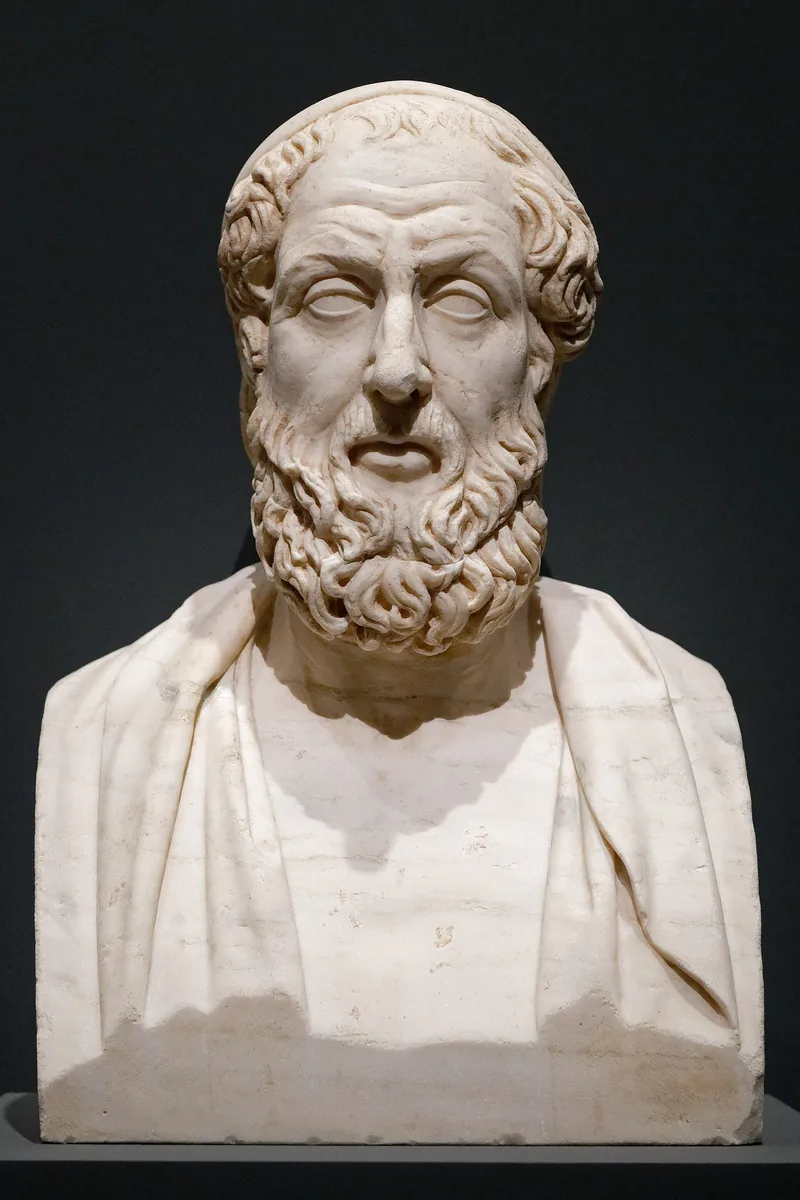
Or again, what would any of you pay for the chance to meet Orpheus,58 Musaeus, Hesiod, and Homer? I would willingly die over and over if these stories are true.
For I myself would have a wonderful time there whenever I met Palamedes59 and Ajax, son of Telamon, or any other man of long ago who died through an unjust judgment, and compared my sufferings with theirs. I think that would be no unpleasant experience. And, best of all, I could spend my time questioning and examining people there as I do here, to discover who is wise and who thinks himself wise without being so.
How much would someone pay, gentlemen of the jury, to question the man60 who led that great army against Troy, or Odysseus, or Sisyphus, or the countless other men and women one could name? One would be unimaginably happy to talk with them, spend time with them, and question them there.
Surely they do not put people to death there for that, at least! After all, besides being happier in other respects than people here, they are immortal for all the time to come—if the stories are true.
But you too must face death hopefully, gentlemen of the jury, and keep this single truth in mind: no harm can reach a good man in life or in death, and the gods do not disregard his affairs.
Nor has what is happening to me now happened by chance: it is clear to me that dying now and being rid of my troubles was better for me. That is also why the divine sign never turned me back, and why I feel no great anger toward the men who condemned or accused me.
Yet this was not what they had in mind as they accused me and voted against me; they thought they were harming me, and for that they deserve blame.
One thing, though, I ask of them: when my sons reach manhood, if they seem to you to care more for money or anything else than for excellence, punish them, gentlemen, by troubling them just as I troubled you. And if they believe they are somebody when they are nothing, reproach them as I reproached you, for failing to care for what they should and for believing themselves somebody when they are worth nothing.
42a And if you act this way, you will have treated both me and my sons justly.
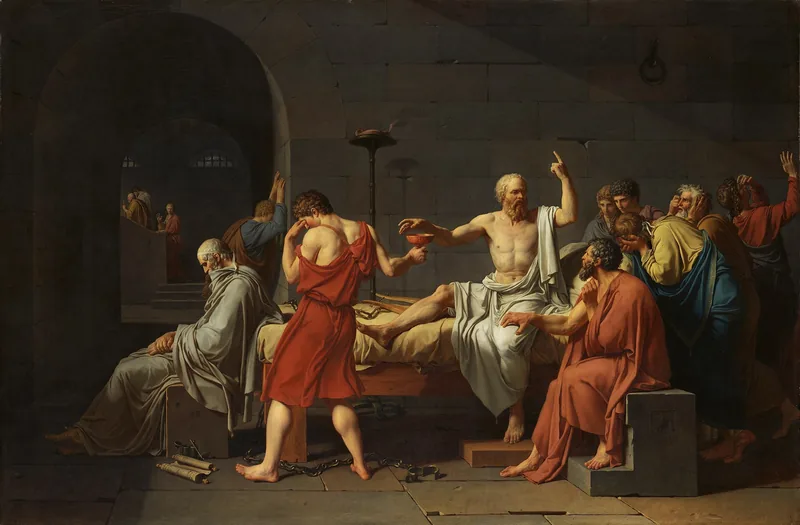
But it is time now for us to leave: I to die, you to live. Which of us is heading for a better fate no one knows, except the god.


