Echecrates
57a Phaedo,1 were you yourself with Socrates in the prison the day he drank the poison, or did someone else tell you about it?
Phaedo
I was there, Echecrates.2
Echecrates
Then what did he say before he died? And how did he die? For I would gladly hear about it: our fellow citizens of Phlius3 hardly ever visit Athens these days, and for a long time no visitor has come 57b from there who could give us a clear account of what happened, except that he died after drinking poison. But he could tell us nothing else.
Phaedo
58a So you did not even hear how the trial4 went?
Echecrates
Yes, someone reported that, and we were surprised that, although the trial took place so long ago, his death apparently came much later. How did that happen, Phaedo?
Phaedo
It was a coincidence, Echecrates: the ship the Athenians send to Delos5 happened to have its stern wreathed the day before the trial.
Echecrates
What is this ship, then?
Phaedo
The Athenians say it is the ship in which Theseus6 once sailed to Crete, 58b taking those fourteen with him; he saved them and survived himself. They then vowed to Apollo,7 so the story goes, that if they survived they would take a sacred mission to Delos every year. Ever since, down to this very day, they have sent it annually to the god. Once the mission begins, their law requires the city to remain pure and to put no one to death by public authority until the ship has reached Delos and returned. Sometimes this takes a long time, when winds hold 58c them up. The mission begins when Apollo’s priest wreaths the ship’s stern; as I said, this happened to be the day before the trial. That is why Socrates spent so long in prison between his trial and his death.
Echecrates
And what about the death itself, Phaedo? What was said and done, and which of his friends were there? Or did the authorities refuse to admit them, so that he died without his friends?
Phaedo
58d Far from it: some were there—a great many, in fact.
Echecrates
Then please take the trouble to give us the clearest account you can of all this, unless you have something else to do.
Phaedo
I have time, and I will try to tell you. For nothing ever gives me greater pleasure than remembering Socrates, whether I speak about him myself or listen to someone else.
Echecrates
And your listeners feel the same, Phaedo. So try to go through everything as precisely as you can.
Phaedo
58e My own feelings while I was there were extraordinary. For I felt no pity at being present when a friend was dying, because he seemed blessed, Echecrates, in his manner and his words, so fearlessly and nobly did he meet death. So it struck me that even his journey to Hades8 was not without divine favor, and that once there he would fare well 59a if anyone ever had. That was why I felt none of the pity you might expect at a scene of mourning, nor the pleasure of our usual philosophical discussions—for that was the kind of conversation we were having—but something utterly strange, an unfamiliar mixture of pleasure and sorrow at the thought that he would soon die. Almost everyone there felt much the same, now laughing, now in tears, and one of us especially—Apollodorus.9 59b You surely know him and what he is like, after all.
Echecrates
Of course I do.
Phaedo
He was completely overcome by these feelings; I too was deeply disturbed, as were the others.
Echecrates
Who was there, Phaedo?
Phaedo
Among the Athenians were Apollodorus, whom I mentioned, Critobulus10 and his father, Hermogenes, Epigenes, Aeschines, and Antisthenes; there were also Ctesippus of Paeania, Menexenus, and some other Athenians, though Plato, I believe, was ill.
Echecrates
Were any visitors there?
Phaedo
59c Yes—Simmias11 of Thebes, Cebes, and Phaedondes, together with Euclid and Terpsion from Megara.
Echecrates
What about Aristippus12 and Cleombrotus? Were they there?
Phaedo
No; they were reportedly in Aegina.13
Echecrates
Was there anyone else?
Phaedo
I think that was nearly everyone.
Echecrates
Well, then, what was the conversation you mentioned?
Phaedo
I will try to relate everything from the beginning. 59d For on the earlier days, the others and I had regularly visited Socrates. We would gather at dawn in the courthouse where his trial had taken place, because it was close to the prison. Each day we waited together until the prison opened—it did not open early—and then went in to Socrates and usually stayed with him all day.
That day we gathered earlier, because the previous day, 59e when we left the prison in the evening, we learned that the ship had returned from Delos. So we arranged to meet at our usual place as early as possible. When we arrived, the doorkeeper14 who usually answered us came out and told us to wait: we must not go in until he gave the word. “For the Eleven15 are removing Socrates’s chains,” he said, “and giving instructions for his death today.”
After a short delay, he returned and told us to enter. When we went in, 60a we found Socrates just released from his chains, and his wife Xanthippe16—you know her—sitting beside him, holding his little child. At the sight of us, Xanthippe cried out in grief17 and said the sort of thing women usually do: “Socrates, now your friends will speak to you for the last time, and you to them.”
Socrates looked toward Crito.18 “Crito,” he said, “have someone take her home.”
Some of Crito’s people led her away as she cried aloud 60b and beat herself, while Socrates sat up on the bed, bent his leg, and rubbed it with his hand. As he rubbed, he said, “How strange, gentlemen, this thing people call pleasure seems to be! What a remarkable connection it has with pain, which seems to be its opposite: the two refuse to visit a person together, yet if you pursue one and catch it, you are almost always forced to take the other too, as though they were joined 60c at a single head. If Aesop19 had thought of them, I believe he would have made up a story about how the god wanted to make peace between them as they warred and, when he could not, fastened their heads together; that is why, whenever one visits someone, the other follows behind. That seems to be just what has happened to me: after the ache the shackle caused in my leg, pleasure seems to have followed.”
Cebes took this up. “By Zeus20, Socrates, that was a timely reminder. For others have already asked me about 60d the poems you have written by putting Aesop’s tales into verse, and about your prelude21 to Apollo—and just the other day Evenus asked what made you compose them after coming here, when you had never written poetry before. So if you want me to have an answer for Evenus when he asks again—and I know he will—tell me what I should say.”
“Then give him the truth, Cebes,” Socrates said. “I did not write these things to rival him or his poems 60e—I knew that would be difficult—but to test what certain dreams meant and satisfy my religious scruples, in case this was the musica they were telling me to make. This is how it was. Throughout my life the same dream often visited me, appearing in different forms at different times but always giving the same message: ‘Socrates, make music and practice it.’
“In earlier days I understood it to be urging 61a and encouraging me in what I was already doing. Just as people cheer runners on, so the dream, I thought, was cheering me on in my own work, telling me to make music, since philosophy was the highest music and philosophy was what I practiced. But now that the trial was over and the god’s festival was delaying my death, I thought I should obey the dream and make music as people ordinarily understand it, in case that was what it was commanding. It seemed safer, after all, not to leave before satisfying my religious scruples 61b by writing poems in obedience to the dream.
“So I began with a poem for the god whose sacrifice was being celebrated. After that, I reflected that a poet,b to be a poet at all, must compose stories rather than arguments, and I had no gift for inventing stories. That was why I took the stories I knew and had ready to hand—Aesop’s—and made poems from the first that came to me.
“Tell Evenus this, then, Cebes, and wish him well; if he has any sense, tell him to follow me as soon as possible. 61c I seem to be leaving today: those are the orders of the Athenians.”
“What advice to send Evenus, Socrates!” Simmias said. “I have met the man many times, after all, so from what I have seen of him I would say that he will certainly not follow your advice willingly.”
“Why?” Socrates asked. “Isn’t Evenus a philosopher?”
“I believe he is,” Simmias said.
“Then Evenus will want to follow me, as will anyone whose share in philosophy is worthy of the name. Though perhaps he will not do violence to himself, since they say that is forbidden22.”
As he spoke, he lowered 61d his legs to the floor and sat that way for the rest of the discussion.
Cebes asked him, “How can you say, Socrates, that doing violence to oneself is forbidden, but a philosopher would want to follow someone who is dying?”
“Well, Cebes, did you and Simmias hear nothing about this when you were with Philolaus23?”
“Nothing clear, Socrates.”
“I too speak of it only from what I have heard, but I have no objection to telling you what that is. Perhaps, after all, 61e it is especially fitting for someone about to travel there to examine that journey and tell stories about what we think it is like. For what else could one do in the time before sunset?”
“Then why exactly do they say one is forbidden to kill oneself, Socrates?” Cebes asked. “For, to answer your question just now, I have heard Philolaus say, when he stayed with us, that one must not do it, and I have heard the same from others; but I have never heard anything clear about it from anyone.”
62a “Keep trying,” Socrates said, “for you may soon hear something. Still, you may find it strange if this alone, unlike everything else, allows no exceptions—if being dead rather than alive is not, as other things are, better at some times and for some people only.c And for people who are better off dead, it may seem strange that it is not right before the gods for them to do themselves this good, and they must wait for someone else to be their benefactor.”
Cebes gave a quiet laugh. “Zeus be my witness!d” he said in his own dialect.
62b “Yes, put like that, it would seem unreasonable,” Socrates said, “though perhaps there is a reason for it. The account given in secret teachings,24 that we humans are under a kind of guarde and must neither free ourselves nor run away, strikes me as profound and hard to understand. Yet one thing does seem well said to me, Cebes: the gods care for us, and we humans are among their possessions. Don’t you agree?”
“I do,” said Cebes.
62c “Then if something you owned killed itself without any sign from you that you wanted it dead, wouldn’t you be angry with it and punish it if you had any means of doing so?”
“Certainly,” he said.
“On that view, perhaps it is not unreasonable that one must not kill oneself until a god imposes some necessity, like the one now facing us.”
“That does seem reasonable,” Cebes said. “Yet what you said just now, Socrates, that philosophers would readily wish 62d to die, seems strange if we were right to say that the god cares for us and we are his possessions. For it makes no sense that the people with the greatest understanding should not resent leaving this service, in which the gods, the best overseers25 there are, oversee them. After all, such a person surely does not expect to care for himself better once he is free. A mindless man might perhaps think he should run 62e from his master, without reckoning that he ought to stay with a good master as long as possible rather than escape, and so he might run away thoughtlessly; but someone who uses his mind would surely wish to remain forever with someone better than himself. And yet, Socrates, this makes the opposite of what we just said seem likely: people with understanding should resent dying, while foolsf should rejoice.”
When Socrates heard this, he seemed pleased with 63a Cebes’s earnestness. He looked toward us and said, “Cebes is always examining arguments and is in no hurry to accept whatever someone tells him.”
“This time, Socrates, I too think Cebes has a point,” Simmias said. “For why would truly wise men want to escape masters better than themselves and leave them so readily? I think Cebes is directing his argument at you: you so lightly accept leaving both us and good rulers—the gods, as you yourself acknowledge.”
63b “Your point is fair,” Socrates said, “for I take it you mean that I must defend myself against this as though I were in court.”
“Exactly,” Simmias said.
“Come, then: let me try to make my defense to you more persuasive than it was to the jurors.26 For, Simmias and Cebes, if I did not expect to reach, first, other gods who are both wise and good, and then dead people better than those here, I would be wrong not to resent death. As it is, you can be sure that I hope to reach 63c good men—though I would not insist very strongly on that—but as for reaching gods who are very good masters, be sure that if I would insist on anything of this kind, I would insist on that. That is why I do not feel the same resentment, but have good hope that something awaits the dead, and, as people have long said, something far better for those who are good than for those who are bad.”
“So, Socrates,” Simmias said, “do you intend to depart with this thought all to yourself, or will you share it with us? 63d After all, I think this is a good that belongs to us too, and if you convince us of what you say, that will also serve as your defense.”
“I will try,” he said. “First, though, let us see what Crito here wants to say; I think he has been wanting to speak for some time.”
“Nothing more than this, Socrates,” Crito said. “For some time now the man27 who will give you the poison has been telling me to ask you to talk as little as you can. He says, you see, that talking raises the body’s heat and that you must avoid this when taking 63e the poison; otherwise people who get heated in this way sometimes have to drink it twice or three times.”
“Let him be,” Socrates said. “Just let him make his preparations, ready to give it twice, or three times if need be.”
“I thought as much,” Crito said, “but he has been pestering me for some time.”
“Let him be,” he said. “But now I want to give you, my jurors,g my explanation of why I think a man who has truly devoted his life to philosophy has good reason for confidence as he is about 64a to die, and good hope of gaining the greatest goods there after death. I shall try to explain how this can be, Simmias and Cebes. For it seems to escape other people that those who practice philosophy rightly pursue nothing except dying and being dead. So if this is true, it would surely be strange to devote their whole lives eagerly to this alone, then resent the arrival of what they had so long been eager for and practiced.”
Simmias laughed. “By Zeus, Socrates, 64b I was hardly in the mood to laugh, but you have made me laugh. I think most people, on hearing that, would find it an excellent description of philosophers—and people back home would agree wholeheartedly—that philosophers really are bent on death,h and that it has certainly not escaped them that philosophers deserve that fate.”
“And they would be right, Simmias, except when they say it has not escaped them. For it has escaped them in what sense true philosophers are bent on death, in what sense they deserve death, and what kind of death they deserve. 64c So let us leave those people aside and talk among ourselves. Do we hold that death is something?”
“Certainly,” Simmias answered.
“Is it anything but the soul’s release from the body? And is being dead just this: that the body has been released from the soul and exists apart, by itself, while the soul has been released from the body and exists apart, by itself? Is death something other than that?”
“No, that is it,” he said.
“Now, my good friend, consider whether you agree with me, 64d because I think these points will help us understand what we are investigating better. Do you think it is a philosopher’s business to be intent on what people call pleasures, such as food and drink?”
“Not in the least, Socrates,” Simmias said.
“What about sexual pleasures?”
“Certainly not.”
“What about the other ways of attending to the body? Do you think such a man values them? For example, does he prize owning fine clothes and shoes, and all the other ways of adorning the body, or disdain them, 64e except insofar as he absolutely needs them?”
“A true philosopher, I think, disdains them,” he replied.
“So you think that, broadly speaking, he does not devote himself to the body, but stands as far apart from it as possible and turns toward the soul?”
“I do.”
“Then in matters like these, for a start, we can plainly see 65a the philosopher releasing his soul from its association with the body as far as he can, more than other people do?”
“So it seems.”
“And most people think, Simmias, that life is not worth livingi for someone who finds no pleasure in such things and takes no part in them; to care nothing for the pleasures that come through the body is to be almost dead.”
“What you say is entirely true.”
“What about acquiring understanding itself? Does the body hinder us or not, if we bring it into our search 65b as a partner? I mean this: do sight and hearing give us any truth, or is it as the poets28 keep repeating, that we neither hear nor see anything accurately? Yet if these bodily senses are neither accurate nor clear, the others are hardly likely to be, since they are all inferior to these. Don’t you think so?”
“Certainly,” he said.
“When, then, does the soul get hold of the truth? For whenever it tries to investigate something together with the body, the body clearly deceives it.”
65c “That is true.”
“Then doesn’t something real become fully clear to it in reasoning, if anywhere?”
“Yes.”
“Surely it reasons best when none of these things disturbs it—hearing, sight, pain, or any pleasure—and it is as much as possible by itself, dismissing the body and reaching for reality, with as little association or contact with the body as it can manage.”
“That is so.”
“Then here too the philosopher’s soul above all 65d disdains the body and flees from it, seeking to be by itself?”
“So it seems.”
“And what about these, Simmias? Do we say that the just itself29 is something, or nothing?”
“We certainly say it is, by Zeus.”
“And again, the beautiful itself and the good itself?”
“Of course.”
“Have you ever set eyes on anything like these?”
“Never,” he said.
“Have you grasped them through any other bodily sense? I mean all such things: size, health, strength—in a word, the being of everything, 65e what each thing actually is. Is what is truest about them observed through the body, or is this how it works: whoever among us prepares most fully and precisely to consider each thing he investigates in itself comes closest to knowing each?”
“Certainly.”
“Then would someone do this most purely by approaching each thing with thought alone, as far as possible, bringing neither sight nor any other 66a sense into his thought to accompany his reasoning, but using thought itself by itself and unmixed to hunt down each real thing, itself by itself and unmixed? He would free himself as far as possible from eyes and ears and, so to speak, the whole body, in the belief that whenever the body joins the search, it disturbs the soul and prevents it from gaining truth and understanding. Isn’t this the person, Simmias, who will reach reality if anyone will?”
“How extraordinarily true that is, Socrates,” Simmias said.
66b “Then doesn’t all this inevitably lead genuine philosophers to a view like this,” Socrates said, “so that they say something of the following sort to one another: ‘In our inquiry, it seems, a kind of path is leading us and our argument to this: so long as we have a body and our soul is mixed up with an evil of this kind, we will never fully gain what we long for—and that, we say, is the truth.j For the body keeps us endlessly busy because it must be 66c fed; any illnesses that come upon us also obstruct our hunt for reality. It fills us with erotic passions, desires, fears, images of every kind, and a mass of nonsense, so that, as people say, it really and truly makes it impossible for us ever to understand anything. For wars, civil strife, and battles come from nothing other than the body and its desires. All wars, after all, are fought to acquire wealth, and 66d we are forced to acquire wealth for the body, as slaves to its service; that is why all these things leave us no leisure for philosophy.
“‘Worst of all, if it does leave us some leisure and we turn to investigating something, it keeps intruding at every turn into our inquiries, producing noise and turmoil and bewildering us, so that it stops us from seeing the truth clearly. But it has in fact been shown to us that, if we are ever to know anything purely, 66e we must be rid of the body and use the soul alone to contemplate things themselves; then, it seems, we shall have what we long for and profess to love—understanding—when we are dead, as the argument indicates, and not while alive. For if we cannot know anything purely with the body, either knowledge is unattainable or it comes only after death, because only then 67a will the soul be apart, by itself, without the body, and not before.
“‘And while we live, it seems that we will come closest to knowing if we avoid every association and involvement with the body as far as possible, except what absolute necessity demands, and are not infected with its nature, but keep pure from it until the god himself releases us. In this way, pure and released from the body’s folly, we will probably be with others like us and know for 67b ourselves everything that is unmixed—and perhaps this is the truth; for it may be forbidden for the impure to touch the pure.’ Such things, I think, Simmias, are what all who rightly love learning must say to one another and believe. Don’t you think so?”
“Most certainly, Socrates.”
“Then if this is true, my friend,” Socrates said, “there is great hope that when I arrive where I am going I will fully acquire there, if anywhere, what we have worked so hard for in our lives until now; so the 67c journey now laid upon me comes with good hope, as it does for any other man who believes his thought stands ready, purified, as it were.”
“Certainly,” Simmias said.
“And isn’t purification precisely what we have been saying in our discussionk: to part the soul from the body as far as possible, to accustom it to gather and draw itself together from every part of the body, and to live alone, by itself, so far as it can, both now and in the 67d future, released from the body as from chains?”
“Certainly,” he said.
“Then release and parting of soul from body is what we call death?”l
“Exactly.”
“And as we say, those who practice philosophy rightly are always most eager to release it—they alone—and this is precisely what philosophers practice, releasing the soul and parting it from the body. Isn’t that so?”
“So it seems.”
“Then, as I said at the start, wouldn’t it be ridiculous for someone 67e to train himself during life to live as close to being dead as possible, and then resent death when it came?”
“Ridiculous, of course.”
“So in fact, Simmias,” he said, “those who practice philosophy rightly practice dying, and being dead frightens them less than it frightens anyone else. Consider it this way.”
“For if they are altogether estranged from the body and want the soul by itself, would it not be utterly unreasonable, when this happens, for them to be afraid and resentful instead of 68a gladly going where they hope to gain what they loved throughout life—and their love was understanding—and escape the company of what they were estranged from? Many men, when the people they loved—beloved boys,30 wives, or sons—have died, have willingly chosen to go to Hades, drawn by the hope of seeing those they longed for there and being with them; yet will a true lover of understanding, firmly holding that same hope of finding it 68b to any real extent only in Hades, resent dying and go there without joy? We must expect him to go gladly, my friend, if he truly is a philosopher.m For he will firmly believe that nowhere but there can he encounter understanding in its purity. If that is so, would it not, as I was just saying, be utterly unreasonable for such a man to fear death?”
“Utterly, by Zeus,” Simmias said.
“Then when you see someone resentful at the prospect of dying,” Socrates said, “is that sufficient evidence that he was 68c no philosopher,n but a lover of the body? And this same man is presumably also a lover of money or honor, or both.”
“Yes,” he said, “it is exactly as you say.”
“Then, Simmias,” he said, “does what we call courage belong above all to people with a philosopher’s disposition?”
“Certainly,” he said.
“And moderation, as most people themselves call it—not being swept away by desires, but treating them with indifference and restraint—does that belong only to those who care least about the body and live in philosophy?”
68d “It must,” he said.
“Because if you consider other people’s courage and moderation,” Socrates said, “you will find them strange.”
“How so, Socrates?”
“You know,” he said, “that everyone else counts death among the great evils?”
“Very much so,” he said.
“Then when the courageous among them face death, do they face it because they fear greater evils?”
“They do.”
“So everyone except philosophers is courageous because they are afraid, out of fear; yet being courageous out of fear and cowardice is absurd.”
68e “Quite absurd.”
“And what about the restrained among them? Are they not in the same position—moderate through a kind of self-indulgence? We say this is impossible, yet something like it happens to them with this foolish sort of moderation: because they fear losing certain pleasures and desire those pleasures, they abstain from others, mastered by the ones they desire.
“Yet they call it self-indulgence 69a to be ruled by pleasures, and nevertheless they master some pleasures because other pleasures master them. That resembles what we were just saying: in a way, self-indulgence has made them moderate.”
“So it seems.”
“My dear Simmias, I suspect that the right exchange for excellence is not to trade pleasures for pleasures, pains for pains, and fear for fear, greater amounts for smaller, as though they were coins, but that understanding is the one sound coin for which all these must be exchanged. 69b Everything bought and sold for this coin and with it would truly be courage, moderation, justice—in short, true excellence—with understanding, whether pleasures, fears, and all such things come or go. But when these are separated from understanding and traded for one another, I fear that such excellence is a painted illusion, truly slavish, with nothing sound or true in it. The truth, though, may be that moderation, justice, and courage are a kind of 69c purification from all such things, and that understanding itself is a kind of cleansing.
“And those who established our initiation rites31 may have been no fools: long ago they spoke in riddles, saying that whoever reaches Hades without initiation and without completing the rites will lie in mud, whereas anyone who arrives purified and initiated will live with gods. For those concerned with the rites say:
“These, in my judgment, are none other than those who have practiced philosophy rightly. To become one of them, I have left nothing undone in my life, so far as I could, but have tried in every way. Whether I have tried rightly and achieved anything, we shall know for certain when we get there, if the god is willing—very soon, I think.
“So this, Simmias and Cebes,” he said, “is my defense: I have good reason to take my departure from you and my masters here 69e without distress or resentment, since I believe that there, no less than here, I shall meet good masters and companions, though most people find this hard to believe. If my defense convinces you any better than it convinced the jurors of Athens, that would be a good thing.”
When Socrates had said this, Cebes took up the discussion. “Socrates, the rest of what you say seems sound to me, 70a but people have great doubts about the soul. They fear that once it leaves the body it will no longer exist anywhere, but will be destroyed and perish on the very day a person dies: the moment it leaves the body and departs, it will scatter like breath or smoke and vanish in flight, no longer existing anywhere at all. Because if it did exist somewhere, gathered together by itself and released from the evils you have just described, there would be a great and beautiful hope, 70b Socrates, that what you say is true. But perhaps considerable reassurance and evidence are needed to establish that the soul exists after a person’s death and retains some power and understanding.”
“You are right, Cebes,” Socrates said. “But what shall we do? Would you like us to talk over just these questions, to see whether things are likely to be so or not?”
“I would certainly be glad,” Cebes said, “to hear what you think about them.”
“Well,” Socrates said, “I imagine that no one listening now, 70c even a comic playwright,33 would say that I am babbling about things that do not concern me. So, if you agree, we should examine the matter.
“Let us approach it this way: do people’s souls exist in Hades after their deaths, or not? There is an ancient account34 we remember, according to which they arrive there from here, then return here and come to be from the dead. If that is so, and the living come to be again from the dead, must our souls not 70d exist there? They could hardly come to be again if they did not exist. And if it really became clear that the living come to be from no source except the dead, that would be sufficient evidence that our souls exist there; if it is not so, we would need some other argument.”
“Certainly,” Cebes said.
“Then if you want to understand it more easily,” Socrates said, “consider not just human beings but all animals and plants—in short, everything that comes to be. 70e Let us see whether everything comes to be in this way, opposites from their opposites alone, wherever anything has an opposite: the beautiful, for instance, is the opposite of the ugly, and the just of the unjust, and there are countless other cases. So let us consider whether anything with an opposite must come to be from that opposite and nowhere else. For example, when something becomes larger, must it previously have been smaller and then become larger?”
“Yes.”
“And if something becomes smaller, must it previously have been larger and 71a afterward become smaller?”
“That is so,” he said.
“And the weaker comes from the stronger, the faster from the slower?”
“Certainly.”
“What about this? If something becomes worse, does it come from something better, and if more just, from something more unjust?”
“Of course.”
“Then have we sufficiently established,” Socrates said, “that everything comes to be in this way, opposite things from their opposites?”
“Certainly.”
“And is there also something like this between them? Between every pair of opposites, since there are two, are there two processes of coming to be, 71b one from the first to the second, and another back from the second to the first? Between a larger thing and a smaller one there are growth and shrinkage, and we call the processes growing and shrinking?”
“Yes,” he said.
“Then the same holds for separating and combining, cooling and heating, and everything of that kind? Even where we do not use names for the processes, must things in fact always work this way, coming to be from each other, with a process of coming to be in each direction?”
“Certainly,” he said.
71c “What, then?” Socrates asked. “Does being alive have an opposite, as being asleep is the opposite of being awake?”
“It certainly does,” he said.
“What?”
“Being dead,” he said.
“Then these come to be from each other, if they are opposites, and since there are two of them, there are two processes of coming to be between them?”
“Of course.”
“Then I will describe one of the two pairs I just mentioned,” Socrates said, “both the pair itself and its processes of coming to be, and you will describe the other. I mean being asleep and being awake: being awake comes from being asleep, and 71d being asleep from being awake, while their processes of coming to be are falling asleep and waking up. Is that clear enough to you, or not?”
“Quite clear.”
“Now you tell me in the same way about life and death,” he said. “You say that being dead is the opposite of being alive?”
“I do.”
“And that they come to be from each other?”
“Yes.”
“Then what comes to be from the living?”
“The dead,” he said.
“And from the dead?”
“We must agree,” he said, “that it is the living.”
“So living things and living people come to be from the dead, Cebes?”
71e “Apparently,” he said.
“Then our souls exist in Hades,” Socrates said.
“So it seems.”
“And of the two processes of coming to be here, one is clear enough: dying is surely clear, is it not?”
“Certainly,” he said.
“What shall we do, then?” Socrates asked. “Shall we withhold the opposite process of coming to be and leave nature lame on that side, or must we supply some process of coming to be opposite to dying?”
“We certainly must,” he said.
“What is it?”
“Returning to life.”
“Then if returning to life exists,” Socrates said, “would that be the process of coming to be from 72a the dead into the living?”
“Certainly.”
“So we agree on these grounds too that the living have come to be from the dead just as much as the dead from the living; and if that is so, we thought it sufficient evidence that the souls of the dead must exist somewhere, from where they come to be again.”
“Given what we have agreed, Socrates,” he said, “I think that must be so.”
“Then look at it this way, Cebes,” Socrates said, “and you will see that our agreement had good grounds, I think. For if things did not continually repay one another 72b by coming to be from one another, going around as though in a circle, but coming to be ran straight from one opposite to the other without bending or turning back, do you realize that everything would eventually have the same shape, reach the same condition, and stop coming to be?”
“What do you mean?” he asked.
“What I mean is easy to understand,” Socrates said. “Suppose there were falling asleep, but no waking up to balance it by coming from sleep: you realize that everything would eventually 72c make Endymion’s story35 seem trivial, who would go unnoticed because everything else would share his condition—asleep. And if everything combined but nothing separated, we would soon have what Anaxagoras36 describes: ‘Everything together.’ Likewise, my dear Cebes, if everything that partook of life died, and after dying remained in that condition without returning to life, would not everything inevitably end up 72d dead, with nothing left alive? Because if living things came to be from other things, and living things died, how could everything fail to be used up in death?”
“I see no way, Socrates,” Cebes said. “What you say seems entirely true to me.”
“Yes, Cebes,” Socrates said, “I think this most certainly is how things stand. We are not being misled in agreeing on these very points: returning to life is real, the living come to be from the dead, the souls of the dead 72e exist, and good souls fare better, bad souls worse.o”
“And there is also that argument, Socrates,” Cebes put in, “which you so often make: that learning is nothing other than recollection. If it is true, it too requires that we learned at some earlier time what we now recollect.
“But that 73a is impossible unless our soul existed somewhere before coming to be in this human form. So this too suggests that the soul is immortal.”
“But what are the proofs of that, Cebes?” Simmias interrupted. “Remind me, because I do not remember very clearly just now.”
“There is one excellent argument,” Cebes said: “when people are questioned, if the questions are well put, they themselves state everything as it is—yet they could not do this unless knowledge and correct reasoning were already present in them. Then 73b if someone takes them to geometrical diagrams37 or something of that sort, the clearest evidence emerges that this is so.”
“But if that does not convince you, Simmias,” Socrates said, “see whether you agree when you examine it this way. For your doubt is about how what we call learning is recollection?”
“I do not doubt you,” Simmias said, “but I need to undergo the very thing we are discussing: recollection. In fact, what Cebes began to say has nearly brought it back to me already, and I am convinced. Still, I would like to hear how you were going to put it.”
73c “This way,” Socrates said. “For we agree, surely, that if someone is to recollect something, he must have known it at some earlier time.”
“Certainly,” he said.
“Do we also agree that when knowledge comes to someone in the following way, it is recollection? Here is what I mean. If someone sees or hears something, or perceives it through another sense, and not only recognizes it but also thinks of something else, knowledge of which is different from knowledge of the first, do we not rightly say that he has recollected what came to 73d mind?”
“What do you mean?”
“Take this example: knowing a person is different from knowing a lyre.38”
“Of course.”
“Then you know what happens to lovers when they see a lyre, a cloak, or something else their beloved usually uses: they recognize the lyre and bring to mind the image of the boy it belonged to? That is recollection, just as someone seeing Simmias has often recollected Cebes; and there must be countless other examples.”
“Countless, by Zeus,” Simmias said.
73e “Then is that a kind of recollection,” Socrates asked, “especially when it concerns things someone has already forgotten through the passage of time and lack of attention?”
“Certainly,” he said.
“And can someone see a painted horse or lyre and recollect a person, or see a painting of Simmias and recollect Cebes?”
“Certainly.”
“And can someone see a painting of Simmias and recollect Simmias himself?”
74a “Yes,” he said.
“Then in all these cases, recollection can arise both from things like what is recollected and from things unlike it?”
“It can.”
“But when someone recollects something through things like it, must he also consider whether their likeness falls short in any way of what he has recollected, or not?”
“He must,” he said.
“Now consider whether this is so,” Socrates said. “We say there is something equal—not one piece of wood equal to another, or one stone to another, or anything of that sort, but something distinct from all these, the equal itself.39 Shall we say that it is something, or nothing?”
74b “Something, by Zeus,” Simmias said, “most emphatically.”
“And do we know what it is?”
“Certainly,” he said.
“Where did we acquire our knowledge of it? Was it from the things we just mentioned—by seeing equal pieces of wood, stones, or other things, and thinking from them of that other thing, which is distinct from them? Or does it not seem distinct to you? Consider it this way too: do not the very same equal stones and pieces of wood sometimes appear equal to one person but not to another?p”
“Certainly.”
74c “But have the equals themselvesq ever appeared unequal to you, or equality appeared to be inequality?”
“Never, Socrates.”
“So these equal things and the equal itself are not the same,” Socrates said.
“They do not seem the same to me at all, Socrates.”
“Yet from these equal things,” he said, “which are distinct from the equal itself, you have nevertheless thought of it and acquired knowledge of it?”
“That is exactly right,” he said.
“Whether it is like them or unlike them?”
“Certainly.”
“And that makes no difference,” Socrates said. “Whenever you see one thing and 74d the sight makes you think of another, whether like it or unlike it, what has happened must be recollection.”
“Certainly.”
“Now,” he said, “do we experience something like this with the equal pieces of wood and the other equal things we were discussing? Do they seem as equal to us as the equal itself, or do they fall short of being like the equal? Or is there no shortfall at all?”
“They fall very far short,” he said.
“Then suppose someone sees something and thinks, ‘What I see here wants to be like some other existing thing, 74e but falls short and cannot be its equal: it is inferior.’ Do we agree that the person who thinks this must already have known the thing he says it resembles but falls short of?”
“He must.”
“Well, have we ourselves had that experience with equal things and the equal itself, or not?”
“Exactly that.”
“Then we must have known the equal before 75a we first saw equal things and thought that they all strive to be like the equal but fall short.”
“That is so.”
“And we also agree that we have thought of it, and could only think of it, through seeing, touching, or some other sense? I count all these as the same.”
“They are the same, Socrates, for what the argument seeks to show.”
“But it must be through our senses that we think 75b everything we perceive strives for the equal itself and falls short of it. Is that what we are saying?”
“It is.”
“Then before we began to see, hear, and use our other senses, we must have acquired knowledge of what the equal itself is, if we were going to refer the equal things we perceive to it, recognizing that they are all eager to be like it but are inferior to it.”
“That follows necessarily from what we said earlier, Socrates.”
“And we began seeing, hearing, and using our other senses immediately at birth?”
“Certainly.”
75c “But we say that we must have acquired knowledge of the equal before that?”
“Yes.”
“So it seems we must have acquired it before birth.”
“So it seems.”
“Then if we acquired that knowledge before birth and still had it when we were born, we knew both before birth and from the moment of birth not just the equal, the larger, and the smaller, but everything of that kind? For our argument concerns the equal no more than the beautiful itself, the 75d good itself, the just, and the holy—in fact, as I say, everything we stamp with the words ‘itself, what it is’r when we put questions and give answers. So we must have acquired knowledge of all these before birth.”
“That is so.”
“And if, having acquired it, we have not forgotten it on each occasion, we must always be born knowing and continue to know throughout life, because knowing means having acquired knowledge of something and retaining it without losing it. Or is that not what we call forgetting, Simmias—the loss of knowledge?”
75e “Certainly, Socrates,” he said.
“But if, as I suppose, we acquired it before birth and lost it when we were born, and later, by using our senses on these things, recover the knowledge we once possessed, would what we call learning be the recovery of knowledge that is our own? And would we be right to call this recollection?”
“Certainly.”
76a “For we found that this was possible: someone perceives something by seeing, hearing, or another sense, and from it thinks of something else he had forgotten, with which the perceived thing was associated, whether unlike it or like it. So, as I say, it is one of two things: either we were all born knowing these things and know them throughout life, or those we say learn afterward are merely recollecting, and learning would be recollection.”
“That is certainly so, Socrates.”
“Which do you choose, then, Simmias: that we were born knowing, 76b or that we later recollect things whose knowledge we had acquired before?”
“I cannot choose just now, Socrates.”
“Well, can you choose on this point? What do you think: would someone who knows be able to explain what he knows, or not?”
“He certainly must, Socrates,” he said.
“And do you think everyone can explain the things we have just been discussing?”
“I wish they could,” Simmias said. “But I am much more afraid that by this time tomorrow there will be no one left who can do so adequately.”
76c “So you do not think everyone knows these things, Simmias?”
“Certainly not.”
“Then they recollect what they once learned?”
“They must.”
“When did our souls acquire knowledge of them? Surely not since we became human beings.”
“Certainly not.”
“Before that, then.”
“Yes.”
“So our souls existed earlier, Simmias, before they were in human form, apart from bodies, and they had understanding.”
“Unless we acquire this knowledge at the moment of birth, Socrates, because that time still remains.”
76d “Very well, my friend. But at what other time do we lose it? For we are certainly not born possessing it, as we just agreed. Do we lose it at the very moment we acquire it, or can you name some other time?”
“No, Socrates. I did not realize I was talking nonsense.”
“Then, Simmias,” Socrates said, “is this where we stand? If the things we keep speaking of exist—the beautiful, the good, and every reality of that sort—and we refer everything we perceive to that reality, 76e rediscovering it as something that was already ours and comparing what we perceive with it, then just as those realities exist, our soul must also have existed before our birth. But if they do not exist, would this argument have been spoken in vain? Is that how it stands: is there an equal necessity that these things exist and that our souls existed before we were born, and if the former do not exist, neither did the latter?”
“Socrates,” Simmias said, “I am overwhelmingly convinced that the same necessity holds, and the argument has found an excellent refuge in 77a affirming alike the existence of our soul before our birth and of the reality you now describe. For nothing is clearer to me than that all such things—the beautiful, the good, and everything else you just mentioned—exist in the fullest possible sense. And I think the demonstration is sufficient.”
“But what about Cebes?” Socrates asked. “We must convince Cebes too.”
“He is sufficiently convinced, I think,” Simmias said, “though no one is more stubborn in doubting arguments. Still, I believe he is fully persuaded that our soul existed before 77b we were born. But that it will continue to exist after our death has not, I think, been demonstrated even to me, Socrates. The fear most people have, which Cebes mentioned earlier, still remains: that when a person dies the soul scatters, and that ends its existence. For what prevents it from coming to be and being put together from some other source, and existing before it enters a human body, but then, once it has entered and leaves that body, itself dying and being destroyed?”
77c “You are right, Simmias,” Cebes said. “For it seems that only half of what is needed has been demonstrated—that our soul existed before we were born—but if the demonstration is to be complete, we must also show that it will exist after our death just as much as before our birth.”
“But that has already been demonstrated, Simmias and Cebes,” Socrates said, “if you will bring this argument together with the one we agreed on earlier, that everything living comes to be from what is dead. For if 77d the soul exists beforehand, and on entering life and coming to be must come from death and the state of being dead, and nowhere else, how can it fail to exist after it dies, since it must come to be again? So what you ask for has already been demonstrated.
“Still, I think you and Simmias would gladly examine this argument more thoroughly, and that you have the children’s fear that the wind really does blow the soul away as it leaves the body 77e and scatter it, especially if someone happens to die in a strong wind instead of calm weather.”
Cebes laughed. “Try to convince us as if we were afraid, Socrates,” he said. “Or rather, not as if we ourselves were afraid, but perhaps there is a child in us too who fears such things. So try to change that child’s mind, so he will not fear death the way he fears bogeys.”40
“But you must sing charms41 over him every day,” Socrates said, “until you have charmed the fear out.”
78a “Then where, Socrates,” Cebes asked, “are we to find someone who can sing these charms well, now that you are leaving us?”
“Greece is large, Cebes,” he said, “and surely has good men in it, and there are many peoples among the barbarianss too. You must search among them all for such a singer of charms, sparing neither expense nor effort, since you could find no better use for your money. You must also search together among yourselves: perhaps you would not readily find anyone more capable of doing this than you are.”
“We will see to that,” Cebes said. “But let us return to where 78b we left off, if that pleases you.”
“It certainly does. Why wouldn’t it?”
“Good,” he said.
“Then we need to ask ourselves something like this,” Socrates said. “What sort of thing is liable to this fate of being scattered, what sort should we fear might suffer it, and what sort is not liable to it? After that, shouldn’t we consider which sort the soul is, and on that basis feel confidence or fear for our own soul?”
“You’re right,” he said.
78c “Isn’t something that has been put together and is composite naturally liable to be taken apart in the way it was put together, while something noncomposite, if there is such a thing, alone avoids this fate, if anything does?”
“That seems right to me,” Cebes said.
“Then things that always stay exactly the same are most likely noncomposite, whereas things that vary from one time to another and never stay the same are composite?”
“That is how it seems to me.”
“Let us turn,” he said, “to the same things as in our earlier 78d argument. The reality itself whose being we account for when we ask and answer questions—does it always remain exactly as it is, or does it vary? Can the equal itself, the beautiful itself, each thing itself—what it is, its being—ever admit any change at all? Or does each of them, single in form and itself by itself, always remain exactly as it is, never admitting any alteration at any time, in any respect, or in any way?”
“It must remain exactly as it is, Socrates,” Cebes said.
“And what of the many beautiful things—people, for instance, or horses or 78e cloaks, or anything else of that kind—or equal things, or beautiful things, or all the things that share the names of those realities? Do they remain exactly as they are, or, quite the reverse of those realities, are they, so to speak, never in any respect the same, either in themselves or in relation to one another?”
“The latter is true of them,” Cebes said. “They never remain as they are.”
79a “These things you can touch, see, or perceive through the other senses, but those that remain exactly as they are you can grasp only by reasoning in thought: things of that sort are unseen and not visible, aren’t they?”
“You are quite right,” he said.
“Shall we suppose, then,” he said, “that there are two forms of existence, the visible and the unseen?”
“Let us,” he said.
“And that the unseen always stays the same, while the visible never does?”
“Let us suppose that too,” he said.
79b “Now then,” Socrates said, “isn’t one part of us body and the other soul?”
“It is,” he said.
“Which form do we say the body more closely resembles and is more closely related to?”
“Everyone can see that it is the visible,” he said.
“And the soul? Is it visible or unseen?”
“Not to human beings, at least, Socrates,” he said.
“But we were speaking of what is visible to human beings and what is not. Did you think we meant some other kind of being?”
“To human beings.”
“What, then, do we say of the soul: is it visible or invisible?”
“Not visible.”
“Unseen, then?”
“Yes.”
“So the soul resembles the unseen more closely than the body does, and the body resembles the visible.”
79c “It must, Socrates.”
“And haven’t we been saying for some time that when the soul uses the body to examine something, whether through seeing, hearing, or another sense, the body drags it toward things that never stay the same? For examining something through the body means examining it through a sense. And then the soul itself wanders, becomes confused, and reels like someone drunk, because those are the things it touches.”
“Certainly.”
79d “But when it examines things itself by itself, it goes away to what is pure, always exists, is immortal, and stays as it is. Since it is related to this, it always joins it whenever it is on its own and is free to do so. Its wandering ends, and in the presence of these things it always remains exactly as it is, because these are the things it touches. And this experience of the soul is called understanding, isn’t it?”
“That is perfectly well put, Socrates, and perfectly true,” he said.
“Then which form, in your view, does the soul more closely resemble and have a closer kinship with, judging both from our earlier discussion and from 79e what we have just said?”
“I think anyone, Socrates,” he said, “even the slowest learner, would agree on the basis of this inquiry that the soul is far, far more like what always remains as it is than like what does not.”
“And the body?”
“The other.”
“Look at it this way too: when soul and 80a body are together, nature assigns the body the task of serving as a slave and being ruled, and the soul that of ruling and being master. On this basis, which seems to you to resemble the divine, and which the mortal? Or don’t you think the divine naturally rules and leads, while the mortal is ruled and serves as a slave?”
“I do.”
“Which, then, does the soul resemble?”
“Clearly, Socrates, the soul resembles the divine, and the body the mortal.”
“Consider, then, Cebes,” he said, “whether all we have said brings us to 80b these conclusions: the soul most closely resembles what is divine, immortal, intelligible,42 single in form, indissoluble, and always exactly the same as itself, while the body most closely resembles what is human, mortal, many in form, unintelligible, dissoluble, and never exactly the same as itself. Can we offer any objection to this, dear Cebes, to show that it is otherwise?”
“We cannot.”
“What follows, then? If this is so, isn’t the body naturally liable to dissolve quickly, while the soul is altogether indissoluble, or nearly so?”
80c “Of course.”
“Consider,” he said, “that when someone dies, the visible part of him, his body, lying there in the visible world—what we call his corpse—is liable to dissolve, fall apart, and dissipate, yet none of this happens at once; instead, it lasts quite a long time, and a very long time indeed if his body was in good condition when he died and the season was favorable. For a body that has shriveled and been embalmed,43 like the embalmed bodies in Egypt, stays almost whole for an inconceivably long time, 80d and some parts—bones, sinews, and all such things—are still, so to speak, immortal, even if the body rots. Isn’t that so?”
“Yes.”
“But the soul is unseen and goes to another place like itself, noble, pure, and unseen—to Hadest in the true sense, to the good god who possesses understanding, where, if the god wills it, my own soul must soon go too. Is a soul of this sort, with this nature, blown apart and destroyed the instant it leaves the body, as most 80e people claim? Far from it, dear Cebes and Simmias. It is much more like this: suppose it leaves in a pure state, dragging nothing bodily along with it, because in life it never willingly had dealings with the body, but fled it and gathered itself into itself, always practicing this. That means nothing other than practicing philosophy rightly and truly 81a practicing being dead with ease. Isn’t that a practice for death?”
“Absolutely.”
“Then a soul in this state goes to what resembles it, the unseen, divine, immortal, and full of understanding, and when it arrives it is happy, freed from wandering, foolishness, fears, wild passions, and the other human evils, truly living all the time thereafter with gods, as is said of those who have been initiated. Shall we say that, Cebes, or something else?”
“That, by Zeus,” Cebes said.
81b “But suppose, as I imagine, that it leaves the body polluted and impure, because it has always kept the body’s company, tended it, loved it, and been bewitched by it and by its desires and pleasures. So it has come to think that nothing is real except what is bodily, which one can touch and see, drink and eat, and use for sexual pleasure; but what is dark and unseen to the eyes, yet intelligible and accessible to philosophy, it has grown used to hating, trembling before, and fleeing. Do you think a soul in 81c this condition will depart on its own, unmixed?”
“Not at all,” he said.
“Rather, I think, it will be permeated by the bodily, which its association and companionship with the body have made part of its nature, through continual company and constant practice.”
“Yes, certainly.”
“We must take this bodily element, my friend, to be ponderous, heavy, earthy, and visible. Burdened with it, such a soul is weighed down and dragged back into the visible world by fear of the unseen and of Hades; as people say, it haunts 81d monuments and graves,44 where shadowlike apparitions of souls have in fact been seen. Such souls produce these phantoms because they were not released in purity but retain a share of the visible, which is why they can be seen.”
“That seems likely, Socrates.”
“It is likely, Cebes, and these are souls of the base, not of the good; they are forced to wander around such places, paying the penalty for their former way of life, which was bad. They go on wandering until their 81e desire for the bodily element that clings to them binds them into a body once more.u And, as one would expect, they enter creatures whose dispositions match those they practiced in life.”
“What sorts do you mean, Socrates?”
“For example, those who have practiced gluttony, debauchery,v and a love of drink, and have made no effort to avoid them, are likely to enter the race of donkeys 82a and other such beasts. Don’t you think so?”
“What you say is very likely.”
“And those who favored injustice, tyranny, and plunder are likely to enter the races of wolves, hawks, and kites. Where else could we say such souls go?”
“Surely into creatures like those,” Cebes said.
“Then it is clear,” he said, “where each of the others will go, according to its resemblance to the habits it has practiced?”
“Clearly,” he said. “How could it be otherwise?”
“Then the happiest among these too,” he said, “and those who reach the best place, are those who have practiced the popularw and civic 82b excellence that people call moderation and justice, acquired through habit and practice without philosophy or mind?”
“How are they the happiest?”
“Because they are likely to return to a social and gentle race of that sort—perhaps bees or wasps or ants—and also to the human race itself, and become decent men.”
“Likely enough.”
“But no one is permitted to reach the race of gods unless he has practiced philosophy and departs wholly 82c pure; only the lover of learning may do so. For these reasons, my friends Simmias and Cebes, true philosophers abstain from all bodily desires, hold firm, and refuse to surrender to them—not from fear of ruining their household and falling into poverty, as most people and lovers of money do, nor from fear of dishonor and a bad reputation for wickedness, as lovers of power and honor do.”
“That would hardly suit them, Socrates,” Cebes said.
82d “Certainly not, by Zeus,” he said. “That is why those who care for their own soul, Cebes, rather than shape their lives to suit the body,x take leave of all these people and do not follow their path, judging that those people do not know where they are going; they themselves believe they must not oppose philosophy and its liberation and purification, and so turn to follow wherever it leads.”
“How, Socrates?”
“I will explain,” he said. “For lovers of learning recognize 82e that philosophy takes charge of their soul when it is quite literally bound and glued to the body, forced to examine what exists through the body as through prison walls, rather than itself through itself, and wallowing in every kind of ignorance. Philosophy sees how terrible this imprisonment is: it comes about through desire, so that the prisoner himself is the chief accomplice 83a in his imprisonment.y
“As I was saying, then, lovers of learning recognize that when philosophy takes charge of their soul in this condition, it offers gentle encouragement and tries to free it. It shows that examination through the eyes abounds in deception, as does examination through the ears and other senses, and persuades the soul to withdraw from them except when it must use them. It urges the soul to gather and collect itself within itself, and to trust nothing other 83b than itself when it understands, on its own, a reality in itself. But it should count as real nothing that it examines through other means and that differs in different things: such things are perceptible and visible, while what the soul itself sees is intelligible and unseen.
“So the true philosopher’s soul believes it must not resist this liberation, and accordingly abstains as far as it can from pleasures, desires, pains, and fears. It reasons that when someone feels intense pleasure, fear, pain, or desire, the harm he suffers from 83c them is not so much what one might expect—such as falling ill or spending money because of his desires—but the greatest and most extreme harm of all, which he suffers without taking it into account.”
“What is that, Socrates?” Cebes asked.
“That whenever a person’s soul feels intense pleasure or pain at something, it is at the same time compelled to regard the thing that affects it most strongly as the most evident and most real, though it is not. These are chiefly visible things, aren’t they?”
“Certainly.”
83d “And isn’t this experience where the body binds the soul most tightly?”
“How?”
“Because every pleasure and pain has, as it were, a nail with which it nails the soul to the body and pins it there, making it bodily, so that it believes the things the body calls real are real. Because it shares the body’s beliefs and enjoys the same things, it is compelled, I think, to share its character and its nourishment. And it becomes unable ever to reach Hades in purity but always leaves filled with the body, so that it soon falls back into 83e another body and takes root there like a seed being sown, and as a result is denied fellowship with what is divine, pure, and single in form.”
“You speak the very truth, Socrates,” Cebes said.
“These, then, Cebes, are the reasons why those who rightly love learning are disciplined and courageous, rather than the reasons most people give. Or do you think otherwise?”
84a “Certainly I don’t.”
“No indeed. Rather, this is how a philosopher’s soul would reason. It would not think that philosophy should free it and that, while being freed, it should give itself over to pleasures and pains, bind itself up again, and labor endlessly, like a Penelope45 working her loom in reverse; instead, it would quiet these feelings, follow reasoning and stay with it always, contemplating what is real, divine, and beyond the reach of opinion, 84b and drawing nourishment from it. It believes it must live in this way for as long as it lives, and when it dies, go to what is related to it and of the same kind, released from human evils. There is no danger that a soul nurtured in this way and trained in these practices, Simmias and Cebes, will fear being torn apart as it leaves the body, blown away by the winds and scattered, gone without anything of it remaining anywhere.”
84c When Socrates had finished, a long silence fell. Socrates himself appeared absorbed in the argument he had made, as were most of us, but Cebes and Simmias exchanged a few words.
Socrates noticed them and asked, “What is it? Do you think our account is somehow lacking? It still leaves plenty of room for misgivings and objections, if someone intends to examine it thoroughly. If you are considering something else, I have nothing to say; but if you are puzzled about this, don’t hesitate to speak up and 84d examine it yourselves, if you think something could be said better, and to bring me in too, if you think you will find a better way through with me.”
Simmias said, “Yes, Socrates, I’ll tell you the truth. For some time, each of us, puzzled himself, has been urging the other forward and telling him to ask, because we want to hear, but hesitate to trouble you for fear it might distress you in your present misfortune.”
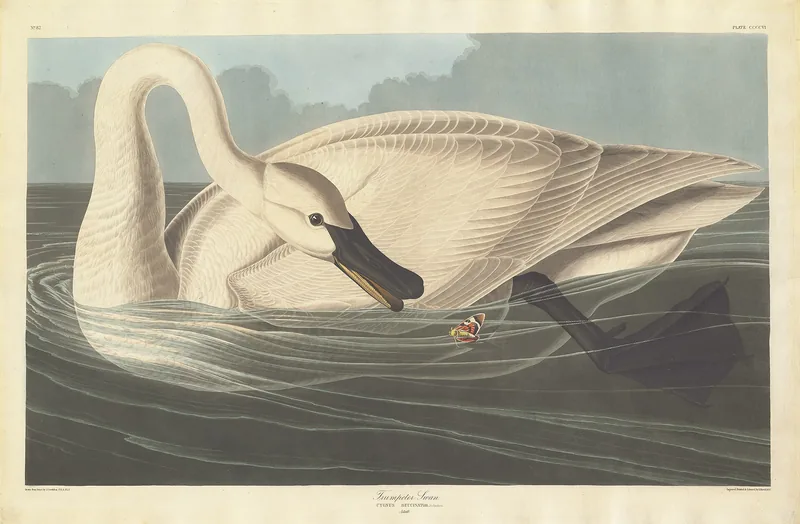
When Socrates heard this, he laughed softly and said, “Goodness, Simmias! I shall have a hard time persuading other people 84e that I don’t regard my present lot as a misfortune, when I cannot persuade even you, and you are afraid that I am now more ill-tempered than I used to be. And apparently you think my powers of prophecy are poorer than the swans’:46 when they sense that they must die, although they also sing in 85a their earlier lives, they sing more than ever, and more beautifully, delighted that they are about to go to the god they serve.
“But people, afraid of death themselves, falsely accuse the swans too, saying that their final song is a lament for death, sung in grief. They fail to consider that no bird sings when hungry, cold, or suffering any other pain—not even the nightingale,47 swallow, or hoopoe, which they say sing laments out of grief. Yet I don’t think these birds 85b sing in sorrow, any more than swans do. Rather, because the swans belong to Apollo, they are, I think, prophetic, and foreseeing the good things in Hades, they sing and rejoice on that day far more than before. I believe that I too am a fellow slave with the swans and sacred to the same god, that the gift of prophecy I have received from our master is no poorer than theirs, and that I am leaving life no more downhearted than they are. So as far as that goes, say and ask whatever you like, for as long as the Athenian Eleven allow it.”
Simmias said, “Well said. I will explain what 85c puzzles me, and Cebes will explain in turn where he disagrees with what has been said. For I think, Socrates—perhaps you do too—that getting clear knowledge of such matters in our present life is either impossible or exceedingly difficult, yet a man would be very feeble if he failed to test what is said about them in every way and gave up before exhausting his examination from every side.z One must, after all, accomplish at least one of these things concerning them: learn how they stand, discover it for oneself, or, if that is impossible, take the best and hardest to refute of human arguments and 85d ride it like a raft, venturing on it across life, unless one can make the passage more safely and with less danger on a firmer vessel, some divine argument.
“And now, since you say this yourself, I won’t be ashamed to ask, and I won’t blame myself later for failing now to say what I think. For when I examine what has been said, Socrates, both by myself and with Cebes, it does not seem to have been argued quite adequately.”
85e Socrates said, “Perhaps your impression is right, my friend. But tell me just where it is inadequate.”
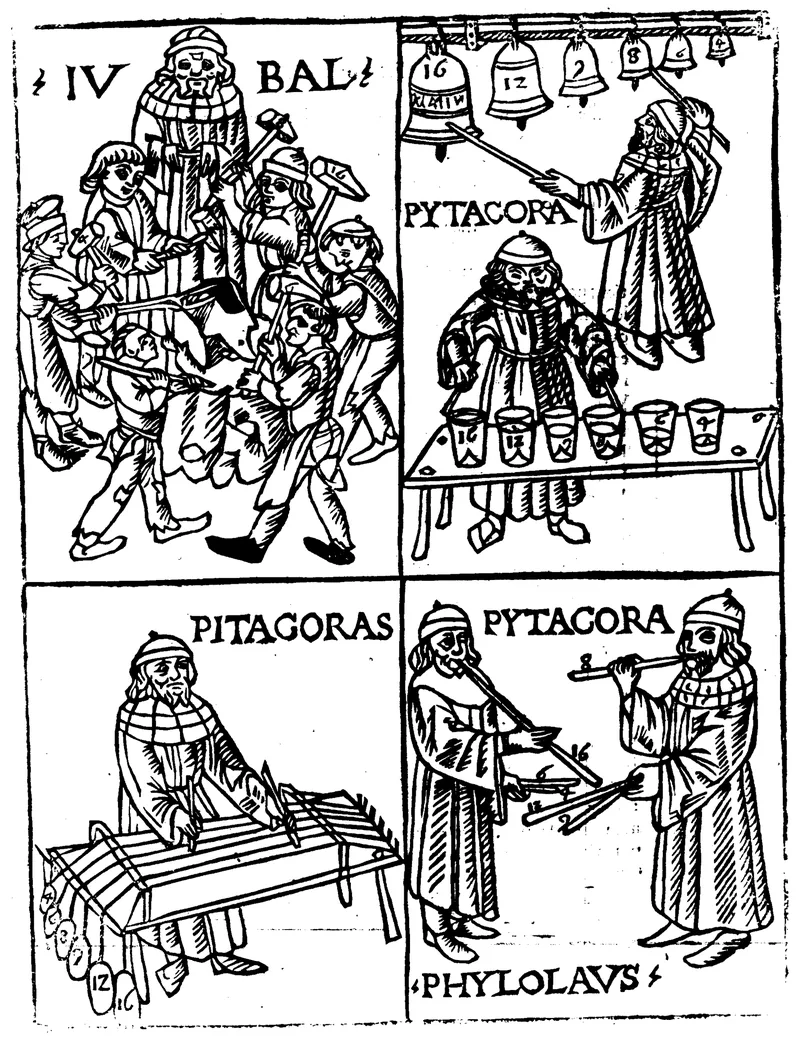
“Here,” Simmias replied. “One could use this very argument about an attunementaa and a lyre48 with its strings, saying that the attunement in an attuned lyre is invisible, bodiless, supremely beautiful, and 86a divine, whereas the lyre itself and its strings are bodies—bodily, composite, earthy, and related to what is mortal. Now suppose someone smashed the lyre or cut and tore its strings, and someone insisted, using the same argument as you, that this attunement must still exist and cannot have perished. For it would be impossible, he would say, for the lyre and its strings, which resemble what is mortal, still to exist with the strings torn, while the attunement 86b had perished, though it shares the nature and kinship of the divine and immortal—perished before the mortal. He would maintain that the attunement itself must still exist somewhere, and that the wood and strings would rot away before anything happened to it.
“Socrates, I think you too have considered this, after all: this is very much how we conceive the soul. Our body is, as it were, stretched taut and held together by hot49 and cold, dry and wet, and things of that sort, and our soul is a blend and attunement 86c of precisely these, when they are blended with one another properly and in due proportion. So if the soul is a kind of attunement, it is clear that whenever illness or other ills slacken or tighten our body beyond measure, the soul must perish at once, divine though it is in the highest degree, like other attunements in sounds and in all the products of craftspeople, whereas each body’s remains last a long time 86d until they are burned or rot away. Consider, then, how we are to answer this argument, if someone claims that because the soul is a blend of what is in the body, it is the first thing to perish in what we call death.”
Then Socrates opened his eyes wide, as he so often did, and smiled. “Simmias has a fair point,” he said. “If any of you sees a way through more readily than I do, why hasn’t he answered? He does seem to have taken a firm hold of the argument. Still, before we answer, I think we should first hear from Cebes 86e what objection he has to it, so that the time this gives us will let us consider what to say. Then, once we have heard them, we should concede if they seem to be in tune,ab or otherwise proceed to defend the argument. Come, Cebes,” he said, “tell us what was troubling you and makes you doubt.ac”
“I’ll tell you,” Cebes said. “For it seems to me that the argument is still where it was and, as we said earlier, 87a still faces that same objection. I do not withdraw my agreement that our soul existed before it entered this form: that has been demonstrated very elegantly and, if it is not too much to say, quite adequately. But I do not think it has been shown in this way that our soul continues to exist somewhere after we die. I do not accept Simmias’s objection that the soul is not stronger and longer-lived than the body, since I think it far surpasses the body in all these respects.
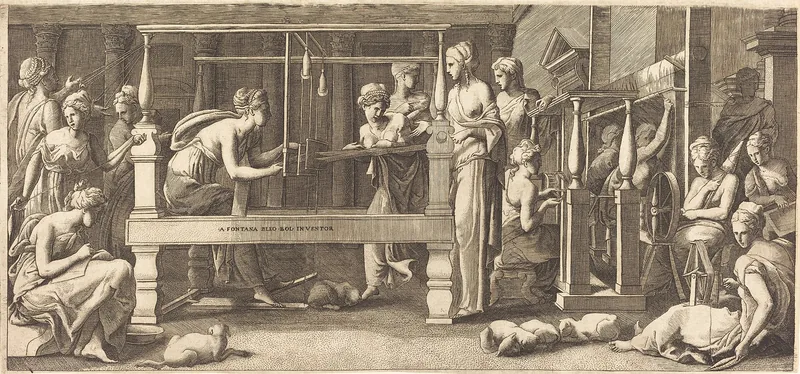
“‘Then why,’ the argument might say, ‘do you still doubt, when you see that after a person’s death the weaker part still exists? Don’t you think that what lasts longer 87b must still survive for that time?’ Consider, then, whether there is anything in my reply to this; for apparently I too need an image, as Simmias does. For it seems to me that this is like arguing, when an old weaver dies, that the man has not perished but survives somewhere, and offering as evidence that the cloak he wove himself and used to wear survives and has not perished. If someone 87c disbelieved him, the speaker would ask which kind lasts longer: a man, or a cloak in use and being worn. When someone answered that a man lasts far longer, he would think it had been demonstrated that the man must surely survive, since the shorter-lived thing had not perished.
“But I don’t think that is how it stands, Simmias: you too should consider what I am saying. Anyone, after all, would reply that the speaker is talking foolishness: this weaver wove and wore out many such cloaks, and perished after all of those, many 87d though they were, but before the last, I think; yet that does not make a man inferior to a cloak or weaker than one.
“And I think this same image could apply to soul and body, and anyone who said precisely this about them would, I think, be speaking reasonably: the soul is long-lived, while the body is weaker and has a shorter life. He could add that each soul wears out many bodies, especially if a person lives for many years. For if the body flows away and perishes while the person is still alive, 87e but the soul constantly reweaves what is worn out, then when the soul perishes it must be wearing the last thing it wove, and perish before that one alone; once the soul has perished, the body at last reveals its natural weakness and rapidly rots away and vanishes.”
“So this argument does not yet justify our trusting it and feeling confident that 88a our soul still exists somewhere after we die. For someone might concede to the person making the argument more than you yourself claim: that our souls existed before we came to be, and that nothing prevents some of them from continuing to exist after our death, being born many times and dying again—for the soul is naturally strong enough to endure repeated births. Yet he might grant all this without ruling out its suffering through those many births and finally perishing altogether in one of its deaths. He might say that no one knows which 88b death, which dissolution of the body, brings destruction to the soul, since none of us could perceive it. If that is so, anyone confident in facing death is foolishly confident unless he can prove that the soul is entirely immortal and imperishable. Otherwise, anyone about to die must always fear for his soul, lest it perish altogether in this separation from the body.”
88c So hearing their objections left us all distressed, as we said to one another afterward. For the earlier argument had thoroughly convinced us, but now they seemed to have thrown us back into confusion and distrust, not only of the arguments already given but also of those still to come. We feared that we were worthless judges, or that the things themselves could not be trusted.
Echecrates
By the gods, Phaedo, I understand how you felt. After all, hearing you now makes me want to say 88d to myself, “What argument can we trust any longer, since Socrates’s argument, so very convincing, has now fallen into discredit?” For the argument that our soul is an attunement of some sort has a remarkable hold on me, now as always; hearing it mentioned seemed to remind me that I had already believed this myself. I badly need another argument, as though we were starting again, to convince me that when someone dies, his soul does not die with him. So tell me, for Zeus’s sake, how did Socrates pursue the argument? Did 88e he show any of the distress you describe in yourselves, or did he defend the argument calmly? And was his defense adequate or deficient? Tell us everything as precisely as you can.
Phaedo
I have often marveled at Socrates, Echecrates, but I never admired him more than I did when I was there that day. 89a Perhaps there was nothing surprising in his having something to say; what astonished me most was first how warmly, kindly, and appreciatively he received the young men’s argument, then how keenly he saw what their arguments had done to us, and then how well he healed us, rallying us as though we had fled in defeat and urging us to follow him and examine the argument together.
Echecrates
How did he do that?
Phaedo
I’ll tell you: I happened to be sitting on his right, 89b on a low stool beside the couch, while he sat much higher than I did. He stroked my head and gathered the hair at the back of my neck in his hand—he liked to play with my hair when he had the chance.
“Tomorrow, Phaedo,” he said, “perhaps you’ll cut off50 those lovely locks.”
“I expect so, Socrates,” I said.
“Not if you listen to me.”
“What then?” I asked.
“Today,” he said, “I’ll cut mine, and you’ll cut yours, if the argument should die on us and we cannot revive it. 89c And in your place, if the argument slipped away from me, I would swear an oath like the Argives,51 that I would not grow my hair again before renewing the battle and defeating the argument of Simmias and Cebes.”
“But they say,” I replied, “that even Heracles52 cannot take on two opponents.”
“Then call on me as Iolaus53 to help,” he said, “while we still have daylight.54”
“Then I do call on you,” I said, “but as Iolaus calling for Heracles, not as Heracles.”
“That makes no difference,” he said. “But first we must guard against something happening to us.”
“What?” I asked.
89d “Becoming haters of arguments,ad as some become haters of people,” he said, “since nothing worse could happen to someone than coming to hate arguments. Hatred of arguments and hatred of people arise in the same way. For hatred of people takes hold when someone without the necessary skill trusts another person completely and thinks him utterly truthful, sound, and reliable, then shortly afterward discovers that he is wicked and unreliable, and then finds the same in another. When this happens repeatedly, especially with those he regards as 89e closest to him and his dearest companions, disappointment after disappointment finally makes him hate everyone and believe that nothing about anyone is sound. Haven’t you seen that happen?”
“Yes, certainly,” I said.
“Isn’t it shameful,” he said, “and clear that such a person was attempting to deal with people without any skill in human affairs? For if he had dealt with them skillfully, he would have judged things as they really 90a are: the good and the wicked are each very few, while the great majority fall between.”
“What do you mean?” I asked.
“The same as with things that are very small or very large,” he said. “Is anything rarer, do you think, than finding an extremely large or extremely small human being, dog, or anything else? Or again, something extremely fast or slow, ugly or beautiful, white or black? Haven’t you observed that in all such cases the furthest extremes are scarce and few, while those between them are plentiful and numerous?”
“Certainly,” I said.
90b “Then don’t you think,” he said, “that if a contest in wickedness were announced, here too very few would take the leading places?”
“That seems likely,” I said.
“It is likely,” he said. “But arguments are not like people in that respect; you led me there just now, and I followed. The resemblance lies here: someone without skill in arguments trusts an argument as true, then soon afterward thinks it false—sometimes it is false, sometimes it isn’t—and the same happens with another and another. You know that especially those 90c who spend their time on arguments devoted to contradiction eventually think themselves supremely wise. They believe they alone have understood that nothing in either things or arguments is sound or stable, but everything that exists simply surges up and down as though in the Euripus,55 never remaining in any one state for any length of time.”
“What you say is quite true,” I replied.
“Then wouldn’t it be pitiful, Phaedo,” he said, “if an argument existed that was true, stable, and possible to 90d understand, yet someone, after encountering the same arguments, which seemed true one moment and false the next, blamed neither himself nor his lack of skill, but in his distress gladly shifted the blame from himself to the arguments and spent his remaining life hating and reviling them, deprived of truth and knowledge of what exists?”
“By Zeus, that would be pitiful,” I said.
“Then let us guard against that first,” he said, “and not 90e admit into our souls the thought that perhaps no argument is sound, but far rather the thought that we ourselves are not yet sound. We must instead show courage and work eagerly to become sound—you and the others for the sake of all the life still ahead of you, and I 91a for the sake of death itself. After all, on this very question I seem at present to be behaving not as a philosopherae but as someone eager to win, like the thoroughly uneducated. For when they dispute something, they care nothing about the truth of the matter under discussion; their concern is to make those present accept the position they have taken. I think my only difference from them at present will be this: I shall strive to make what I say seem true not to those present, except incidentally, but above all to myself. 91b For this is how I reckon it, my dear friend—see how selfishly: if what I say is true, believing it is a good thing; if there is nothing for someone who has died, at least during this time before death I shall distress those here less with my lamenting. And this folly of mine will not last—that would be bad—but will perish before long.
“This is how I come prepared for the argument, Simmias and Cebes,” he said. “But if you take my advice, 91c care little for Socrates and much more for the truth: agree if you think I say anything true, but otherwise resist with every argument. Beware that in my eagerness I do not deceive both myself and you, then go away like a bee, leaving my sting behind.
“But we must go on,” he said. “First remind me what you said, if I seem to have forgotten it. Simmias, I think, doubts and fears that the soul, although more divine and 91d more beautiful than the body, may perish before it because it has the form of an attunement. Cebes seemed to grant me that the soul lasts longer than the body, but held that no one knows whether, after wearing out many bodies time after time, the soul itself now perishes on leaving its last body behind, and whether this very thing—the soul’s destruction—is death, since the body goes on perishing without pause. Are these the points we must examine, Simmias and Cebes?”
91e Both agreed that they were.
“Then do you reject all the earlier arguments,” he asked, “or accept some and reject others?”
“We accept some and reject others,” they said.
“Then what do you say,” he asked, “about the argument in which we said that learning is recollection and that, if this is so, our 92a soul must necessarily have existed elsewhere before being bound within the body?”
“It convinced me extraordinarily at the time,” Cebes said, “and I still hold to it as to no other argument.”
“I feel the same,” said Simmias, “and I would be very surprised ever to change my mind on this point.”
“But you must change your mind, my Theban guest,” said Socrates, “if you keep this view: that an attunement is a compound, and that the soul is an attunement of some sort composed of the elements held in tension throughout the body. For surely you won’t accept 92b your own claim that an attunement was put together before the things from which it had to be put together existed. Or will you?”
“Certainly not, Socrates,” he said.
“Then do you realize,” he asked, “that this is what you are saying when you claim that the soul existed before entering human form and body, yet was composed of things that did not exist? For on your view, an attunement is not like the soul you compare it with: the lyre, its strings, and 92c the still unattuned sounds come to be first, while attunement is formed last of all and perishes first. How, then, will this argument sing in tuneaf with the other?”
“It cannot,” said Simmias.
“And yet an argument about attunement, if any argument does, ought to sing in tune.”
“It ought,” said Simmias.
“Well, yours does not sing in tune,” he said. “Consider which argument you choose: that learning is recollection, or that the soul is an attunement.”
“The former, by far, Socrates,” he replied. “For the latter 92d came to me without proof, through a certain plausibility and surface appeal, which is also why so many people believe it. But I know that arguments which build their proofs on likelihood are impostors; unless we guard against them, they deceive us badly, in geometry and every other field. The argument about recollection and learning, however, was put forward on a hypothesis56 worthy of acceptance. For we said that our soul existed even before it entered a body, just as the reality bearing the name ‘what it is’ belongs to it.ag 92e I am persuaded that I have accepted this on sufficient and proper grounds. So for these reasons, it seems, I must reject the claim that the soul is an attunement, whether it comes from myself or anyone else.”
“What about this, Simmias?” he asked. “Do you think an attunement, or any other 93a compound, can be in a condition different from that of the things composing it?”
“Certainly not.”
“Nor, I suppose, can it do or undergo anything other than what those things do or undergo?”
He agreed.
“Then an attunement cannot lead the things it is composed of, but must follow them.”
He agreed with that.
“An attunement, then, cannot possibly move against its own parts, sound against them, or oppose them in any other way.”
“It certainly cannot,” he said.
“And isn’t each attunement by nature an attunement according to how it is attuned?”
“I don’t understand,” he said.
“If it were attuned more fully and in greater measure,” he said, “93b assuming that is possible, wouldn’t it be more of an attunement and a greater one, and if less fully and in smaller measure, less of an attunement and a smaller one?”
“Certainly.”
“Does that hold for a soul? Could one soul be even slightly more fully and in greater measure what it is—a soul—than another, or less fully and in smaller measure?”
“Not in the slightest,” he said.
“Now tell me, for Zeus’s sake,” he said: “we say that one soul has mind and excellence and is good, while another has folly and wickedness 93c and is bad. Is that rightly said?”
“Yes, rightly.”
“Then what will someone who holds that the soul is an attunement say these things in our souls—excellence and vice—are? A further attunement and discordah? Will he say that the good soul is attuned and, though itself an attunement, has another attunement within it, while the other is itself unattuned and has no further attunement within it?”
“I can’t say,” Simmias replied, “but plainly anyone making that hypothesis would say something of the sort.”
93d “But we have already agreed,” he said, “that one soul is never any more or any less a soul than the next. That agreement amounts to saying that one attunement is neither more fully nor in greater measure an attunement than another, nor less fully nor in smaller measure. Is that right?”
“Certainly.”
“And what is neither more nor less an attunement is neither more nor less attuned. Is that so?”
“Yes.”
“Does something that is neither more nor less attuned share in a greater or smaller amount of attunement, or in an equal amount?”
“An equal amount.”
“Then since one soul is a soul to no greater or lesser degree than 93e another, neither is it more or less attuned?”
“That is so.”
“And being in this condition, it could have no greater share in either discord or attunement?”
“No, it could not.”
“And being in this condition, could one soul have any greater share in vice or excellence than another, if vice were discord and excellence attunement?”
“No greater share.”
94a “More precisely, Simmias, if we follow the argument correctly, no soul will share in vice at all, if it is an attunement. For an attunement, being wholly what it is—an attunement—could never share in discord.”
“No, it could not.”
“Nor could a soul, being wholly a soul, share in vice.”
“How could it, given what we have said?”
“On this argument, then, every soul in every living creature will be equally good, if by nature they are equally what they are—souls.”
“So it seems to me, Socrates,” he said.
“And do you think it is right to say that,” he asked, “and that the argument would have reached this point 94b if the hypothesis that the soul is an attunement were correct?”
“Not at all,” he said.
“Then consider this,” he said. “Of everything in a human being, do you say anything rules except the soul, especially one with understanding?”
“I do not.”
“Does it yield to what the body feels, or does it also resist it? I mean things like this: when the body is hot and thirsty, the soul pulls the other way, toward not drinking, and when there is hunger, toward not eating; in countless other ways, too, we see 94c the soul opposing what happens in the body. Don’t we?”
“Certainly.”
“But didn’t we agree earlier that, if the soul were an attunement, it could never sing against the tightening, slackening, plucking, or any other treatment of the parts it was made of, but must follow them and never take the lead?”
“We did,” he said. “Of course.”
“Then doesn’t it now seem to us to do exactly the opposite: leading all those things it is said to be 94d made of, opposing them in almost everything throughout life, and mastering them in every way, punishing some more harshly and painfully through physical training and medical treatment, others more gently, threatening some and admonishing others, speaking to desires, anger, and fears as one thing speaking to another? Just as Homer57 does in the Odyssey, where he says of Odysseus:
“‘He struck his chest and rebuked his heart with these words: 94e “Endure, heart; once you endured something else foulerai still.”’
“Do you think Homer wrote this believing that the soul is an attunement, something led by what the body undergoes, rather than something that leads and masters these things and is itself far more divine than an attunement?”
“By Zeus, Socrates, I think he took the latter view.”
“Then, my good friend, we have no grounds at all for calling the soul 95a an attunement of some sort, since we would apparently agree neither with Homer, the divine poet, nor with ourselves.”
“That is so,” he said.
“Well then,” said Socrates, “it seems we have fairly well appeased Harmonia58aj of Thebes; but what of Cadmus, Cebes—how, and with what argument, shall we appease him?”
“I think you will find a way,” said Cebes. “At any rate, what you said against attunement astonished me: I had expected nothing like it. For when Simmias was explaining his difficulty, I very much doubted 95b whether anyone could make headway against his argument, so it struck me as extraordinary that it failed to withstand even the first assault of yours. It would not surprise me if Cadmus’s argument suffered the same fate.”
“Don’t boast like that, my friend,” said Socrates, “or some evil eye59 may overturn the argument we are about to make. But the god will see to that; let us close in, in Homer’s fashion,60 and test whether there is anything in what you say. Here is the central point of your inquiry: you require proof that our soul 95c is imperishable and immortal, if a philosopher about to die is to face death confidently, believing he will fare much better there after death than if he had died after living differently, without his confidence being senseless and foolish. And you say that demonstrating the soul’s strength and godlike nature and its existence before we became human need not indicate immortality at all, but only that the soul is long-lived, that it existed somewhere for an unimaginably long time before, and that it knew and did all sorts of things. Yet that would make it 95d no more immortal; its very entry into a human body could be the beginning of its destruction, like an illness, so that it would lead this life in distress and finally perish in what we call death. And you say that whether it enters a body once or many times makes no difference to the fear each of us should feel, since anyone who does not know, and cannot give an account showing 95e that it is immortal, ought to be afraid unless he is a fool. That, Cebes, is roughly what I think you mean. I deliberately go over it repeatedly so that nothing escapes us and you can add or remove anything you wish.”
“At present,” said Cebes, “I have nothing I want either to remove or to add. That is what I mean.”
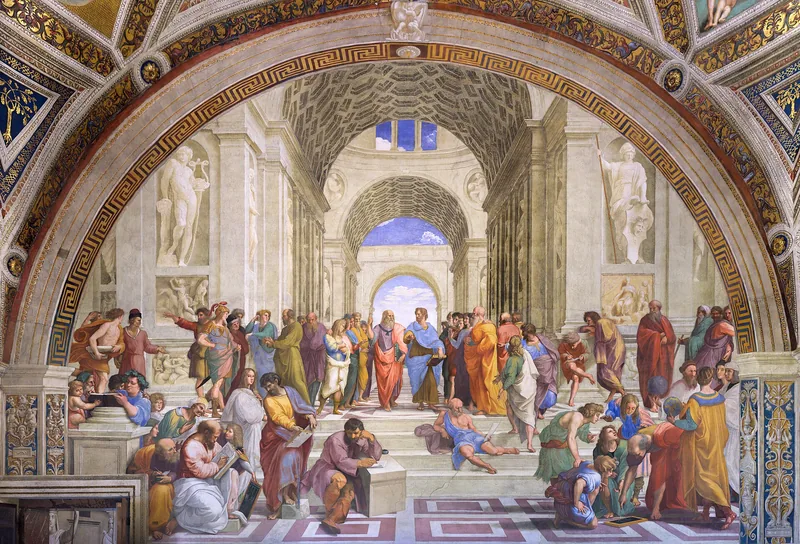
Socrates paused for a long time, thinking something over by himself, then said, “You’re asking no small thing, Cebes, since we must investigate thoroughly what causes coming to be and passing away. 96a So if you like, I’ll go through my own experiences in these matters; then, if any of what I say seems useful to you, you can use it to reach a conviction about the questions you are raising.”
“Yes,” said Cebes, “I would like that.”
“Then listen; I’ll tell you. You see, as a young man, Cebes,” he said, “I was extraordinarily eager for the wisdom they call ‘inquiry into nature,’61 because I thought it splendid to know the causes of everything: why each thing comes to be, why it perishes, and why it exists. I often 96b turned myself upside down, first examining questions like these: is it when heat and cold undergo a kind of putrefaction that living creatures develop, as some people said? Is it through blood that we understand, or through air or fire? Or is it none of these, but the brain that supplies the sensations of hearing, seeing, and smelling, from which memory and opinion arise, while knowledge in turn arises from memory and opinion once they become stable? I also examined how these things pass away and what happens in the heavens 96c and on earth, until I finally thought myself utterly unsuited by nature to this inquiry.
“I’ll give you sufficient evidence of it: this inquiry so thoroughly blinded me about things I had previously known clearly—or so I and others thought—that I unlearned even what I had once supposed I knew, among many other things why a person grows. For I had previously thought it clear to everyone that this happens through eating and drinking: 96d when food adds flesh to flesh, bone to bone, and likewise to each of the other parts what belongs to it, a bulk that was small becomes large, and in this way a small person becomes large. That was what I thought then. Doesn’t my view seem reasonable?”
“It does to me,” said Cebes.
“Consider these further examples: it also seemed clear enough to me that a tall person standing beside a short one was taller 96e because of the head itself,ak and that the same held for one horse compared with another. In cases clearer still, I thought ten exceeded eight because of the additional two, and a length of two cubits62 exceeded a length of one because the difference was half the longer length.”
“And what do you think about these things now?” Cebes asked.
“By Zeus,” he said, “I am far from thinking I know the cause of any of them, since I do not even accept my own claim that when someone adds one to one, either the one receiving the addition becomes two, or the added one does, or the added one and the one receiving it 97a become two because one was added to the other. For I wonder how it can be that, when they were apart, each was one, yet at that point they were not two, but after they came together, their meeting—being placed side by side—caused them to become two. Nor can I still believe that when someone splits one apart, the splitting is what causes it to become two, since this gives us the opposite 97b cause of becoming two: in the first case, one was moved close to the other and added to it, whereas now one is taken away and separated from the other. Nor can I still persuade myself that, by this approach to inquiry, I know why one comes to be, or, in a word, why anything comes to be, perishes, or exists; instead, I muddle together another approach of my own at random, but I reject this one outright.
“Once, though, I heard someone read from what he said was a book by Anaxagoras 97c and declare that mind orders everything and is the cause of everything. I was delighted with this cause and thought there was something right about mind being the cause of everything. I supposed that, if this were so, mind, in ordering everything, would order all things and place each one in whatever way was best. So if anyone wished to discover the cause of anything’s coming to be, perishing, or existing, they would have to discover how it is best for that thing to exist, or 97d to undergo or do anything else. This reasoning meant that, in considering that thing itself and all the others, a person should examine nothing but what is finest and best.al That same person must necessarily know what is worse as well, since knowledge of both is the same.
“As I reasoned this out, I was delighted to think that in Anaxagoras I had found a teacher to my likingam on the cause of what exists. I thought he would first tell me whether the earth was flat or 97e round, then go on to explain the cause and the necessity of its being so, saying what was better and why it was better for the earth to be that way. If he said it was in the middle, he would also explain why it was better for it to be in the middle; and if he 98a demonstrated these things to me, I was ready to feel no further need for any other kind of cause.”
“And I was ready to inquire in the same way about the sun, the moon, and the other stars: their speeds in relation to one another, their revolutions, and their other changes, and just how it was better for each to do what it does and undergo what it undergoes. For I could never imagine that, after claiming mind had arranged them, he would give any other cause than that it was best for them to be 98b just as they are. So I expected that, in assigning a cause for each and for all together, he would also explain what was best for each and their common good. I would not have sold those hopes for a fortune; I eagerly seized the books and read them as quickly as I could, to discover just as quickly what was best and what was worse.
“But how far I fell from that wonderful hope, my friend, when I read on and saw that the man made no use of mind and assigned it no responsibility for 98c arranging things, but gave air, ether,63 water, and many other absurd things as causes. It seemed to me much like someone saying that Socrates uses his mind in everything he does, then trying to explain the causes of each of my actions by saying first that I am sitting here now because my body consists of bones and sinews. The bones are solid and separated by joints, while the sinews can be tensed 98d and relaxed and surround the bones along with the flesh and the skin that holds them together. So, with the bones suspended at their joints, the sinews slacken and tighten, making it possible for me to bend my limbs now, and that is why I sit here with them bent. He would offer similar causes for my talking to you, citing sounds, air, hearing, and countless 98e other things of that kind, while neglecting the true causes: since the Athenians thought it better to condemn me, I too have therefore thought it better to sit here, and more just to stay and submit to whatever penalty they order. For, by the dog,64 I think these sinews and bones would long ago 99a have reached Megara or the Boeotians,65 carried there by a judgment of what was best, if I had not thought it more just and nobler to accept whatever penalty the city imposed than to flee and run away.
“But calling things like these causes is utterly absurd. Someone who said that without such things—bones, sinews, and everything else I have—I could not carry out my decisions would be telling the truth; but saying that my actions, performed with mind, are due to these things rather than 99b to my choosing what is best would be grossly careless talk. For that fails to distinguish the actual cause from something without which the cause could never be a cause. Most people, it seems to me, grope about as though in darkness and give the latter a name that belongs elsewhere, calling it a cause. That is why one thinker surrounds the earth with a vortex66 to keep it beneath the heavens, while another props it up on air like a broad kneading trough. 99c But they neither seek the power that makes things lie where they now lie, in the best possible arrangement, nor believe it has any divine strength; instead, they expect to discover an Atlas67 stronger and more immortal than this, better able to hold everything together, and do not believe that the good and the necessaryan truly bind and hold things together.
“For my part, I would be very glad to become anyone’s pupil to learn how a cause of that kind works. But since I was deprived of it and could neither discover it myself nor learn it from someone else, would you like me, Cebes,” he said, “to show you how I have pursued my second 99d voyage68 in search of the cause?”
“I would like that immensely,” he said.
“After that, then,” Socrates said, “once I had worn myself out investigating what exists, I thought I must take care not to suffer what happens to people who watch and examine the sun during an eclipse. Some of them ruin their sight, you see, unless they examine its image in water or 99e something similar. A comparable thought occurred to me: I feared that I might completely blind my soul by looking at things with my eyes and trying to grasp them with each of my senses. So I thought I should take refuge in arguments and look there for the truth about what exists.
“Perhaps, then, the comparison 100a does not quite fit: I certainly do not concede that someone who examines reality through arguments examines it in images any more than someone who examines it through actual things. Still, that was how I began. On each occasion I take as my hypothesis the statement I judge strongest, and accept as true whatever seems to agree with it, about causes or anything else that exists, and as false whatever does not. But I want to explain my meaning more clearly, because I think you do not understand it yet.”
“No, by Zeus,” Cebes said, “not very well.”
100b “Here is what I mean,” Socrates said. “Nothing new, but the very things I have never stopped saying, both on other occasions and in our earlier discussion. For I am going to try to show you the kind of cause I have been working on. I return to those much-discussed things and begin with them, taking as my hypothesis that the beautiful itself exists on its own, as do the good itself, the large itself, and all the rest. If you grant me these and agree that they exist, I hope to use them to show you the cause and discover that the soul is immortal.”
100c “I grant you that,” Cebes said. “Do go straight on to the conclusion.”
“Then consider what follows,” Socrates said, “and see whether you agree with me. It seems to me that if anything besides the beautiful itself is beautiful, it is beautiful for no other reason than that it shares in the beautiful itself; and I say the same about everything. Do you accept a cause of this kind?”
“I do,” he said.
“So I no longer understand those other wise causes,” Socrates said, “or have any grasp of them. If someone tells me 100d that something is beautiful because it has a vivid color, a shape, or anything else of that kind, I let all that go—it all confuses me—but hold simply, plainly, and perhaps foolishly to this: nothing makes it beautiful except the beautiful itself, whether through its presence, through sharing in it, or in whatever way it comes to be there. For I make no firm claim about that yet, only that all beautiful things become beautiful through the beautiful. This, after all, seems to me the safest answer to give myself or anyone else, and I believe that by holding to it 100e I shall never fall, but that I or anyone else can safely answer that beautiful things become beautiful through the beautiful. Don’t you think so too?”
“I do.”
“So through largeness large things are large and larger things larger, and through smallness smaller things are smaller?”
“Yes.”
“Then if someone said that one person was larger than another by a head,ao and the smaller person smaller by that same 101a thing, you would reject it and insist that you mean only this: whatever is larger than something else is larger solely through largeness, and because of largeness, while whatever is smaller is smaller solely through smallness, and because of smallness. You would, I think, fear a counterargument if you claimed that someone was larger or smaller by a head: first, that the same thing makes the larger larger and the smaller smaller; then, that a head, which is small, makes the larger person 101b larger—and that this is a monstrosity, someone being large through something small. Wouldn’t you fear that?”
Cebes laughed. “I would,” he said.
“Then,” Socrates said, “wouldn’t you fear saying that ten exceeds eight by two, and because of those two, rather than through quantity, and because of quantity? Or that two cubits are larger than one cubit by a half,ap rather than through largeness? For you would presumably have the same fear.”
“Certainly,” he said.
“And when one is added to one, wouldn’t you hesitate to say that addition is the cause 101c of their becoming two, or division when one is split? You would loudly declare that you know no way for anything to come to be except by sharing in the particular essence of whatever it shares in. In these cases, the only cause you can give for two coming to be is their sharing in twoness: anything that is to be two must share in twoness, and anything that is to be one in oneness. You would let divisions, additions, and all such refinements go, leaving the answers to people wiser than yourself; but you, afraid, as they say, of your own 101d shadow69 and of your inexperience, would hold to the safety of your hypothesis and give that answer.
“If someone challenged the hypothesis itself, you would let him be and offer no answer until you had examined its consequences to see whether they agreed with one another or clashed. When you needed to give an account of the hypothesis itself, you would proceed in the same way, setting up another hypothesis, whichever of the higher ones seemed best, 101e until you reached something adequate. And if you wanted to discover something about what exists, you would not muddle the discussion of your starting point with that of its consequences, as those bent on contradicting do, would you? For perhaps they spare this neither a thought nor a care, because their wisdom enables them to stir everything into a single mess and still be pleased with themselves; but if you are one of the philosophers, 102a I think you would do as I say.”
“Nothing could be truer,” Simmias and Cebes said together.
Echecrates
By Zeus, Phaedo, and rightly so. It seems to me that he put this astonishingly clearly for anyone with any mind at all.
Phaedo
Certainly, Echecrates. Everyone there thought so too.
Echecrates
And so do we, who weren’t there but are hearing it now. But what did they say next?
Phaedo
I believe that once they had granted him these points 102b and agreed that each form exists and that other things share in these forms and take their names from them, Socrates went on to ask: “If that is how you put it, when you say that Simmias is larger than Socrates but smaller than Phaedo, aren’t you saying that Simmias has both largeness and smallness in him?”
“I am.”
“But you agree,” he said, “that when we say Simmias exceeds Socrates, the truth 102c is not as the words put it? After all, Simmias presumably does not exceed him by being Simmias, but through the largeness he happens to have; nor does he exceed Socrates because Socrates is Socrates, but because Socrates has smallness in relation to Simmias’s largeness?”
“True.”
“Nor, again, does Phaedo exceed him because Phaedo is Phaedo, but because Phaedo has largeness in relation to Simmias’s smallness?”
“That is so.”
“So Simmias gets the names ‘small’ and ‘large’ because he stands between the two, offering his smallness for Phaedo’s largeness 102d to exceed and his largeness to exceed Socrates’s smallness.” With a smile he added, “I sound as though I’m drafting a contract,aq but I suppose that is how it is.”
He agreed.
“I say this because I want you to share my view. For it seems to me that not only will largeness itself never be both large and small, but the largeness in us will never admit the small or consent to be exceeded: it does one of two things, either fleeing and withdrawing when 102e its opposite, the small, approaches, or perishing when it arrives. It will not stay, admit smallness, and consent to be anything other than what it was. I, for example, have admitted and endured smallness, yet I remain the very person I am, and that same person is small. But largeness, being large, has never dared to be small. In the same way, the small in us never consents to become or be large, nor does any other opposite, while still being what it was, consent at once to become 103a and be its opposite; in that situation it either departs or perishes.”
“That is exactly how it seems to me,” Cebes said.
One of those present, hearing this—I cannot clearly remember who—said, “By the gods, didn’t we agree in our earlier discussion on the very opposite of what is being said now:70 that the larger comes to be from the smaller and the smaller from the larger, and that this is precisely how opposites come to be, from their opposites? But now we seem to be saying that this could never happen.”
Socrates tilted his head and listened. 103b “A bold reminder,” he said, “but you have missed the difference between what we are saying now and what we said then. You see, previously we said that an opposite thing comes to be from an opposite thing, whereas now we say that the opposite itself can never become its own opposite, whether in us or in nature. For earlier, my friend, we were talking about things that possess opposites and calling those things by the names of the opposites; now we are talking about the opposites themselves, whose presence gives those things their names. 103c We say that the opposites themselves will never consent to come to be from one another.”
As he spoke, he looked at Cebes. “Cebes,” he said, “has any part of what this man said troubled you too?”
“No, that isn’t how I feel either,” Cebes said, “though I’m certainly not saying there aren’t many things that trouble me.”
“Then we have agreed without qualification,” Socrates said, “that an opposite will never be its own opposite.”
“Completely,” he said.
“Now consider this too,” Socrates said, “and see whether you will agree. Do you speak of something hot and something cold?”
“Yes.”
“Do you mean the same things as snow and fire?”
103d “No, by Zeus, I do not.”
“Then the hot is something other than fire, and the cold something other than snow?”
“Yes.”
“But I think you hold this: snow will never admit the hot, as we put it earlier, and still be what it was, snow that is also hot; when the hot approaches, it will either withdraw before it or perish.”
“Certainly.”
“And fire, again, when the cold approaches, will either withdraw or perish; it will never dare to admit coldness and still be what it was, fire that is also cold.”
103e “What you say is true,” he said.
“So in some of these cases,” Socrates said, “not only is the form itself entitled to its own name for all time, but something else is too: something that is not the form, yet always has its character whenever it exists. Perhaps this will make what I mean clearer: the odd must always bear the name we are using now, mustn’t it?”
“Certainly.”
“Is it the only thing that does—that is what I am asking—or is there something else 104a that is not the same as the odd, but must nevertheless always bear that name along with its own, because its nature never lets it be without the odd? I mean things like three, and many others. Consider three: don’t you think we must always call it both by its own name and by the name of the odd, though the odd is not the same as three? Yet three, five, and a whole half of all numbers are so constituted that 104b each is always odd without being the odd itself; similarly, two, four, and the entire other row of numbers are always even, each of them, without being the even itself. Do you agree or not?”
“How could I not?” he said.
“Then look at what I want to make clear,” Socrates said. “Apparently it is not just those opposites that refuse to admit one another: things that are not opposites of one another but always have opposites in them also seem to refuse the form opposite to the one within them, and when it approaches, they either 104c perish or withdraw. Won’t we say that three would perish or suffer anything at all before submitting to becoming even while still being three?”
“Certainly,” Cebes said.
“Yet two is not an opposite of three,” Socrates said.
“Certainly not.”
“So opposite forms are not the only things that refuse to endure one another’s approach: some other things also refuse to endure the approach of opposites.”
“Exactly right,” he said.
“Shall we try, then,” Socrates said, “to define what these things are, if we can?”
“Certainly.”
104d “Would they be things, Cebes,” he said, “that force whatever they occupy to have not only their own form, but always also the form of some opposite?”ar
“What do you mean?”
“Just what we were saying. You know, surely, that anything occupied by the form of three must be not just three, but odd as well.”
“Certainly.”
“Now we say that the form opposite to the character that brings this about could never come upon such a thing.”
“No, it could not.”
“It was the odd character that brought it about?”
“Yes.”
“And opposite to that is the form of the even?”
“Yes.”
104e “So the form of the even will never approach three.”
“Certainly not.”
“Then three has no share in the even.”
“None.”
“So three is uneven.”as
“Yes.”
“What I suggested we define was this: what things, though not themselves opposite to something, still refuse to admit that opposite? Three, for example, is not opposite to the even, yet admits it no more readily, since it always brings up the opposite against it; two does the same against the odd, and 105a fire against the cold, and there are countless others. But see whether you would define it this way: not only does an opposite refuse to admit its opposite, but anything that brings one of the opposites with it wherever it goes will itself never admit the opposite of what it brings. Recall it again; there is no harm in hearing it often. Five will not admit the form of the even, nor will ten, the double, admit the form of the odd. The double is itself opposite to something else, yet it still will not admit the form 105b of the odd; nor will one and a half and other such quantities—those with a half in themat—admit the form of the whole, nor will a third or anything else of that sort—if you follow me and agree.”
“Absolutely; I agree and I follow you,” he said.
“Then answer me again from the beginning,” Socrates said. “Don’t answer with the very thing I ask about, but follow my example.au I mean that I now see another safe answer in what we have been saying, besides that safe answer I gave at first. If you asked me what must enter a body to make it hot, I would not give you 105c that safe, ignorant answer, ‘heat,’ but a more refined answer based on what we have just said: ‘fire.’ If you asked what must enter a body to make it ill, I would not say ‘illness,’ but ‘fever’; and if you asked what must enter a number to make it odd, I would not say ‘oddness,’ but ‘one,’ and so on. But see whether you now understand what I want well enough.”
“Quite well enough,” he said.
“Then answer this,” Socrates said. “What must enter a body to make it alive?”
“A soul,” he said.
105d “And does that always hold?”
“Of course,” he said.
“So whenever a soul takes possession of something, it always comes bringing life to it?”
“It certainly does,” he said.
“And is there an opposite to life, or none?”
“There is,” he said.
“What?”
“Death.”
“Then, from what we agreed before, a soul will never admit the opposite of what it always brings?”
“Most certainly not,” Cebes said.
“Well then, what did we just call whatever refuses the form of the even?”
“Uneven,” he said.
“And what refuses the just, or refuses the musical?”
105e “Unmusical,” he said, “and in the other case, unjust.”
“Good. And what do we call whatever refuses death?”
“Immortal,”av he said.
“And a soul refuses death?”
“Yes.”
“So a soul is immortal.”
“Immortal.”
“Good,” Socrates said. “Shall we say we have proved that, then? Or what do you think?”
“Yes, very thoroughly, Socrates.”
“What follows, Cebes?” Socrates said. “If the uneven had to be 106a imperishable, wouldn’t three be imperishable too?”
“Of course it would.”
“Then if what is not hot also had to be imperishable, wouldn’t snow withdraw intact and unmelted whenever someone brought the hot against it? For it could neither perish nor stand its ground and admit heat.”
“What you say is true,” he said.
“I think the same would hold if what is not cold were imperishable: whenever something cold approached fire, the fire would never be extinguished or perish, but would go away intact.”
“It must,” he said.
106b “Then mustn’t we say the same about the immortal?” Socrates said. “If the immortal is also imperishable, a soul cannot perish when death comes upon it. For according to what we have already said, it will not admit death or be dead, just as we said that three would not be even, nor would the odd; nor would fire be cold, or the heat within the fire. But someone might say, ‘What prevents this: the odd does not become even when the even approaches, as we agreed, 106c but perishes and the even comes to be in its place?’ We could not counter that claim by insisting that it does not perish, because the uneven is not imperishable. Had we agreed that it was, we could easily insist that when the even advances, the odd and three depart and are gone; and we could make the same case about fire, the hot, and the others. Couldn’t we?”
“Certainly.”
“So now too, if we agree that the immortal is also imperishable, a soul would be immortal 106d and imperishable as well; otherwise, we would need another argument.”
“But none is needed on that score,” Cebes said. “For hardly anything else could refuse to admit destruction if the immortal, which is eternal, is going to admit it.”
“Well, I think everyone would agree,” Socrates said, “that the god, the form of life itself, and whatever else is immortal, if anything, never perish.”
“Everyone, certainly, by Zeus,” he said, “among human beings—and still more, I think, among gods.”
106e “Since, then, the immortal is also indestructible, doesn’t it follow that if a soul is immortal, it would also be imperishable?”
“It most certainly must.”
“Then when death approaches a person, it seems that what is mortal in him dies, while what is immortal departs intact and indestructible, withdrawing before death.”
“So it seems.”
“The soul, then, Cebes, is beyond any doubt immortal and 107a imperishable,” Socrates said, “and our souls really will exist in Hades.”
“For my part, Socrates,” Cebes said, “I have nothing further to say against this, and no ground for distrusting the arguments. But if Simmias here, or anyone else, has something to say, he should not keep silent. For if anyone wants to say or hear something about such matters, I don’t know what occasion he could postpone it to beyond this one.”
“Nor can I myself find any further grounds for distrust—at least from what has been said,” Simmias replied. “But our discussion concerns such large matters, 107b and I have such a poor opinion of human weakness, that I cannot help still having some doubt within myself about what has been said.”
“What you say is sound, Simmias,” Socrates said, “but that is not all: the initial hypotheses must be examined more closely too, even if you find them trustworthy. If you analyze them adequately, I think you will follow the argument as fully as a human being possibly can; and if that itself becomes clear, you will look no further.”
“True,” he said.
107c “But this deserves thought, gentlemen,” Socrates said. “If the soul is immortal, it needs care not just for this stretch of time that we call living, but for all time, and now the danger of neglecting it would seem terrible indeed. For if death were release from everything, it would be a windfall for the wicked to be rid of their bodies and their own wickedness along with their souls when they die; but now that the soul appears immortal, 107d it can have no other escape from evils, no other safety, except by attaining the greatest possible goodness and understanding. The soul, after all, arrives in Hades with nothing besides its education and upbringing, and these are said to help or harm the dead person more than anything else, right from the start of the journey there.
“The account runs like this: after each person dies, the spirit71 to whom he was allotted during life tries to lead him to a certain place, where those who gather must undergo judgment72 and then journey to Hades 107e with the guide appointed to lead them from here to there. When they have received there whatever is their due and remained for the required time, another guide brings them back here after many long cycles of time.”
“But the journey turns out to be different from the one Telephus73 describes in Aeschylus. For he 108a speaks of a simple path leading to Hades, but to me it seems neither simple nor single. Otherwise guides would be unnecessary: surely nobody could lose the way anywhere if only one road existed. As things stand, there seem to be many forks and three-way crossings; I infer this from the sacrifices74 and customs practiced here.
“So the orderly soul with understanding follows its guide and knows what is happening, but the soul that longs for the body, after fluttering about it and the visible world for a long 108b time, as I said earlier, and after much resistance and much suffering, is led away forcibly and with difficulty by its appointed spirit. When it reaches the others, if it is impure and has committed such a deed—had a hand in wrongful killings or done other such deeds, kindred to these and the work of kindred souls—everyone flees from it and turns away, unwilling to accompany or guide it; it 108c wanders alone, utterly at a loss, until certain periods have elapsed, when necessity carries it to the dwelling it deserves. But a soul that has lived in purity and moderation finds gods to accompany and guide it, and each such soul settles in its proper place.
“There are many astonishing regions of the earth, and the earth itself is neither the kind of thing nor the size that those accustomed to discuss it suppose. Someone has persuaded me of this.”
108d “What do you mean, Socrates?” Simmias asked. “You see, I too have heard a great deal about the earth, though not the things that have persuaded you. So I would gladly hear them.”
“Well, Simmias, I do not think it takes Glaucus’s75 skill to describe them. But proving them true seems beyond even Glaucus’s skill: I myself might be incapable of it, and even if I knew how, Simmias, I think the explanation would be longer than the life I have left. Still, nothing prevents me from describing the form 108e I believe the earth has, and its regions.”
“That much is enough,” said Simmias.
“To begin with, then,” Socrates said, “I am persuaded that if the earth is spherical and lies at the center of the heavens, it needs neither 109a air nor any other such force to prevent it from falling: the uniformity of the heavens in every direction, together with the earth’s own balance, suffices to hold it in place. For a balanced object set at the center of something uniform has no greater or lesser tendency to tilt in any direction; with everything equal, it will remain untilted. That, then,” he said, “is my first conviction.”
“And a sound one,” said Simmias.
“I also believe,” Socrates said, “that it is enormous, and that we who live 109b from Phasis76 to the Pillars of Heracles occupy a tiny portion of it, settled around the sea like ants or frogs around a pond, while many others live elsewhere in many similar places. For all over the earth there are hollows of every form and size, into which water, mist, and air have collected. But the earth itself lies pure in the pure heavens where the stars are—the region called ether77 109c by most people who regularly discuss such matters. Water, mist, and air are its sediment, continually gathering in the earth’s hollows.
“We therefore live in its hollows without knowing it, imagining ourselves on top of the earth, much as someone living deep on the seabed might think he lived on the surface of the sea and, seeing the sun and the other stars through the water, mistake the sea for heaven. Because of 109d his slowness and weakness, he would never have reached the surface, raised his head out into our world, or seen how much purer and more beautiful it is than his own; nor would he have heard from someone who had seen it.
“That is precisely our situation too: we live in a hollow of the earth but imagine ourselves on top of it, and call the air heaven, as though this were the heaven through which the stars travel. Our difficulty is the same: 109e weakness and slowness prevent us from reaching the outer limit of the air. After all, if someone reached its surface or grew wings and flew up, he could raise his head and see what is there, just as fish raising their heads above the sea see what is here; and if his nature could endure the sight, he would recognize that this is the true heaven, the true light, 110a and the true earth.
“For the earth here, its rocks, and this whole region are decayed and eaten away, as things in the sea are eaten away by salt water. Nothing worth mentioning grows in the sea, and nothing there is fully developed, so to speak; wherever there is ground, there are caves, sand, endless mud, and slime, all utterly unworthy of comparison with the beautiful things here. Yet the things above would appear to surpass ours by a still greater margin. 110b For if it is fitting to tell a story too, Simmias, it is worth hearing what things are like on the earth beneath the heavens.”
“We would certainly be glad to hear that story, Socrates,” said Simmias.
“Well, my friend,” Socrates said, “the story says, first, that if you viewed the earth from above, it would resemble the balls stitched from twelve pieces of leather,78 with different colors marking out its many patches; the colors our painters 110c use are like samples of these. But the earth above consists entirely of such colors, far brighter still and purer than ours. One part is purple, astonishingly beautiful; another looks like gold; wherever it is white, it is whiter than gypsum or snow; it is similarly composed of the other colors, more numerous and more beautiful than any we have seen. For the very hollows, filled with water and air, 110d display a gleaming shadeaw amid the variety of the other colors, so that the earth’s appearance is one continuous, many-colored whole.
“On an earth like this, the trees, flowers, and fruits are beautiful in the same proportion. The mountains too, and the rocks, are correspondingly more beautiful in smoothness, transparency, and color; the little stones prized here—carnelians, jaspers, emeralds, 110e and all the rest—are fragments of those rocks. There every stone is of that kind, and more beautiful still. The reason is that those stones are pure: unlike ours, they have not been eaten away or ruined by the rot and salt in what collects here, bringing ugliness and disease to rocks and earth, as well as to animals and plants.
“The earth itself is adorned with all these things, and also with gold, silver, 111a and other such materials. For they occur naturally in plain sight, in great quantities and large masses everywhere, so that the earth is a spectacle whose viewers are blessed.
“Many other creatures live on it, and human beings too: some inland, some around the air as we live around the sea, and some on islands near the mainland, surrounded by air. Briefly, water and sea serve us in the way 111b air serves them; for them, ether does what air does for us. The seasons are so temperately blended that they suffer no disease and live much longer than people here; in sight, hearing, understanding, and all such faculties, they stand as far above us as air stands above water, and ether above air, in purity. They also have sacred groves79 and sanctuaries of the gods in which gods really dwell. They hear divine voices and prophecies, perceive the gods, and have such encounters 111c with them. They see the sun, moon, and stars as they actually are, and their happiness in other respects accords with this.
“Such is the nature of the earth as a whole and of its surroundings. Throughout its hollows there are many regions: some deeper and more extensive than the hollow we inhabit, others deeper but with a narrower opening than our 111d region, and others shallower and wider. All these regions connect underground through many openings, narrow or broad, with passages along which great quantities of water flow between them, as into mixing bowls. Below ground are endlessly flowing rivers of immense size, both of hot water and of cold; there is much fire, and there are great rivers of fire, as well as many rivers of liquid mud, some purer and some filthier, 111e like the rivers of mud in Sicily80 that run ahead of the lava, and the lava itself. Each region fills with these as their flow happens to reach it at one time or another. A kind of swinging motion within the earth drives all this up and down. This swinging motion has the following cause.
“One chasm in the earth is the largest of all 112a and runs right through it: the one Homer81 describes as
“‘Very far away, where the deepest gulf lies beneath the earth,’
“and elsewhere calls Tartarus,82 a name many other poets use too. For all the rivers gather in this chasm and flow out again, each taking on the character of the earth it passes through. The 112b reason all these streams flow out and back in is that this liquid has no bottom or foundation. It therefore swings and surges up and down, and the surrounding air and windax do the same, following the liquid both when it rushes toward the far side of the earth and when it rushes toward this side. Just as the breath of breathing creatures continually moves out and in, so the wind there swings with the liquid, producing terrible, overwhelming gales as it moves 112c in and out.
“So when the water withdraws into the region called ‘below,’ it flows through the earth into the streams on that side and fills them as though pumped into them. When it leaves that region and rushes back here, it fills the streams on this side instead. Once filled, they flow through the channels and the earth, each reaching the places to which a path has been made for it, and form seas, lakes, rivers, and springs. From there they sink 112d underground again; some travel longer distances through more regions, others shorter distances through fewer, before falling back into Tartarus, some far below the point where they were drawn out, others only a little below. All return beneath their outlets. Some have their outlets opposite their inlets, while others have both on the same side. Still others make a complete circuit, coiling once or several times about the earth like snakes, then descend as far as they can and fall back in. 112e From either side the water can descend to the center, but no farther; beyond it, either stream faces an uphill slope.
“There are, then, many other streams, great and of every kind, but among all these there are four in particular. The largest, which circles the earth farthest out, is called Oceanus,83 while opposite it, running the other way, is Acheron, which travels through various deserted regions 113a and underground to reach the Acherusian lake. The souls of most people who have died arrive there and stay for allotted periods, some longer and some shorter, before being sent out again to be bornay as living creatures.
“A third river issues halfway between these two and, near its outlet, pours into a vast region burning with a great fire, forming a lake larger than our sea,az seething with water and mud. From there 113b it follows a winding course, turbid and muddy, coiling about the earth and reaching, among other places, the outer edge of the Acherusian lake, without mixing with its water. After winding underground many times, it empties lower down in Tartarus. This is the river named Pyriphlegethon;84 the lava streams spout up fragments of it at various places on earth.
“Opposite this, the fourth river issues and first falls into a terrifying, savage region, so the story goes, entirely the color of 113c lapis lazuli; this region is called Stygian,85 and the lake formed by the river flowing into it is called Styx. After falling into this lake and taking on terrible powers in its water, the river sinks underground, winding along against the course of Pyriphlegethon, and meets it from the opposite direction in the Acherusian lake. Nor do its waters mix with any others: after making its circuit, it too empties into Tartarus opposite Pyriphlegethon. Its name, as the poets tell us, is Cocytus.86
“113d With things arranged in this way, when the dead reach the place their own spirit takes them to, they first face judgment, both those who lived well and piously and those who did not. Those judged to have lived neither well nor badly go to Acheron, embark on the vessels provided, and travel in them to the lake. They live there and are purified: if they have done any wrong, they pay for it and are released from it, while their good deeds 113e earn them honors, each according to what he deserves. But those judged incurable because of the enormity of their offenses—because they have committed many grave temple robberies, many wrongful and unlawful killings, or other deeds of that sort—are flung into Tartarus by the fate due them, never to emerge.
“Others are judged to have committed grave but curable offenses—for instance, people who have done violence to a father or mother 114a in anger and lived the rest of their lives in regret, or become killers in some other similar way. They must fall into Tartarus, but after a year there the surge casts them out: killers into Cocytus, those who struck their fathers or mothers into Pyriphlegethon. Once the current carries them to the Acherusian lake, they shout and call out, some to those they killed, others to those they abused. They implore 114b them and beg to be allowed out into the lake and received there; if they persuade them, they emerge and their troubles end, but if not, they are swept back to Tartarus and from there into the rivers again. This suffering does not stop until they persuade those they wronged, for that is the penalty their judges imposed on them.
“But those judged to have lived with exceptional piety are released and set free from these regions inside the earth, as from prisons, 114c and arrive at the pure dwelling above, making their homes on the earth. Among these, those sufficiently purified by philosophy live from then on altogether free of bodies and reach homes still more beautiful than these. Such homes are not easy to describe, and there is not enough time to do so now.
“But for all these reasons we have gone through, Simmias, we must do everything we can to share in excellence and understanding while we live: the prize is fine and the hope great.
“114d So no man of sense should insist that things stand exactly as I have described them, but since the soul appears to be immortal, it seems to me fitting, and worth the risk, to believe that this or something like it is true of our souls and their dwellings—for the risk is a fine one. We should chant such things to ourselves like a spell; that is why I have drawn out this story for so long.
“But for these reasons a man should be confident about his soul 114e if in life he has set aside the other pleasures—those of the body—and its adornments as alien, judging them more harmful than helpful, but earnestly pursued the pleasures of learning and adorned his soul with its own adornment, not something alien: moderation, 115a justice, courage, freedomba, and truth. In this state he awaits the journey to Hades, ready to go whenever destiny calls.
“As for you, Simmias, Cebes, and the rest,” he said, “each of you will make the journey at some later time; for me, as a tragic poet might put it, destiny is already calling, and it is about time I went to bathe. For I think it better to drink the poison after washing, and spare the women87 the work of washing a corpse.”
115b When he had finished, Crito said, “Very well, Socrates. What instructions do you have for these men or for me—about your children, or anything else we could do that would please you most?”
“Only what I always say, Crito,” he replied, “nothing new: care for yourselves, and whatever you do will be a service to me, to my family, and to yourselves, whether or not you promise anything now. But if you neglect yourselves and are unwilling to live by following, step by step as it were, what we have said today and on earlier occasions, then however many earnest promises you make 115c now, it will do you no good.”
“We shall try our hardest to do that,” Crito said. “And how should we bury you?”
“As you wish,” he said, “provided you catch me and I don’t get away.”
He laughed quietly, looked at us, and said, “Gentlemen, I cannot convince Crito that I am this Socrates here, speaking now and putting each point of the argument in order; he thinks I am the one 115d he will shortly see dead, and asks how to bury me. I have spoken at length about how, once I drink the poison, I shall no longer stay with you but go off to some happiness among the blessed; yet it seems to me that I have said all this to him in vain,bb while consoling both you and myself. So stand surety88 for me before Crito,” he said, “with the opposite pledge to the one he gave the jurors. For he guaranteed that I would stay, whereas you must guarantee that after I die I shall not stay, but leave 115e and be gone, so that Crito can bear it more easily and will not grieve for me as though I were suffering terribly when he sees my body burned or buried, or say at the funeral that he is laying out89 Socrates, carrying him to burial, or burying him. After all, my dear Crito,” he said, “you can be sure that speaking wrongly is not merely a fault in itself; it also does some harm to souls.
“But take heart, say it is my body you are burying, and bury it 116a as you wish and as you judge most in keeping with custom.”
After saying this, Socrates got up and went into a room to bathe. Crito followed him, but Socrates told us to wait.bc So we waited, discussing and reviewing what had been said, or at other moments talking about how great a misfortune had befallen us; we felt just as though we had lost a father and would live as orphans from then on.
After 116b he had bathed, his children were brought in—he had two young sons and one older son—and the women of his family arrived. He spoke with them in Crito’s presence and gave the instructions he wished, then sent the women and children away and came back to us.
Sunset was already near, since he had spent a long time inside. He came in and sat down, freshly bathed, and spoke only a little after that.
The servant of the Eleven90 arrived, stood 116c beside him, and said, “Socrates, I will not blame you as I blame others, who get angry with me and curse me when the authorities make me order them to drink the poison. During your time here I have found you, in other respects too, the noblest, gentlest, and best man ever to enter this place. Now too I know very well that you are angry with those responsible, not with me, since you know who they are. So now—since you know what I have come 116d to announce—farewell, and try to bear what must be as easily as you can.”
At that he wept, turned, and walked away.
Socrates looked up at him. “Farewell to you too,” he said. “We shall do as you ask.”
Then he said to us, “What a gracious man! Throughout my time here he has visited me and sometimes talked with me, and he has been the finest of men. How nobly he weeps for me now! Come, Crito, let us do as he says. Someone should bring the poison if it has been ground; otherwise let the man grind it.”
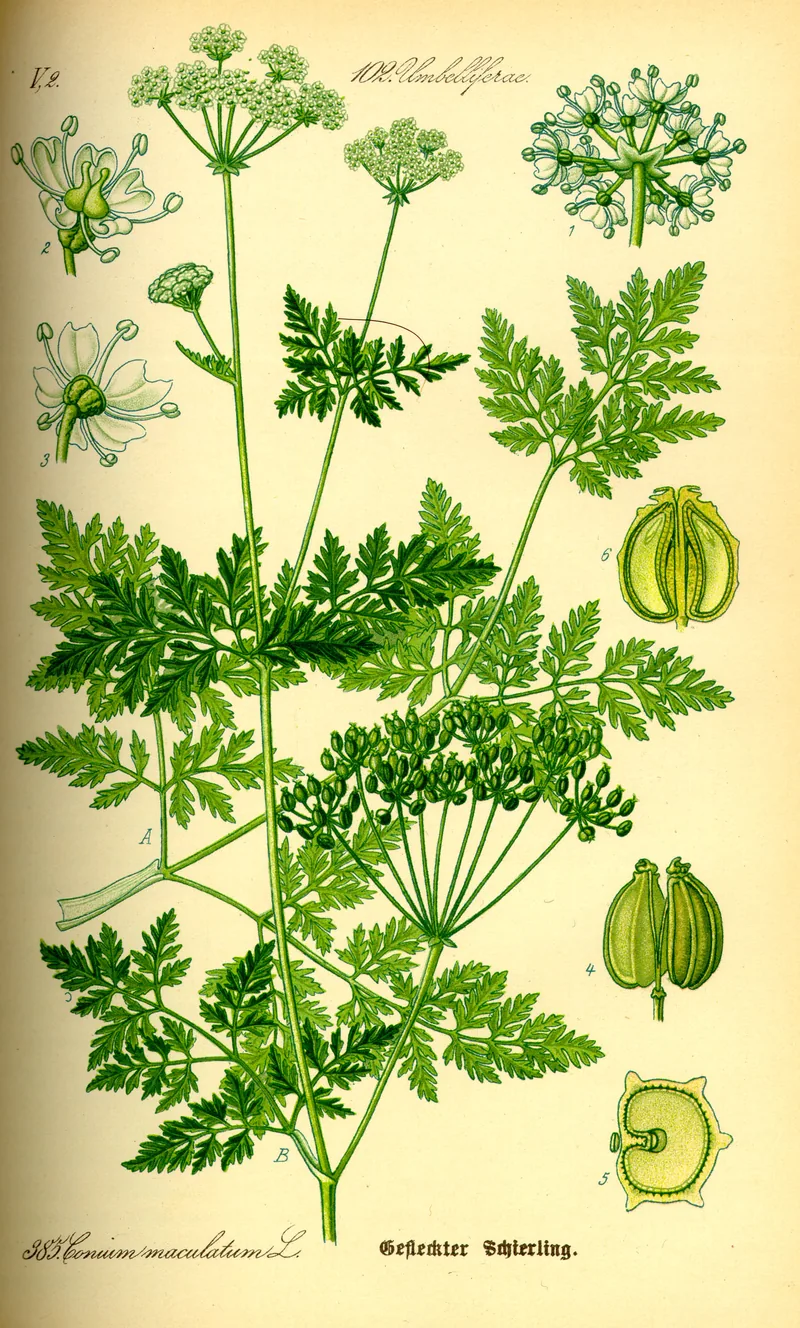
116e “But, Socrates,” Crito said, “I believe sunlight is still on the mountains; the sun has not set yet. And I know other men have waited until very late to drink after the order came, eating and drinking their fill meanwhile; some have even slept with whoever they happened to desire. Do not rush: there is still time.”
“Those you mention, Crito,” Socrates said, “have good reason for doing that—they believe it gains them something—and I have good reason for refusing. For I do not 117a expect to gain anything from drinking a little later, except to become ridiculous to myself, clinging to life and hoarding it when nothing remains. Come,” he said, “listen to me, and don’t refuse.”
On hearing this, Crito nodded to the slave standing nearby. The slave left and, after a considerable time, returned with the man who was to administer the poison; he carried it in a cup, already ground. When Socrates saw him, he said, “Very well, my good man. Since you understand these things, what should I do?”
“Only drink it,” he replied, “then walk until you feel heaviness 117b in your legs; after that, lie down, and it will do its work.”
He held out the cup as he spoke. Socrates took it with complete good humor, Echecrates, and did not tremble or change color or expression, but gave the man his usual upward look from under his brows, like a bull. “What do you say to pouring some of this drink as a libation91 to a god?” he asked. “Is it allowed or not?”
“We grind only what we believe is the proper amount to drink, Socrates,” he said.
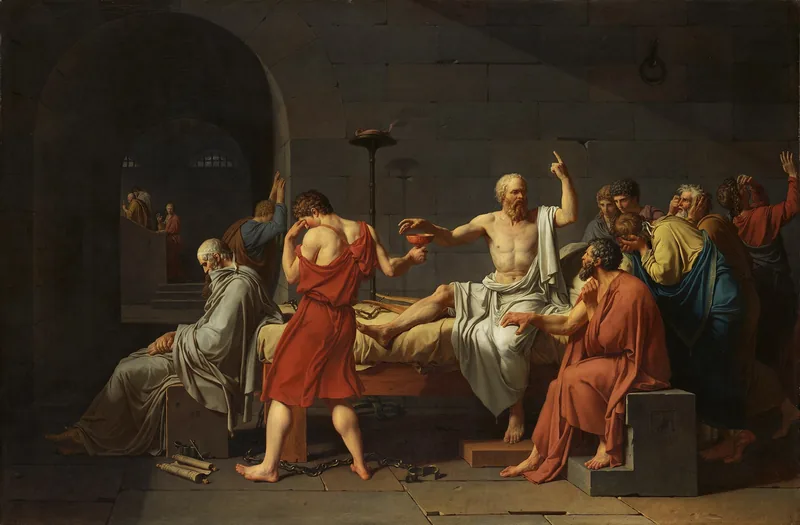
117c “I see,” he replied. “Still, surely we can and should pray to the gods that the move from here to there will go well. That is my prayer; may it be so.”
With that, he lifted the cup and drained it, quite readily and easily. Until then, most of us had managed fairly well to hold back our tears, but when we saw him drink, and then saw that he had finished, we could no longer contain them. My own tears poured out in spite of me; I covered my face and wept for myself—for I was not weeping for him but for my own fate in losing such 117d a friend.
Crito had already stood up, unable to hold back his tears even before I lost control of mine. Apollodorus, who had never stopped crying, now let out a bellow of grief and anguish that broke down everyone present except Socrates himself.
“What a way to behave, you extraordinary men!” he said. “This was one of my chief reasons for sending the women away: to prevent them from 117e making such a disturbance. For I have heard that one should die with no words of ill omen.92 Be quiet, and hold firm.”
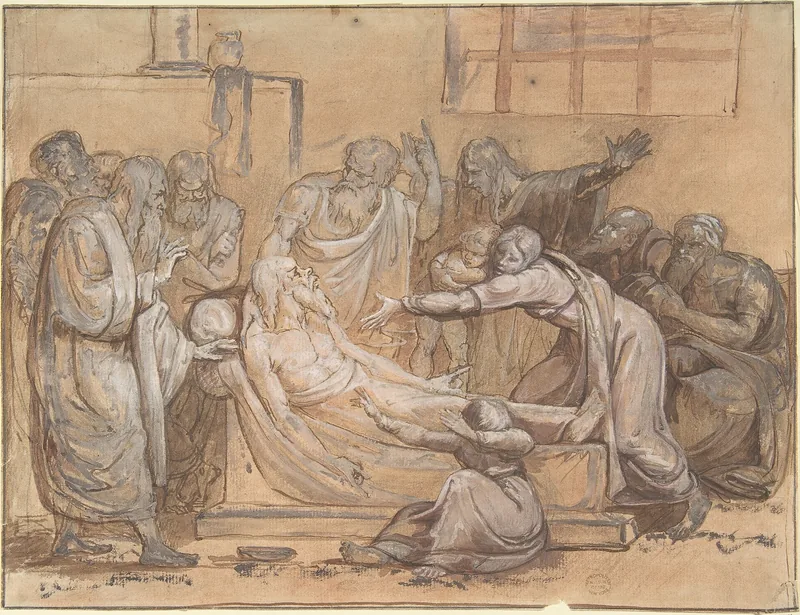
We were ashamed when we heard this and checked our tears. After walking about, Socrates said his legs were growing heavy and lay flat on his back, as the man had instructed. The attendant who had given him the poison touched him and, after an interval, examined his feet and legs. He pressed hard on Socrates’s foot and asked whether he felt it. 118a Socrates said no.
Next he did the same to his lower legs. As he worked upward, he showed us that Socrates was becoming cold and stiff. The attendantbd continued feeling him and said that once it reached the heart, Socrates would be gone.
By about this time his lower belly was growing cold. He uncovered himself—he had been covered—and spoke what proved his last words: “Crito, we owe Asclepius93 a rooster. Paybe what we owe, and don’t neglect it.”
“It will be done,” Crito said. “But see if there is anything more you wish to say.”
He gave no further answer to Crito’s question. After a short interval, he moved. The man uncovered him; his eyes were fixed. Crito saw this and closed his mouth and eyes.94
That was our friend’s end, Echecrates: a man who, we would say, was the best of all we knew in his time, and also the wisest and most just.


