10.1 Will you ever, my soul, be good and simple, undivided and naked, more visible than the body wrapped around you? Will you ever taste what it is to be loving and affectionate? Will you ever be full and need nothing, longing for nothing and craving nothing, living or lifeless, for the enjoyment of pleasure? Nor time in which to enjoy it longer? Nor a place or country or mild climate? Nor people who suit you? But will you be content with your present condition and happy with everything you have? Will you convince yourself that everything you have comes from the gods, that all is well with you and will be well—whatever pleases them and whatever they intend to give to preserve the perfect living being, good and just and beautiful, which gives birth to everything, holds everything together, contains everything, and takes things back as they dissolve to produce others like them? Will you ever be able to live as a fellow citizen with gods and humans, neither finding any fault with them nor being condemned by them?
10.2 Watch what your nature asks of you as a being governed by nature alone; then do it and accept it, provided it will not leave your nature as a living creature worse off. Next, watch what your nature as a living creature asks of you, and accept all of it, provided it will not leave your nature as a rational living creature worse off; being rational also means being social. Use these rules, then, and do not busy yourself needlessly.
10.3 Everything that happens is either something you are naturally able to bear or something you are not naturally able to bear. If what happens is something you are naturally able to bear, do not resent it; bear it as you are naturally able to. If it is something you are not naturally able to bear, do not resent it: it will perish once it has consumed you. Remember, though, that you are naturally able to bear anything your own judgment can make bearable and tolerable through the impression that doing so benefits you or is your duty.
10.4 If someone goes wrong, teach him kindly and show him what he is overlooking. If you cannot, blame yourself—or not even yourself.
10.5 Whatever happens to you was prepared for you from eternity, and from everlasting the interwoven causes were spinning your existence together with that event.
10.6 Whether atoms or nature, let this first be settled: I am part of the whole governed by nature; next, I have a certain close bond with the parts of the same kind as myself. For, remembering this, as a part I will resent nothing allotted to me from the whole, because nothing that benefits the whole harms the part. The whole, after all, contains nothing that does not benefit itself; all natures share this, but the nature of the universe has the further advantage that no outside cause can force it to produce anything harmful to itself.
So, remembering that I am part of such a whole, I will be content with everything that happens; and since I have a certain close bond with the parts of the same kind, I will do nothing antisocial, but concern myself instead with those parts, directing every impulsea toward the common benefit and away from its opposite. With things carried through in this way, life must flow smoothly, just as you might imagine the life of a citizen flowing smoothly when he keeps doing things that benefit his fellow citizens and welcomes whatever the city assigns him.
10.7 The parts of the whole—all that the universe contains by nature—must perish; let “perish” here mean “change.” But if this is both harmful and necessary for them by nature, the whole would not run well, with its parts passing into change and constituted to perish in different ways. For did nature herself set out to harm her own parts, making them liable to harm and bound to fall into it, or did she fail to notice that such things were happening? Neither is believable.
Even if someone leaves nature out of it and explains these things as simply natural, it is still ridiculous to say that the parts of the whole naturally change and at the same time be surprised or resentful as though something unnatural were happening, especially when each thing dissolves into the things it consists of. For either the elements of which it was compounded scatter, or its solid part turns to earth and its breath to air, so that these too are taken back into the reason of the whole, whether the whole burns up in cycles or renews itself through everlasting exchanges.
And do not imagine that the solid part and the breath are what you had at your first beginning: all this received its influx only yesterday and the day before, from food and the air you breathe in. So what changes is what it took in, not what your mother gave birth to. Suppose, though, that this later materialb binds you very closely to the distinct individual your mother bore; I think that has no bearing on the present argument.c
10.8 Having given yourself these names—good, modest, truthful, clear-minded,d like-minded, high-minded—take care never to change them; and if you lose them, return to them quickly. Remember what you intended by “clear-minded”: discerning attention to each thing, with nothing left unconsidered; by “like-minded”: willing acceptance of what the common nature assigns; by “high-minded”: raising the thinking part above the smooth or rough movements of the flesh, above paltry fame and death and all such things.
Then, if you keep yourself true to these names without craving to have others call you by them, you will be a different person and enter a different life. For to remain what you have been until now, torn and fouled in such a life, marks a man utterly senseless and clinging to life, like those half-eaten men who fight wild beasts,1 who, covered in wounds and gore, still beg to be kept alive until tomorrow, only to face the same claws and bites in that condition.
Settle yourself, then, in these few names, and if you can remain there, remain, as though you had moved to some Isles of the Blessed.2 But if you feel yourself slipping out and losing your hold, go boldly into some corner where you can regain it, or even leave life altogether, without anger, simply, freely, and modestly, having done at least this one thing in life: leaving it in this way.
Yet remembering the gods will greatly help you remember these names: they want no flattery, but all rational beings to become like themselves, and a fig tree to do a fig tree’s work, a dog a dog’s, a bee a bee’s, and a human being a human being’s.
10.9 Playacting, war, panic, stupor, slavery. Day by day those sacred principles of yours will be wiped away—all those you entertain and let pass without examining nature.e Yet you must look at everything and act in such a way that you accomplish the practical task and keep reflection active at the same time, while the confidence that comes from knowledgef of each thing is preserved, unnoticed but not hidden. For when will you enjoy simplicity? When dignity? When will you know each thing: what it is in substance, what place it has in the universe, how long it naturally lasts, what it is made of, to whom it can belong, and who can give it or take it away?
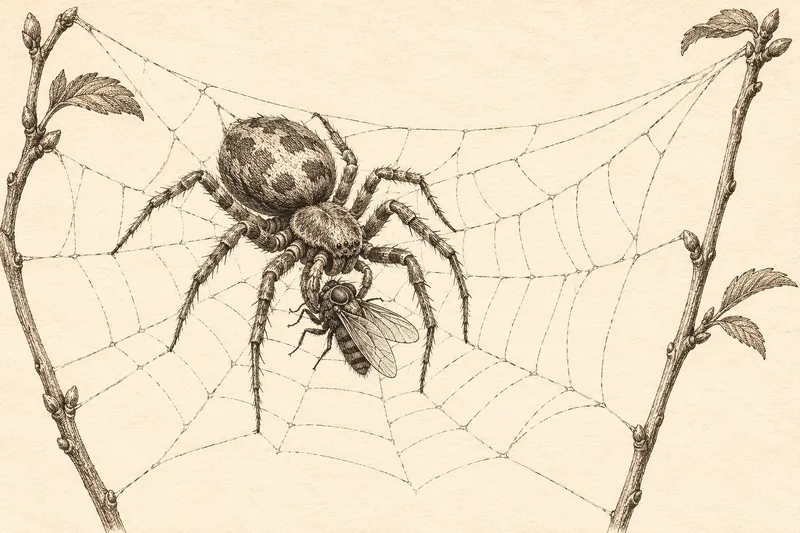
10.10 A little spider thinks highly of itself for catching a fly; one man for catching a little hare, another a sprat in a hand net, another little boars, another bears, another Sarmatians.3 Aren’t they robbers, after all, if you examine their principles?
10.11 Learn a method for examining how everything changes into everything else, and keep paying attention and practicing this part of your study: nothing does more to produce greatness of mind. Such a man has shed his body and, realizing that he must very soon leave all this behind and depart from humankind, has committed himself wholly to justice in his own actions and to the nature of the whole in everything else that happens. What anyone will say or think about him, or do against him, never enters his mind; he is content with two things—to act justly in what he does now and to love what is allotted him now. He has let go of every consuming concern and pursuit, and wants only to keep a straight course by way of the law and follow the god who keeps a straight course.g
10.12 What need is there for guesswork, when you can consider what needs doing and, if you see clearly, go that way with goodwill and without turning aside? If you do not see clearly, hold back and consult the best advisers; if other things oppose this, go forward thoughtfully with the means at hand, holding to what seems just. For attaining this is best, since failureh consists in falling away from it.i Anyone who follows reason in everything is at once unhurried and quick to act, cheerful and composed.
10.13 Ask yourself as soon as you wake: “Will it make any difference to you if someone else criticizes what is just and right?”j It will make no difference. Have you forgotten what these people who bluster over praising or blaming others are like in bed and at table, what they do, what they avoid, what they pursue, what they steal and plunder—not with hands and feet but with the most precious part of themselves, which, whenever it chooses, becomes faithfulness, modesty, truth, law, a good daimon?
10.14 The educated, modest person says to nature, who gives everything and takes it back, “Give what you want. Take back what you want.” He says this without defiance, simply obeying her and wishing her well.
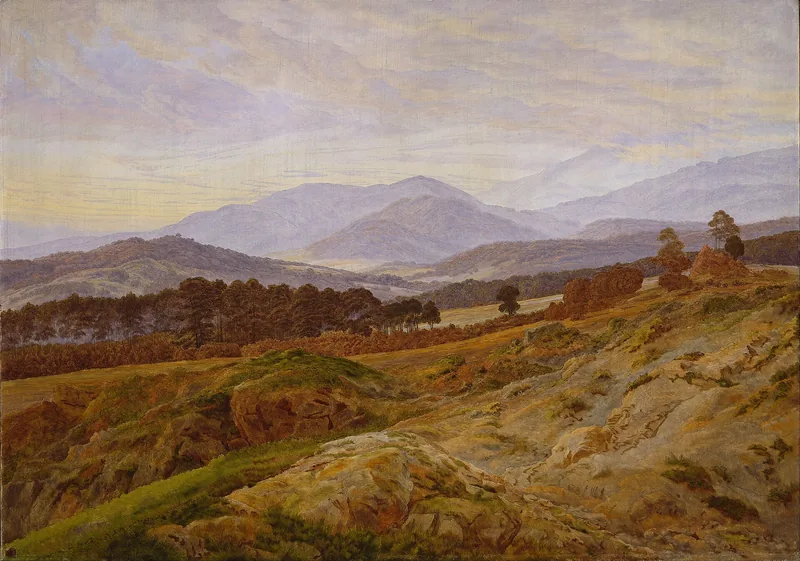
10.15 There is little left. Live as if on a mountain: it makes no difference whether you are there or here, if wherever you are you live in the universe as in a city. Let people see and observe a real human being living in line with nature. If they cannot bear it, let them kill you: that is better than living like this.
10.16 No more talk about what a good man should be like; be one.
10.17 Keep constantly before you the impression of all time and all substance, and of each individual thing as a fig seed in relation to substance and a turn of a drill in relation to time.
10.18 Pause over each thing before you and consider it as already dissolving and changing, passing, as it were, into rot or dispersal, or, so to speak, dying according to its own nature.
10.19 What they are like eating, sleeping, mating, defecating, and the rest! And then what they are like playing the master and puffing themselves up, or raging and rebuking from on high!k Yet only a little while ago, how many they were slaves to, and for what! And in a little while they will be in such a state.
10.20 What the nature of the whole brings to each thing benefitsl each thing, and benefits it when she brings it.
10.21 > “Earth4 is in love with rain, and the majestic sky is in love.”
And the universe is in love with bringing about whatever is going to happen. So I say to the universe, “I share your love.” Is that also what we mean when we say, “This lovesm to happen”?
10.22 Either you live here, and you are already used to it; or you leave, and that is what you wanted; or you die, and your service is over. Beyond these, nothing. So take heart.
10.23 Always keep this clear: the country is like this too, and everything here is the same as on a mountaintop, on the seashore, or wherever you please. For you will find exactly what Plato5 says: “Surrounding himself with a pen on a mountain and milkingn bleating flocks.”
10.24 What is my ruling part,o and what am I making it now? What exactly am I using it for now? Is it empty of mind? Is it detached and torn away from fellowship? Has it melted into and blended with this scrap of flesh, so that it changes along with it?
10.25 A man who runs from his master is a runaway slave; the master is law,p so the man who breaks the law is a runaway slave. But anyone who is grieving, angry, or afraid also wishes that something decreed by the ruler of all things had not happened, were not happening, or would not happen; that ruler is law, which allots to each what falls to him. So anyone who is afraid, grieving, or angry is a runaway slave.
10.26 A man releases seed into a womb and goes away; then another cause takes over, works on it, and produces a baby. What a result from such a beginning! Again, he sends food down his throat; then another cause takes over and produces sensation and impulse—in short, life and strength and other things, how many and of what kinds! So examine these things that happen so completely hidden, and see the power at work, just as we see the power that draws things down and the power that carries them up: not with our eyes, but no less clearly.
10.27 Keep thinking how everything happening now has happened before, and think of it happening in the future. Set before your eyes entire dramas and scenes of the same kind, all those you know from your own experience or earlier history: the whole court of Hadrian, the whole court of Antoninus Pius, the whole court of Philip,6 of Alexander the Great, of Croesus. For all those things were like these, only enacted by different people.
10.28 Picture everyone who is distressed or dissatisfied about anything as a little pig being sacrificed, kicking and squealing; the man who lies alone on his little bed, grieving in silence, is just like it. Think of the bonds that hold us, and of how only the rational living creature has been granted the power to follow events willingly, while merely following them is necessary for all.q
10.29 As you stop to consider each thing you do, ask yourself: “Is death dreadful because it means losing this?”
10.30 When someone’s mistake offends you, turn at once and consider what similar mistake you make—judging money to be a good, for example, or pleasure, or paltry fame, and the like. For thinking of this will quickly make you forget your anger, as the further thought occurs that he is being forced: what is he to do? Or, if you can, take away what is forcing him.
10.31 When you see Satyrion,7 picture Socraticus,r Eutyches, or Hymen; when you see Euphrates, picture Eutychion or Silvanus; when you see Alciphron, picture Tropaeophorus; when you see Severus,8 picture Crito, Socrates’s friend, or Xenophon, the soldier and writer; when you look at yourself, picture one of the Caesars; do the corresponding thing in each case. Then let this thought strike you too: “Where are they, then?” Nowhere, or somewhere or other. For this is how you will continually see human affairs as smoke and nothing, especially if you also remember that what has changed once will never exist again in all infinite time.
Why strain, then? Why are you not content to pass this short time decently? What material and opportunity you are running away from! What are all these things, after all, but exercises for reason that has looked closely at the things of life and examined their nature? Persist, then, until you have assimilated these things too, just as a healthy stomach assimilates everything, and a blazing fire makes flame and light out of anything you throw into it.
10.32 Let no one be able to say truthfully that you are not simple or not good; let anyone who thinks either of these things about you be a liar. All this is up to you. For who can stop you from being good and simple? Only decide that you will not go on living if you are not going to be like this: reason does not favor living otherwise either.
10.33 Given this material, what is the soundest thing you can do or say? For whatever it is, you can do it or say it; do not plead that you are being prevented. You will not stop groaning until you feel that doing what suits the human constitution, with the material placed before you and put in your way, is to you what luxury is to those who live for pleasure. You must, after all, regard as enjoyment everything you can do in line with your own nature, and you can do this everywhere.
Now a cylinder cannot move in its own way everywhere, nor can water, fire, or the other things governed by nature or an irrational soul, because many things block them and stand in their way; but mind and reason can pass through every obstacle as is their nature and as they wish. Keep before your eyes the ease with which reason will pass through everything, like fire rising, a stone falling, a cylinder rolling downhill, and ask for nothing more. After all, other obstacles either affect your little body, that dead thing, or do not crush you or do any harms at all without your judgment and reason’s own surrender. For otherwise the person who suffers would himself immediately become bad. In all other things with a definite constitution, at any rate, any harm they suffer makes them worse; but here a person, if one may say so, becomes better and more praiseworthy by using what comes his way rightly.
In general, remember that nothing harms someone who is a citizen by nature unless it harms the city, nor harms the city unless it harms law; none of these so-called misfortunes harms law. So what does not harm law harms neither city nor citizen.
10.34 For someone steeped in true principles, even the shortest, most commonplace saying is enough to recall freedom from grief and fear; for example:
“Leaves9—some the wind scatters on the ground; so it is with a generation of men.”
Your little children too are little leaves; little leaves too are those who shout so authoritatively and cheer, or on the contrary curse, or quietly criticize and jeer; little leaves too are those who will carry on your reputation after your death. For all of them
“come into being in the season of spring.”
Then the wind has thrown them down; then the forest grows others in their place. A short life is common to all, yet you avoid and pursue everything as though it would last forever. A little while and you will close your eyes; another will already be mourning the man who carried you to your grave.
10.35 A healthy eye must see everything visible and not say, “I want green10 things”: that is a sign of a diseased eye. Healthy hearing and smell must be ready for every sound and smell, and a healthy stomach must respond to all food as a mill does to everything it was made to grind. So healthy thought must be ready for everything that happens, while thought that says, “Let my little children be safe,” and “Let everyone praise whatever I do,” is an eye looking for green things or teeth looking for soft ones.
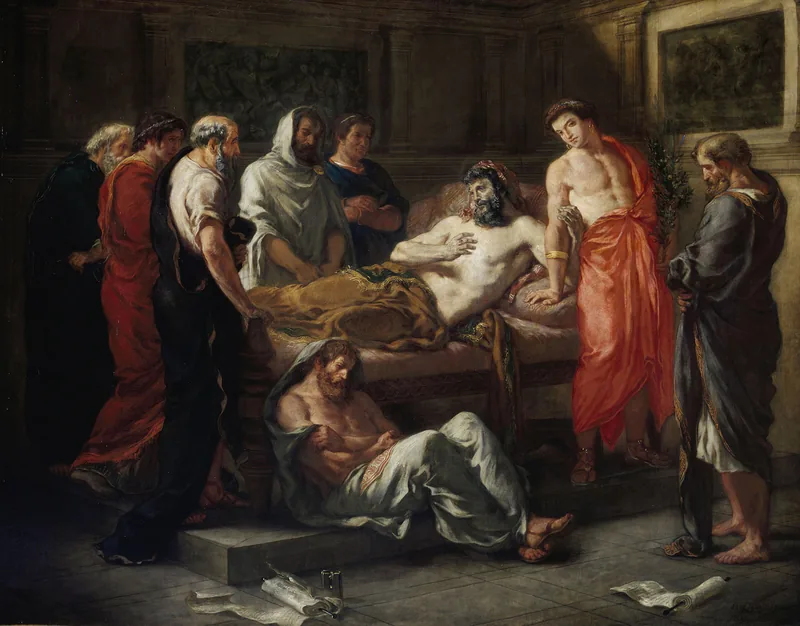
10.36 No one is so fortunate that, as he dies, there will not be people standing beside him who welcome the misfortune. Suppose he was a good and wise man; will there not be someone saying to himself at the very end, “At last we will breathe freely, away from this tutor!11 He was harsh to none of us, but I felt he was quietly condemning us”? This is what happens with the good man; with us, how many other reasons there are for a crowd to want us gone! So think of this as you die, and you will leave more easily, reflecting: “I am leaving a life in which the very people who shared it with me, for whom I struggled, prayed, and cared so much, themselves want me to go, hoping perhaps to gain some further ease from it. Why, then, would anyone cling to a longer stay here?”
Yet do not leave with less goodwill toward them because of this; keep your own character, friendly, well disposed, and gentle. Nor go as if you were being torn away: as the little soul slips easily out of the body when someone dies peacefully, so your departure from these people must be. For nature bound you to them and blended you with them, but now she dissolves the bond. I am being parted as from people close to me, yet without resistance or compulsion: this too is in line with nature.
10.37 Make a habit, as far as possible, of asking yourself about everything anyone does: “What is he aiming at with this?” But start with yourself, and examine yourself first.
10.38 Remember that what pulls the strings is the thing hidden inside: that is eloquence, that is life, that, so to speak, is the human being. Never picture it together with the vessel around it or these little instruments molded onto it: they are like an adze, differing only in being naturally attached. For these parts are no more useful without the cause that moves and restrains them than a shuttle is without the woman weaving, a reed pen without the writer, or a little whip without the charioteer.

