4.1 When what rules within is in line with nature, it responds to events by always adapting easily to what is possible and available. For it is attached to no particular matter,a but directs its impulse toward its primary objectives with a reservation, while turning whatever obstructs it into matter for itself, like a fire that masters whatever falls into it. These things would put out a little lamp, but a blazing fire at once takes what is piled on it into itself, consumes it, and rises higher because of those very things.
4.2 Do nothing at random, and nothing except in line with a principle that perfects the art.
4.3 People look for retreats in country houses, on seashores, and in the mountains, and you too are used to craving such retreats. But this is utterly unphilosophical, when you can retreat into yourself whenever you choose. For nowhere can a person retreat with more quiet or less trouble than into his own soul, especially if he has things within him that bring complete ease as soon as he looks into them; and by ease I mean nothing but good order. So keep giving yourself this retreat and renew yourself. Let the thoughts be brief and basic, enough to wash away all distress as soon as you encounter them and send you back without resentment to the things you return to.
What, after all, will you resent? People’s wickedness? Recall the judgment that rational creatures exist for one another, that putting up with others is part of justice, and that people do wrong unwillingly, and how many who once feuded, suspected, hated, and crossed spears now lie dead, reduced to ashes—and stop at last.
Or will you resent what the whole assigns you? Recall the alternative—either providenceb or atoms—and all the arguments that have established that the universe is like a city.
Or will bodily things still get a grip on you? Remember that the thinking part, once it has withdrawn into itself and recognized its own authority, does not mix with the breath1 moving smoothly or roughly; remember, too, everything you have heard and assented to about pain and pleasure.
Or will your paltry fame distract you? Look at how quickly everything is forgotten, the abyss of time stretching endlessly in both directions, the empty echo, the fickleness and lack of judgment of those who seem to praise you, and the narrow confines of the place it occupies. For the whole earth is a point, and how small a corner of it is this place where you live? And here, how many will praise you, and what are they like?
So from now on remember your retreat into this little plot of your own, and above all do not be pulled about or strain yourself; be free, and look at things as a man, as a human being, as a citizen, as a mortal creature. Among the thoughts you keep closest at hand to look into, let these two be there: first, things do not touch the soul but stand outside it, unmoving, while disturbances come only from the judgment within; second, everything you see will soon change and cease to be. Keep thinking, too, of how many changes you have already witnessed. The universe is change; life is judgment.
4.4 If mind is shared by us all, the reason that makes us rational is shared too; if so, the reason that commands what to do and what to leave undone is shared; if so, so is law; if so, we are fellow citizens; if so, we share in a commonwealth; if so, the universe is like a city. For what other commonwealth could anyone say the whole human race belongs to? From there, from this shared city, we get mind itself, reason, and our sense of law—or where else? For just as the earth in me is a portion of some earth, the moisture comes from another element, the breath from some source, and the heat and fire from a source of their own—since nothing comes from nothing or passes into nothing—so mind too comes from somewhere.
4.5 Death, like birth, is a mystery of nature:c a joining of the same elements, a dissolution into the same elements. There is nothing at all shameful in it, since it is neither out of keeping with a creature that has a mind nor contrary to the reason of its constitution.
4.6 People of this kind are bound by nature to do things of this kind, and anyone who wants it otherwise wants a fig tree to have no sap. But remember this in any case: in a very short time both you and this man will be dead, and a little later not even your names will remain.
4.7 Remove the judgment, and “I have been harmed” disappears; remove “I have been harmed,” and the harm disappears.
4.8 What does not make a human being worse than he was does not make his life worse either or harm him from outside or within.
4.9 The nature of what is beneficial is bound to do this.
4.10 “Everything that happens happens justly”2: if you watch closely, you will find this true. I do not mean merely in sequence, but in accordance with justice, as though someone were allotting what each deserves. So keep watch as you began, and whatever you do, be good in doing it—good in the precise sense of the word. Preserve this in every action.
4.11 Do not judge things as the man who abuses you judges them, or as he wants you to judge them; see them as they really are.
4.12 You must always be ready for two things: to do only what the reason of the kingly and lawgiving artd suggests for people’s benefit, and to change your position if someone comes along who corrects you and leads you away from an assumption. But the change must always rest on something convincing, such as justice or benefit to the community, and the grounds that move youe must be of this kind alone, not that something seems pleasant or prestigious.
4.13 “Do you have reason?”
“I do.”
“Why don’t you use it, then? After all, if it does its own work, what else do you want?”
4.14 You came into being as a part. You will vanish into what brought you into being—or rather, through change you will be taken back into its seed principle.f
4.15 Many little lumps of frankincense3 on the same altar: one fell earlier, another later; it makes no difference.
4.16 Within ten days you will seem a god to the very people who now see you as a wild beast and an ape, if you return to your principles and reverence for reason.
4.17 Do not live as though you had ten thousand years ahead of you. Death hangs over you. While you live, while you can, become good.
4.18 How much free time a man gains by paying no attention to what his neighbor said or did or thought, but only to what he does himself, to see that it is just and pious, or as befits a good man.g Do not look around at a malicious character, but run straight along the line without distraction.
4.19 The man who is frantic for fame after death does not imagine that everyone who remembers him will himself very soon die, then his successor in turn, until all memory is extinguished as it passes through people who flare up and go out. But suppose that those who will remember are immortal, and the memory immortal: what is that to you? I am not speaking of the dead, for whom it means nothing, but what is praise to the living, except perhaps for some practical purpose? After all, set aside nature’s gift for now as out of place here; it belongs to another discussion.h
4.20 Everything that is beautiful in any way is beautiful in itself and complete in itself; praise is no part of it. So what is praised becomes neither worse nor better. I say this even about things called beautiful in ordinary speech, such as material objects and works of craftsmanship—for what does the truly beautiful need? No more than law does, no more than truth, no more than goodwill or a sense of shame. Which of these is beautiful because it is praised, or spoiled when it is blamed? Does an emerald become worse if it is not praised? What about gold, ivory, purple cloth,4 a lyre, a little knife, a little flower, a small tree?
4.21 If souls persist,5 how has the air held them from eternity? But how has the earth held the bodies of those buried over such an age? For just as bodies here, after lasting for some time, change and dissolve to make room for other dead bodies, so souls that move into the air hold together for a time, then change, spread out, and catch fire as they are taken back into the seed principle of the whole, making room in this way for those that arrive to share their dwelling. That is an answer one could give on the assumption that souls persist.
But you must consider not just the number of bodies buried in this way, but also the animals eaten every day by us and by other animals. What a number are consumed and in a sense buried in the bodies of those who feed on them! And yet there is room for them, because they turn into blood, because they change into air or fire. How do we inquire into the truth here? By dividing things into the materiali and the causal.
4.22 Do not wander, but give justice its due in every impulse and preserve a secure grasp of thingsj in every impression.
4.23 Everything that is harmonious with you is harmonious with me, universe; nothing that comes at the right time for you is too early or too late for me. Everything your seasons bear is fruit for me, nature; from you everything, in you everything, to you everything. The poet says,
“Dear city of Cecrops,”6
but won’t you say,
“Dear city of Zeus”?
4.24 “Do little,” the philosopher says, “if you are to be cheerful.”7 Wouldn’t it be better to do what is necessary, what reason in a creature social by nature calls for, and in the way it calls for? For this brings not only the cheerfulness of acting well but also that of doing little. Since most of what we say and do is unnecessary, anyone who cuts it away will have more free time and greater calm.k So at every step you must remind yourself: “Is this one of the unnecessary things?” But you must cut away not only unnecessary actions but also unnecessary impressions, since then no superfluous actions will follow.
4.25 Try the life of a good human being too, and see how it suits you—one pleased with what the whole assigns him and content with his own just actions and kindly disposition.
4.26 You have seen those things; look at these too. Do not disturb yourself; make yourself simple. Does someone do wrong? He wrongs himself. Has something happened to you? Good. Whatever happens was fated for you and spun together with you from the beginning, out of the whole. In general, life is short; make the most of the present with sound reasoning and justice. Be sober, without strain.
4.27 Either a universel set in order or a jumble all stirred together. Yet there is order.m Or can there be some order in you, but disorder in the whole, when all things are so distinct, so widely scattered, and responsive to one another?
4.28 A malicious character, an effeminate character, a stubborn character, bestial, cattlelike, childish, stupid, counterfeit, buffoonish, huckstering, tyrannical.
4.29 If someone who does not know what is in the universe is a stranger to it, someone who does not know what happens in it is no less a stranger. An exile is the man who flees the reason of civic life; a blind man, the man who shuts his mind’s eye; a beggar, the man who needs another and does not have in himself all he needs for life; an abscess on the universe,n the man who stands apart and separates himself from the reason of our common nature by resenting what happens, since the nature that brings this about also brought you into being; a fragment torn from the city, the man who tears his own soul away from the soul of rational creatures, which is one.
4.30 One man practices philosophy without a tunic,8 another without a book. Here is another, half naked: “I have no bread,” he says, “and I hold to reason.”
But I have no nourishment from learning, and I hold to reason.o
4.31 Love the little art you have learned; find rest in it. Spend the rest of your life as one who has entrusted all he has to the gods with his whole soul, while making yourself neither anyone’s tyrant nor anyone’s slave.
4.32 Think, for example, of the days of the emperor Vespasian:9 you will see all the same things—people marrying, raising children, falling ill, dying, waging war, celebrating festivals, trading, farming, flattering, behaving arrogantly, suspecting, plotting, wishing some people dead, grumbling at the present, falling in love, hoarding, craving consulships and royal power. So that life of theirs no longer exists anywhere.
Go on to the time of the emperor Trajan:10 again, all the same things; that life too is dead. Similarly, look through the records of other times and entire peoples, and see how many strained hard, soon fell, and dissolved into the elements. Above all, recall those you yourself knew who were convulsed over empty things, neglecting to do what suited their own makeup, to hold firmly to it, and to be content with it. Here you must remember that the attention given to each action has its own proper value and proportion. For then you will not lose heart if you spend no more time than you should on lesser things.
4.33 Words once familiar are now obscure; so too, in a way, are the names of those once much celebrated: Camillus,11 Caeso, Volesus, Dentatus, and little by little Scipio and Cato too, then Augustus too, then Hadrian and Antoninus Pius. For everything fades and quickly turns to legend, and soon complete oblivion has buried it. I am speaking here of those who shone with extraordinary brilliance; the rest, as soon as they breathe their last, are
“unseen, unheard of.”12
What, after all, is perpetual remembrance? All emptiness. What, then, deserves our effort? This one thing: just thought, actions for the community, speech that never lies, and a disposition that welcomes everything that happens as necessary, as familiar, as flowing from such an origin and source.
4.34 Yield yourself willingly to Clotho,13 letting her spin you together with whatever events she chooses.
4.35 Everything is for a day: what remembers and what is remembered.
4.36 Keep watching how everything comes into being through change, and train yourself to see that the nature of the whole loves nothing so much as changing what exists and making new things like it. For everything that exists is in a sense the seed of what will come from it; but you imagine that the only seeds are what is sown in the earth or a womb, and that is very unphilosophical.
4.37 You will soon be dead, and still you are neither simple nor calm nor free from the suspicion that things outside you might harm you, nor kindly toward everyone, nor convinced that wisdom lies in acting justly alone.
4.38 Look into their ruling parts,p and observe the wise—what they avoid and what they pursue.
4.39 What is bad for you does not lie in someone else’s ruling part, or in some change or alteration of what surrounds you.q Where, then? In the part of you that judges things to be bad. So let that part make no such judgment, and all is well. Even if the thing closest to it—your little body—is cut or burned, festers or rots, still let the part that judges these things remain quiet: that is, let it judge that nothing is either bad or good if it can happen equally to a bad man and a good man. For what happens equally to someone living contrary to nature and to someone living in line with nature is neither in line with nature nor contrary to nature.
4.40 Keep thinking of the universe as one living creature, with one substance and one soul, and how all things pass into its single perception, how it does everything with a single impulse, how all things are joint causes of all that happens, and how they are spun and wound together.
4.41 “You are a little soul carrying a corpse,” as Epictetus used to say.14
4.42 Nothing is bad for things undergoing change, just as nothing is good for things that come into being through change.
4.43 Time is a river of events, a violent current: as soon as each thing comes into view it has been swept past, another is sweeping past, and another will be swept along.
4.44 Everything that happens is as usual and familiar as a rose in spring and fruit in summer, for so are illness, death, slander, plotting, and everything that delights or distresses fools.
4.45 What follows always arises with an affinity to what came before. For this is not a tally of disconnected things with only necessity to link them, but a rational connection, and just as existing things are set in harmonious order, so what happens shows not bare succession but a remarkable affinity.
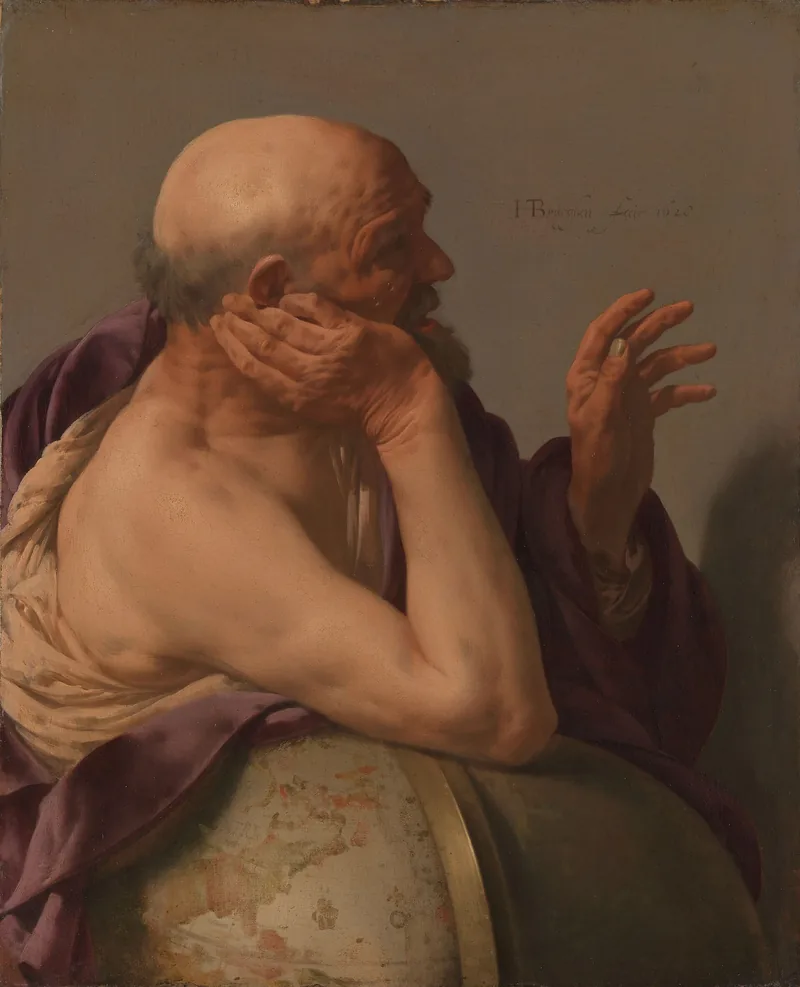
4.46 Always remember Heraclitus’s saying:15 earth’s death is to become water, water’s death to become air, air’s to become fire, and back again. Remember, too, the man who forgets where the road leads16; that people are at odds with what they are in the closest constant contact with, the reason that governs the whole; that what they encounter every day seems strange to them; that we should not act and speak like sleepers, since even in sleep we seem to act and speak; and that we should not act like children following their parents—that is, simply as we have been taught.
4.47 Just as, if one of the gods told you, “You will die tomorrow or, at any rate, the day after,” you would no longer think it mattered much whether it was the day after rather than tomorrow, unless you were utterly cowardlyr—for how small is the interval?—so think it no great matter to die many years from now rather than tomorrow.
4.48 Keep thinking how many doctors have died after often knitting their brows over the sick; how many astrologers, after predicting other people’s deaths as if it were a great achievement; how many philosophers, after making countless emphatic assertions about death or immortality; how many heroes, after killing many people; how many tyrants, after using their power over people’s lives with terrible arrogance, as if they were immortal; how many entire cities, so to speak, have died—Helice,17 Pompeii, Herculaneum, and countless others.
Go through those you know, too, one by one: one buried this man and was then laid out himself; another buried that man; and all in a short time. For the point is always to see human things as short-lived and paltry: yesterday a bit of mucus,s tomorrow cured flesh or ashes. So pass this instant of time in line with nature and reach your end in good spirits, as a ripe olive might fall, praising the eartht that bore it and grateful to the tree that grew it.
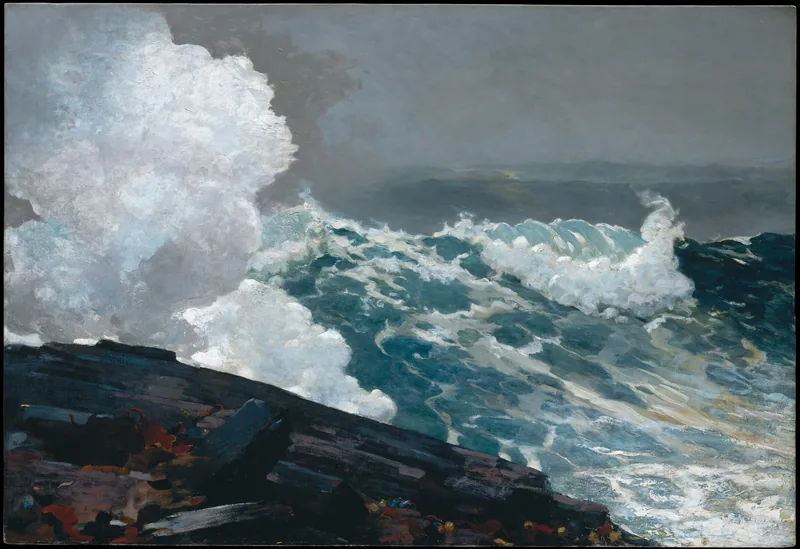
4.49 Be like the headland against which the waves keep breaking: it stands firm, and around it the seething water falls asleep.
“How unlucky I am that this has happened to me!” No, rather: “How lucky I am that, though this has happened to me, I remain free from distress, neither crushed by the present nor afraid of what is coming.” For something like this could have happened to anyone, but not everyone would have remained free from distress through it. So why call that a misfortune rather than this good fortune? Do you call anything a human misfortune at all if it does not thwart human nature? And do you think anything thwarts human nature if it does not go against what that nature wants? What then? You have learned what it wants. Does what has happened prevent you from being just, magnanimous, self-controlled, sensible, deliberate, undeceived,u modest, free, and all the other things whose presence fulfills human nature? From now on, whenever something moves you to distress, remember to use this principle: “This is no misfortune, but bearing it nobly is good fortune.”
4.50 Remembering those who clung greedily to life is an unphilosophical but effective aid to despising death. What more do they have than those who died before their time? They certainly lie somewhere in the end—Caedicianus,18 Fabius, Julianus, Lepidus, and anyone else like them, who carried many others out to burial and were then carried out themselves. In all, the interval is small—and through how much, with what company, and in what a little body is it drained away! So do not make much of it. For look back at the gulf of time, and ahead at another infinity: in all this, what difference is there between someone who lives three daysv and someone who lives three generations?19
4.51 Always run the short route; the short route is the one in line with nature, so that you say and do everything in the soundest way. For a purpose like this frees you from toil and hesitation and all maneuvering and affectation.
