7.1 What is vice? What you have seen so often. And with everything that happens, keep this thought ready: this is what you have seen so often. Everywhere, high and low, you will find the same things: they fill the histories of ancient times, the intervening years, and the recent past; they fill cities and homes today. Nothing new. Everything familiar and short-lived.
7.2 How can your principles die unless the impressions that correspond to them go out—impressions it is up to you to keep rekindling? I can judge this as I should. If I can, why am I troubled? What lies outside my thought has nothing at all to do with my thought. Learn this, and you stand upright. You can come back to life. Look at things again as you used to: that is what coming back to life consists in.
7.3 The empty fuss of a procession, plays on a stage, flocks, herds, clashes of spears, a little bone thrown to little dogs, a scrap of bread into the fish tanks, ants laboring and hauling loads, little mice scurrying about in panic, little dolls pulled by strings.1 So take your place among these things with goodwill, without snorting in contempt, while remembering that each person is worth just as much as the things he takes seriously.
7.4 Follow what is said word by word and what is done impulse by impulse: with actions, see at once what goal they aim at; with words, watch what they mean.
7.5 Is my thought equal to this or not? If it is, I use it for the work as a tool given by the nature of the whole. If it is not, I either leave the work to someone who can do it better, unless duty requires otherwise, or do what I can, bringing in someone who, with help from my ruling part, can do what is timely and useful for the community. For whatever I do, by myself or with someone else, must aim at this alone: what benefits us all and fits our common life.
7.6 How many people once lavishly praised have already been handed over to oblivion, and how many who praised them have long since vanished!
7.7 Do not be ashamed to accept help. For your task is to do your part, like a soldier storming a wall. What, then, if you are lame and cannot climb the battlement alone, but can do it with someone else?
7.8 Do not let the future trouble you: you will reach it, if you must, carrying the same reason you now use to face the present.
7.9 Everything is woven together, and the bond is sacred; hardly anything is foreign to anything else. For things stand in an ordered relationship and together give order to the same universe. There is, after all, one universe made up of everything, one god pervading everything, one substance, one law—the reason shared by all thinking creatures—and one truth, if indeed there is also one perfection for creatures of the same kind who share the same reason.
7.10 All that is material very quickly vanishes into the substance of the whole, every cause is very quickly taken back into the reason of the whole, and the memory of everything is very quickly buried in eternity.
7.11 For a rational creature, the same action is both in line with nature and in line with reason.
7.12 Upright, not held upright.a
7.13 What the limbs of a body are when joined together, rational beings are when separate: they are built for a single shared task. You will grasp this more fully if you often tell yourself, “I am a memberb of the organized whole of rational beings.” But if, using the letter r, you call yourself a part, you do not yet love people from the heart; doing them good does not yet delight you as an end in itself. You still do it merely as the proper thing to do, not yet as doing good to yourself.
7.14 Let anything from outside strike whatever can suffer from its impact. For whatever suffers can complain if it likes, but unless I judge what has happened to be bad, I have not been harmed—and I am free not to judge it so.
7.15 Whatever anyone does or says, I must be good—as if gold or an emerald or purple dye kept saying, “Whatever anyone does or says, I must be an emerald and keep my own color.”
7.16 The ruling part does not disturb itself; I mean, for example, that it does not frighten itself into desire.c If someone else can frighten or distress it, let them; it will not turn itself toward such states through its own judgments. Let the little body worry, if it can, about not suffering harm, and let it say so if it suffers. But the little soul that feels fear and distress and forms judgments about all this will suffer nothing, for you will not lead it to such a judgment. The ruling part, so far as it depends on itself, needs nothing unless it creates a need for itself; likewise, it is untroubled and unhindered unless it troubles and hinders itself.
7.17 Happinessd is a good daimon, or a good ruling part. What are you doing here, then, impression? Go away, by the gods, the way you came: I have no need of you. But you have come out of old habit. I am not angry with you. Just go.
7.18 Does anyone fear change? For what can happen without change, and what is dearer or more congenial to the nature of the whole? Can you yourself bathe unless the wood2 changes? Can you be nourished unless the food changes? Can anything else useful be accomplished without change? Do you not see, then, that your own change is like this, and just as necessary to the nature of the whole?
7.19 All bodies pass through the substance of the whole as through a rushing stream, sharing its nature and working with it as our limbs work with one another. How many people like Chrysippus, how many like Socrates, how many like Epictetus has time already swallowed! Let the same thought occur to you about absolutely every person and thing.
7.20 Only one thing troubles me: that I myself might do something our human constitution does not want, or do it in a way it does not want, or do something it does not want now.
7.21 Soon you will have forgotten everything, and soon everyone will have forgotten you.
7.22 It is the mark of a human being to love even those who stumble. This happens when you also remember that they are your kin, that they go wrong through ignorance and unwillingly, that soon both you and they will be dead, and, above all, that the wrongdoer has not harmed you: he has not made your ruling part worse than it was before.
7.23 The nature of the whole molds a little horse from the substance of the whole, as if from wax, then melts it down and uses its matter for a little tree, then for a little man, then for something else; each of these exists for a very short time. There is nothing terrible for a box in being taken apart, just as there is nothing good for it in being put together.
7.24 A scowling face is deeply against nature; when the scowl is frequent, its beautye dies away or is finally extinguished, so that it cannot be rekindled at all. Try to grasp from this very fact that it is against reason. For if even the awareness of going wrong disappears, what reason is left for living?
7.25 Any moment now, the nature that governs the whole will change everything you see and make other things from its substance, then others again from theirs, so that the universe stays forever young.
7.26 When someone wrongs you, think at once what judgment about good or bad led him to do it, because once you see that, you will pity him and be neither surprised nor angry. For if you too still regard the same thing as good, or something similar, you must make allowances; but if you no longer regard such things as good and bad, it will be easier to show goodwill to someone who sees things wrongly.
7.27 Do not think of what you lack as though you already had it, but pick out the best of what you have and remind yourself how much you would long for these things if they were missing. Yet take care at the same time that enjoying them this way does not accustom you to valuing them so much that you would be troubled if they were ever gone.
7.28 Draw into yourself: the rational ruling part is naturally content with itself when it acts justly and finds peace in that very act.
7.29 Wipe out the impression. Stop the pulling of the puppet strings. Mark off the present moment. Recognize what is happening to you or to someone else. Divide and separate what lies before you into the causal and the material. Think of your last hour. Leave the wrong someone else has done where the wrongdoing occurred.
7.30 Keep your thought abreast of what is said. Let your mind penetrate what happens and what brings it about.
7.31 Brighten yourself with simplicity, self-respect, and indifference to what lies between excellence and vice. Love the human race. Follow god.
That man says, “Everything is by convention; in reality, only the elements,”3 but it is enough to remember that everything is by convention. Very little, already.f
7.32 On death: either dispersal, if there are atoms, or, if all is one, extinction or a change of state.
7.33 On pain: what cannot be borne ends your life; what lasts can be borne.4 Thought keeps its own peace by separating itself, and the ruling part is no worse; as for the parts hurt by pain, let them speak about it if they can.
7.34 On fame: look at their thoughts—what they are like, what they avoid, what they pursue. And see how, as drifts of sand pile on one another and bury those that came before, so in life what came before is very quickly buried by what comes after.
7.35 “Do you think that someone whose thought has grandeur and takes in all time and all existence regards human life as anything great?”5
“Impossible,” he said.
“Then such a person will not think death terrible either?”
“Not in the least.”
7.36 “It is kingly to act well and be spoken ill of.”6
7.37 It is shameful that the face obeys thought, shaping and arranging itself as thought commands, while thought does not shape and arrange itself.
7.38 “For you should not be angry with things, since they do not care at all.”7
7.39 “May you give joy to the immortal gods and to us.”8
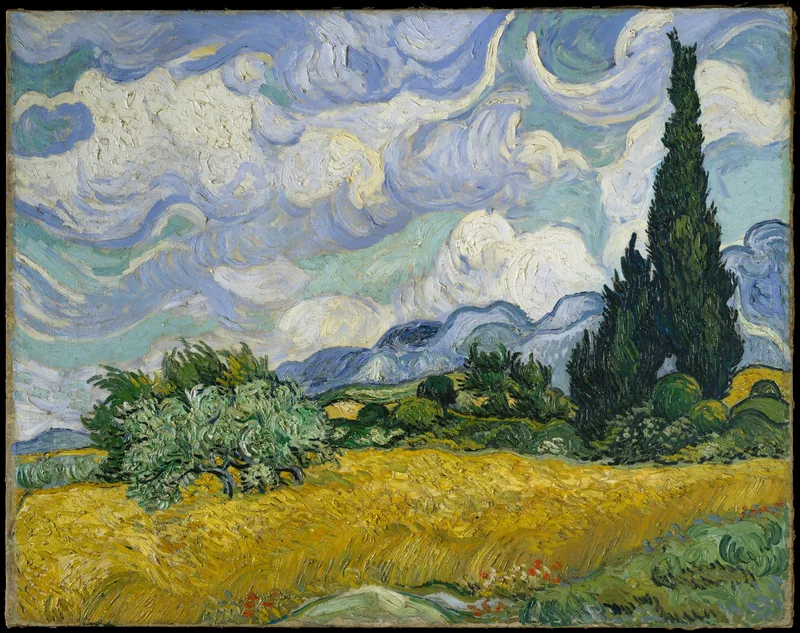
7.40 “To reap life like a ripe ear of grain, and one to live, another not.”9
7.41 “If the gods have neglected me and my two children, there is a reason for that too.”10
7.42 “For goodnessg and justice are with me.”11
7.43 Do not join in lamenting. Do not be agitated.12
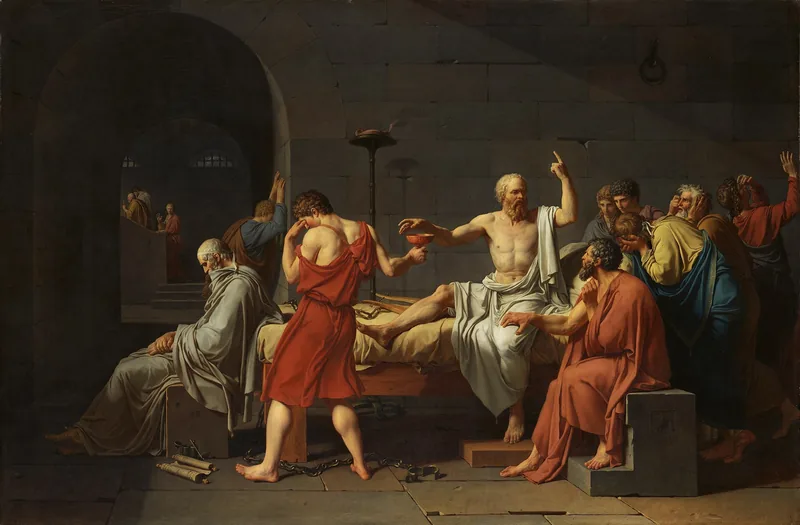
7.44 “But I could fairly reply to him: ‘You are mistaken, sir, if you think a man worth anything at all should consider the danger—whether he will live or die—instead of asking only this whenever he acts: whether he is acting justly or unjustly, and doing the deeds of a good man or a bad one.’”13
7.45 “For this is how it really is, men of Athens: wherever a man has stationed himself because he thinks it best, or has been stationed by his commander, there, it seems to me, he must stay and face danger, counting neither death nor anything else for more than disgrace.”14
7.46 “But, my good man, consider whether nobility and goodness might be something other than saving lives and being saved. For should not a true man leave aside the question of how long he lives and stop clinging to life, but entrust these things to the god, believe the women when they say that no one can escape fate, and then consider how to live as well as possible for the time he has left?”15
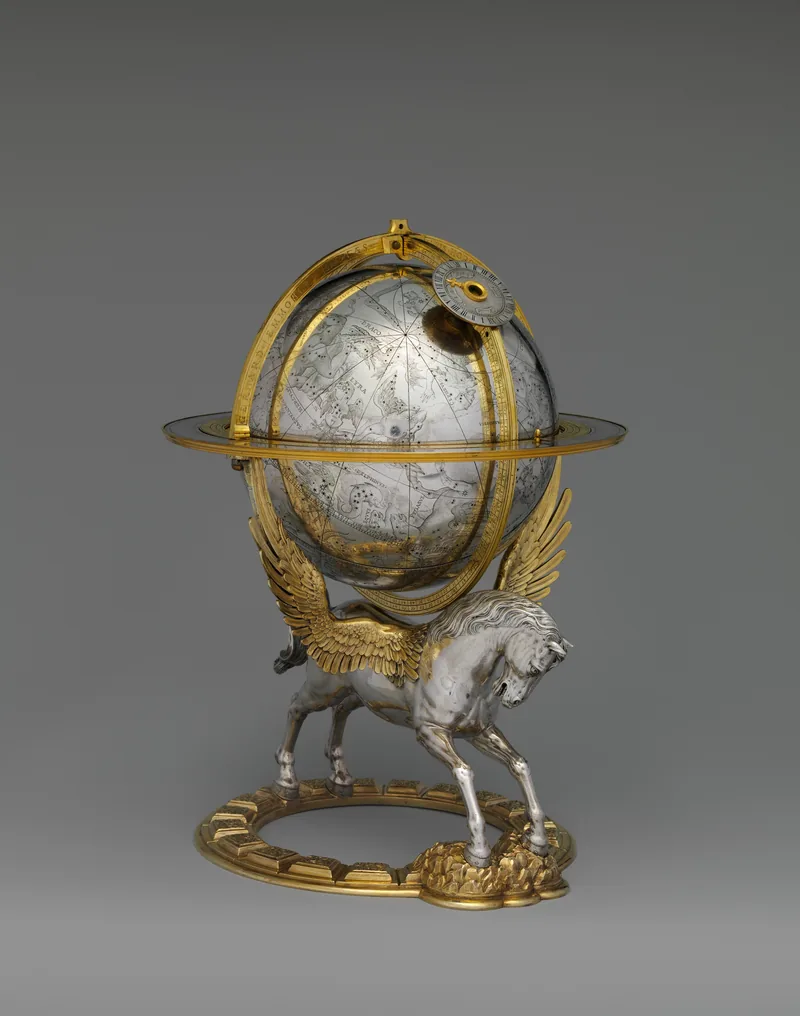
7.47 Watch the courses of the stars as though you were running with them, and keep thinking about the elements16 changing into one another: impressions of these things wash away the dirt of life down here.
7.48 That saying of Plato’s is a fine one. And indeed, when speaking about human beings, you should also look down on earthly things as if from somewhere above—herds, armies, farms, marriages, separations, births, deaths, the uproar of law courts, deserted regions, the many different barbarian peoples, festivals, laments, markets, the whole mixture and the order formed from opposites.17
7.49 Look back over what has happened before, all those changes of rule. You can also look ahead to what will happen: it will certainly be of the same kind and cannot break out of the rhythm of what is happening now. That is why watching human life for forty years is the same as watching it for ten thousand: what more will you see?
7.50 “And what grew from earth has returned to earth, and what sprang from the seed of the upper air has returned to the vault of the sky.”18
Or this is the breaking apart of interlocked atoms, and some such scattering of the unchanging elements.
7.51 “And with food and drink and spells, turning aside the stream, so as not to die. … But the wind that blows from the gods must be borne with uncomplaining toil.”19
7.52 Better at throwing an opponent, but no more devoted to the community, no more self-respecting, no more disciplined in facing what happens, no kinder toward the mistakes of those around you.
7.53 Where work can be done in line with the reason shared by gods and human beings, there is nothing terrible. For where benefit is possible through action that follows a good course and accords with our constitution, there is no reason to suspect harm.
7.54 Everywhere and always, it is up to you to be content with what is happening now, in reverence for the gods; to treat the people now with you justly; and to work carefully on your present impression so that nothing you have not clearly grasped slips in.
7.55 Do not look around at other people’s ruling parts; look straight at where nature leads you—the nature of the whole through what happens to you, and your own nature through what you must do. And each must do what follows from its constitution. Everything else is built for the sake of rational beings—just as, in every other case, inferior things are for the sake of superior ones—while rational beings are built for one another.
So the first feature of the human constitution is life in community; the second is refusal to yield to the body’s feelings. For a movement of reason and mind has the distinctive ability to set its own bounds and never be overcome by a movement of sensation or impulse. After all, both of these are animal movements, while movement of the mind wants to take first place and not be overpowered by them. Rightly so: it is naturally fitted to use them all.
Third in the rational constitution is freedom from rash judgment and from being deceived. So let the ruling part hold to these things and follow a straight course, and it has what belongs to it.
7.56 Regard yourself as dead, with your life lived up to now, and live the rest as something extra, in line with nature.
7.57 Love only what happens to you and is spun into your life: what could fit you better?
7.58 At every event, keep before your eyes those who met the same things and then grew distressed, found them strange, and complained. Where are they now? Nowhere. What, then? Do you want the same? Why not leave other people’s agitations to those who cause and suffer them, and give all your attention to how to use these things yourself? For you will use them well, and they will provide matter for you. Only pay attention and aim to be good in your own eyes in everything you do. And remember both points: what the action concerns also makes a difference.h
7.59 Dig within. Within is the spring of good, which can always well up if you always dig.
7.60 The body too should be steady, not loose and sprawling in either movement or posture. For what thought does for the face, keeping it composed and dignified, should also be required of the whole body. But all this must be maintained without affectation.
7.61 The art of living is more like wrestling than dancing, in standing ready, without falling, for whatever strikes you unexpectedly.
7.62 Keep asking who these people are whose approval you want, and what ruling parts they have. For when you look into the sources of their judgments and impulses, you will neither blame those who stumble unwillingly nor need their approval.
7.63 “Every soul,” he says, “is deprived of truth unwillingly.”20 So it is with justice, self-control, goodwill, and everything of that kind. It is absolutely necessary to remember this continually, for you will be gentler to everyone.
7.64 With every pain, have this thought ready: it is not shameful and does not make the thinking part that governs you worse, for it damages neither its rational nor its social character. But with most pains, let the philosopher Epicurus’s saying help you too: pain is neither unbearable nor everlasting, if you remember its limits and do not add your own judgments to it. Remember also that many things we find disagreeable are really pain without our noticing it—drowsiness, for instance, feeling overheated, or having no appetite. So whenever you are dissatisfied with one of these, tell yourself that you are giving in to pain.
7.65 Take care never to feel toward the inhuman what the inhuman feel toward human beings.
7.66 How do we know that the philosopher Telauges21 was not better than Socrates in character? For it is not enough that Socrates died with greater glory, argued more deftly with the sophists,22 spent the night in the frost with greater endurance,23 seemed to resist more nobly when ordered to bring in the man from Salamis,24 and “swaggered through the streets”25—something one might particularly pause over, if it was really true; what you must examine is what sort of soul Socrates had, and whether he could be content with being just toward human beings and reverent toward the gods, without getting pointlessly angry at vice or becoming a slave to anyone’s ignorance, without treating what the whole allotted him as something foreign or enduring it as unbearable, without letting his mind share in what his little bit of flesh underwent.
7.67 Nature has not blended you into the compound so completely that you cannot mark yourself off and bring what is your own under your own control. For it is perfectly possible to become a godlike man and be recognized by no one. Always remember this, and also that happiness in life rests on very few things. And do not despair of being free, self-respecting, devoted to the community, and obedient to god just because you have lost hope of becoming an expert in logic and natural philosophy.
7.68 Live your life without constraint, in the greatest joy, even if everyone shouts at you whatever they please, even if wild beasts tear apart the little limbs of this lump that has grown around you. What, after all, in all this stops thought from keeping its peace, judging its surroundings truly, and standing ready to use what is offered, so that judgment says to what comes along, “This is what you are in substance, even if opinion makes you look different,” while use says to what lies before it, “You are what I was looking for”? For whatever is present always supplies me with matter for rational and civic excellence and, in general, for the art of a human being or a god: everything that happens is suited to a god or a human being and is neither new nor difficult to handle, but familiar and workable.
7.69 This is what perfection of character involves: living each day as your last, neither agitated nor numb nor playing a part.
7.70 The gods, who are immortal, do not resent the fact that for so long they will inevitably have to put up with so many worthless people, always like this; beyond that, they care for them in every way. But you, whose life is almost over, give up—and you are one of the worthless yourself?
7.71 It is ridiculous not to avoid your own vice, which you can, but to avoid other people’s, which you cannot.
7.72 Whatever the rational and civic capacity finds to be neither intelligent nor social, it reasonably judges inferior to itself.
7.73 When you have done good and someone else has received it, why seek a third thing besides, as fools do—credit for having done good, or repayment?
7.74 No one tires of receiving a benefit, and action in line with nature is a benefit; so do not tire of receiving a benefit while you benefit others.
7.75 The nature of the whole had an impulse to create a universe. Now either everything that happens follows as a consequence, or even the most important things toward which the ruling part of the universe directs an impulse of its own are irrational. Remembering this will make you more at peace about many things.

