5.1 At dawn, when you wake reluctantly, have this thought ready: I am getting up to do a human being’s work. Why am I grumbling, then, if I am going to do what I was born for, what I was brought into the universe for? Or was I made to lie under the blankets and keep myself warm? “But that is more pleasant.” Were you born for pleasure, then? In short, to be acted on or to act? Don’t you see the little plants, the little birds, the ants, the spiders, the bees, each doing its own work and its part to keep the universe in order? And you are unwilling to do a human being’s work? You won’t hurry toward what is in line with your own nature?
“But we need rest too.” I agree. But nature has set limits to rest; it has also set limits to eating and drinking. Yet you go beyond those limits, beyond what is enough, but not when it comes to action: there you stop short of what you can do. For you do not love yourself; otherwise you would love your nature and what it wants.
But people who love their crafts wear themselves out working at them, without washing or eating. Do you value your own nature less than a metal engraver values his engraving, a dancer his dancing, a miser his money, or a vain man his little bit of fame? When these people are passionate about something, they would rather advance what they care about than eat or sleep; do actions for the community seem less valuable to you, less worthy of effort?
5.2 How easy it is to push away and wipe out every troubling or unsuitable impression, and at once be entirely at peace.
5.3 Consider yourself worthy of every word and action in line with nature, and do not let anyone’s ensuing criticism or comment distract you; but if something is good to do or say, do not think yourself unworthy of it. For they have their own ruling parta and follow their own impulse, but you must not look their way: go straight ahead, following your own nature and the nature of the whole; and the two share one and the same road.
5.4 I travel through what is in line with nature until I fall and rest, breathing my last into the air I draw breath from each day and falling onto the earth from which my father gathered his bit of seed, my mother her bit of blood, and my nurse her bit of milk. For so many years it has fed and watered me every day; it bears me as I tread on it and use it for so many things.
5.5 They cannot admire your quick wits. Granted; but there are many other qualities of which you cannot say, “I was not born with that.” Show, then, what is entirely up to you: sincerity, dignity, endurance of hard work, freedom from the love of pleasure, an uncomplaining acceptance of your lot, few needs, goodwill, independence, simplicity, no idle chatter, greatness of spirit. Don’t you realize how much you can already show, with no excuse of natural inability or unfitness, and yet you still willingly stay below the mark? Or does your lack of natural gifts force you to grumble, be grasping, flatter, blame your little body, curry favor, boast, and let your soul be tossed about in so many ways? No, by the gods. You could have freed yourself from these things long ago, leaving only the possible criticism that you are somewhat slow and dull of understanding. And you must work on that too, without overlooking your sluggishness or taking pleasure in it.
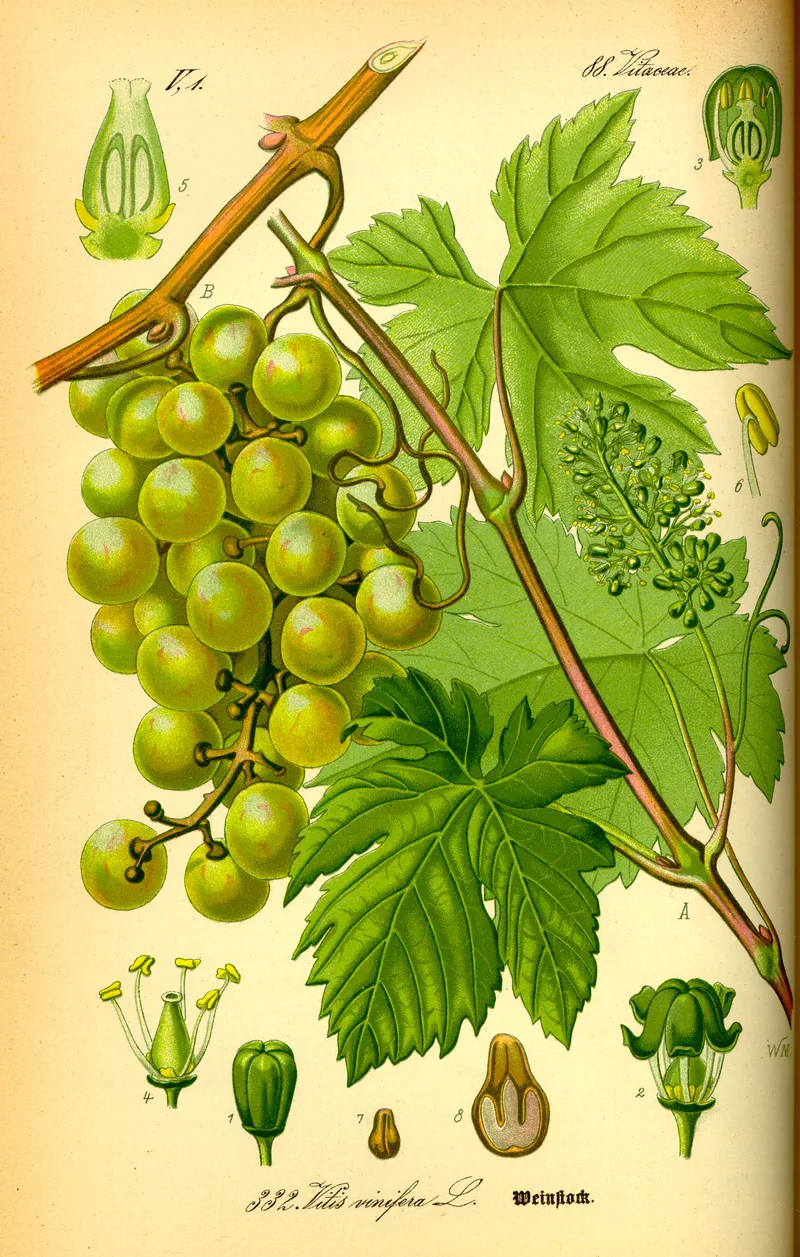
5.6 One man, after doing someone a favor, is quick to mark it down as something owed to him. Another does not do that, but privately he still thinks of the other man as his debtor and is conscious of what he has done. A third, in a way, is not even conscious of it: he is like a vine that has borne a bunch of grapes and asks for nothing more once it has produced its own fruit. Like a horse that has run, a dog that has followed a scent, or a bee that has made honey, a person who has done good does not announce it but goes on to something else, like a vine going on to bear another bunch of grapes in season. So we should be among those who do this, in a way, without being aware of it.
“Yes, but we must be aware of this very thing,” someone says. “For it is characteristic of a social being to recognize that he is acting for the community, and, by Zeus, to want his partner to recognize it too.”
What you say is true, but you misunderstand what is being said here; that is why you will be one of those I mentioned earlier, since they too are led astray by plausible reasoning. But if you are willing to understand what is being said, do not fear that this will make you neglect any action for the community.
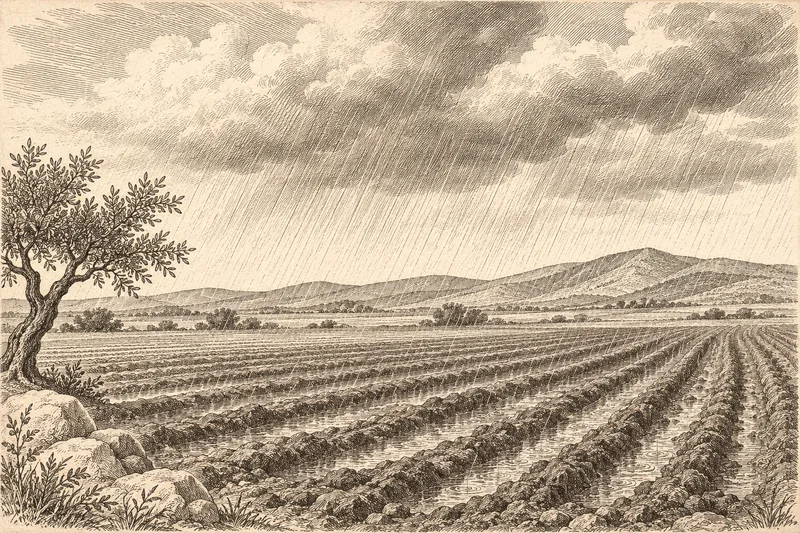
5.7 A prayer of the Athenians:1 “Rain, rain, dear Zeus, on the plowed fields and plains of the Athenians.” Either do not pray at all, or pray as simply and freely as this.
5.8 Saying, “Asclepius2 prescribed riding, cold baths, or walking barefoot for this man,” is like saying, “The nature of the whole prescribed illness, maiming, loss, or something of the kind for this man.” For in the first case “prescribed” means something like this: he assigned it to the man as suitable for his health; in the second, what happensb to each person has somehow been assigned to him as suitable for fate. After all, we speak of things “happening” to us just as builders speak of squared stones in walls or pyramids “fitting together,” when their arrangement makes them fit one another. For there is one harmony overall, and just as all bodies combine to make the universe the body it is, all causes combine to make fate the cause it is.
Even complete laypeople understand what I mean: they say, “Fate brought him this.” So this was brought to him, and this was prescribed for him.c Let us accept these things, then, as we accept what Asclepius prescribes. Many of his prescriptions are harsh too, but we welcome them in the hope of health.
Think of the accomplishment and fulfillment of what the nature of the whole intends as you do your own health, and so welcome everything that happens, even if it seems rather harsh, because it leads you there—to the health of the universe and the success and prosperity of Zeus. For he would not have brought this upon anyone unless it benefited the whole, since not even the nature of an ordinary thing brings about anything unsuitable for what it governs.
So you should love what happens to you for two reasons: first, because it happened to you, was prescribed for you, and concerned you in some way, spun together from the beginning out of the oldest causes; second, because what comes to each person individually is also a cause of success, fulfillment, and, by Zeus, continued existence itself for what governs the whole. For the whole is maimed if you sever any of the connection and continuity of its causes, just as of its parts; when you are dissatisfied, you sever it as far as it is up to you, and in a way destroy it.
5.9 Do not be disgusted, give up, or lose heart if you do not always manage to act on sound principles. But when you are knocked off course, come back; be glad if most of what you do is more worthy of a human being, and love what you return to. Do not return to philosophy as to a child’s minder,3 but as people with sore eyes return to their little sponge and egg, or as another patient returns to a poultice or a wash. For this way you will make no show of obeying reason, but will find rest in it.
Remember that philosophy wants only what your nature wants, while you wanted something else, out of line with nature. “After all, what is more pleasant than those things?” Isn’t that precisely why pleasure trips us up? But see whether greatness of soul, freedom, simplicity, fair-mindedness, and piety are more pleasant. For what is more pleasant than practical wisdomd itself, when you consider how the power to understand and know works without stumbling and runs smoothly in everything?
5.10 Things are, in a way, so veiled that quite a few philosophers, and distinguished ones, have thought them wholly beyond our grasp, while the Stoics4 themselves think them hard to grasp; and every assente we give can change—where is the person whose assent never changes? So turn to the objects themselvesf: how short-lived and worthless they are, and how they can belong to an effeminate debauchee,g a prostitute, or a robber. Then turn to the characters of those you live with: it is hard to put up with even the most agreeable, to say nothing of the fact that one can hardly endure oneself.
In such darkness and filth, then, with substance, time, motion, and moving things flowing away like this, I cannot even conceive what could be highly valued or taken seriously at all. Instead, I should comfort myself as I await my natural dissolution, without resenting the delay, but finding rest in these thoughts alone: first, nothing will happen to me that is not in line with the nature of the whole; second, I am free to do nothing contrary to my god and daimon, since no one can force me to disobey him.
5.11 What am I using my soul for now? Ask yourself this at every turn, and examine what is now in this part of me that they call the ruling part. Whose soul do I have now? A child’s? An adolescent’s? Some little woman’s? A tyrant’s? A domestic animal’s? A wild beast’s?
5.12 You can learn what sort of things most people consider good even from this. If someone called to mind things that are truly good—practical wisdom, self-control, justice, courage—with these in mind he could not bear to hear “because of his good things,”5h since it would not fit. But with what most people regard as good in mind, he would hear the comic poet’s words and readily accept them as an apt addition. This is how even most people perceive the difference. For otherwise we would not take offense at the linei and reject it in the first case, yet accept it as apt and witty when applied to wealth and the advantages that support luxury or fame. Go on, then, and ask whether you should value such things and consider them good, when thinking of them makes it appropriate to add that their owner, because of his abundance, “has nowhere to shit.”
5.13 I consist of the causal and the material, and neither will perish into nothing, just as neither came into being from nothing. So every part of me will change and be assigned to some part of the universe; that will change again into another part of the universe, and so on to infinity. Through such change I too came into being, and those who brought me into being, and so backward into another infinity. For nothing prevents us from saying this, even if the universe is governed in finite cycles.6
5.14 Reason and the art of reasoning are powers that find all they need in themselves and their own work. They set out, then, from a starting point of their own and make their way to the goal before them; that is why such actions are called “right actions,”j a name that expresses the straightness of their road.
5.15 Call none of these things a human being’s if they are not proper to a human being as such. They are not requirements of being human; human nature does not promise them, and they do not bring it to perfection. So a human being’s goal does not lie in them, nor does the good, which brings that goal to fulfillment. For if any of these things were proper to a human being, despising them and rising above them would not be proper; someone who showed he had no need of them would not deserve praise, and someone who deprived himself of any of them would not be good, if they were really good. But as things are, the more of these or other such things a person endures giving up, or even having taken from him, the better he is.
5.16 The impressions you often form will determine the character of your thought, for impressions dye the soul. So dye it with a constant succession of impressions such as these: where one can live, one can also live well; one can live at court; therefore one can also live well at court.
Again: each thing is drawn toward what it was made for; its goal lies in what it is drawn toward; where its goal lies, so do its benefit and its good; the good of a rational animal, then, is fellowship. For it has long been shown that we were born for fellowship. Or was it not clear that inferior things exist for the sake of superior things, and superior things for one another? Living things are superior to lifeless things, and rational beings to other living things.
5.17 To pursue the impossible is madness, but it is impossible for bad people not to do things of this kind.
5.18 Nothing happens to anyone that he is not naturally equipped to bear. The same things happen to another person, and either because he does not realize they have happened or because he wants to display greatness of spirit, he stands firm and remains unharmed. It is terrible, then, for ignorance and vanity to be stronger than practical wisdom.
5.19 Things themselves do not touch the soul in any way, cannot enter it, and cannot turn or move it, but the soul alone turns and moves itself, and makes the things before it correspond, for itself, to whatever judgments it deems itself worthy of.
5.20 In one respect a human being is what is closest to us, since we must do people good and bear with them, but insofar as some obstruct our own work, a human being becomes for me one of the indifferent things,k no less than the sun, wind, or a wild animal. These might obstruct some action, but they do not obstruct impulse or disposition, because of reservationl and redirection. For thought redirects and converts every obstacle to action into something that serves its primary aim: what blocks this work becomes a help to the work, and what blocks this road becomes a help along the road.
5.21 Honor what is best in the universe: it is what uses everything and directs everything. Likewise, honor what is best in yourself: it is of the same kind as that. For in you too this is what uses all the rest, and it governs your life.
5.22 What does not harm the city does not harm its citizen. Whenever you have an impression of being harmed, apply this rule: if the city is not harmed by this, neither am I. But if the city is harmed, do not get angry; instead, show whoever is harming the city what he is overlooking.
5.23 Often consider how quickly the things that exist and the things that come into being sweep past and disappear. For substance is like a river in continual flow; activities keep changing, causes undergo countless turns, and almost nothing stands still, not even what is close at hand. And the infinity of past and future is a gaping void, in which everything vanishes.m How, then, is someone not a fool if amid all this he swells with pride, is tormented, or complains as though the trouble had lasted for some time, and a long time at that?
5.24 Remember the whole of substance, of which you have the tiniest share, and the whole of time, of which a brief, momentary interval has been allotted to you, and fate—what fraction of it are you?
5.25 Does someone else wrong me? Let him see to it: his disposition is his own, his action is his own. I now have what the nature of the whole now wants me to have, and I do what my own nature now wants me to do.
5.26 Let the ruling and sovereign part of your soul remain unaffected by smooth or rough movements in the flesh; let it not mingle with them, but mark its own boundary and confine those experiences to the bodily parts. But when they rise into thought through that other mutual responsiveness,n as happens in a unified body, do not try to resist the sensation, which is natural, but do not let the ruling part add from itself the judgment that it is good or bad.
5.27 “Live with the gods.” A person lives with the gods when he constantly shows them his own soul content with what it has been allotted and doing all that the daimon wants—the daimon Zeus has given each person as guardian and guide, a fragment of himself. This is each person’s mind and reason.
5.28 Do you get angry with a man whose armpits stink? Do you get angry with a man whose breath stinks? What do you expect him to do?o He has a mouth like that, armpits like those; a smell like that has to come from them.
“But the man has reason,” someone says, “and if he pays attention he can understand where he goes wrong.”
Good for you. Then you too have reason: use your rational disposition to stir his rational disposition; show him, remind him. For if he listens, you will cure him, and there is no need for anger.
Neither a tragic actor nor a prostitute.7
5.29 You can live here as you intend to live once you have left. But if they will not allow it, then leave life too, though as someone suffering no evil. “There is smoke,8 and I leave.” Why think it such a great matter? But as long as nothing of this sort drives me out, I remain, a free man, and no one will prevent me from doing what I want; I want what is in line with the nature of a rational and social animal.
5.30 The mind of the whole is social. It has at any rate made inferior things for the sake of superior things and fitted superior things to one another. You see how it has subordinated and coordinated things, allotted each according to its worth, and brought the highest beings into harmony with one another.
5.31 How have you behaved so far toward the gods, your parents, siblings, wife, children, teachers, those who raised you, friends, relatives, household slaves? Have you lived up to this with them all so far:
“Neither to do nor to say anything outrageous to anyone”?9
Remember too what you have passed through, what you have found the strength to endure, and that the story of your life is already full and your public service complete; how many beautiful things you have seen, how many pleasures and pains you have scorned, how many honors you have passed over, and how considerate you have been to so many inconsiderate people.
5.32 Why do souls without skill or knowledge throw a skilled and knowledgeable soul into confusion? What soul, then, has skill and knowledge? One that knows the beginning and the end, and the reason that runs through all substance and governs the whole through all time in ordered cycles.
5.33 Very soon: ashes or a skeleton, and either a name or not even a name; a name is noise and an echo. What people prize in life is empty, rotten, petty—little dogs biting one another, quarrelsome children laughing and then at once crying. But good faith, modesty, justice, and truth have gone
“to Olympus10 from the earth with its broad roads.”
What still holds you here, then, if objects of sense change easily and never stand still, the senses are dim and easily misled, the little soul itself is vapor rising from blood,11 and a good reputation among such people is empty? What then? Wait cheerfully for either extinction or a change of state. Until its time comes, what is enough? What else but to revere the gods and speak well of them,p do people good, bear with them, and restrain yourself; as for everything within the bounds of this bit of flesh and breath, remember that it is neither yours nor up to you.
5.34 Life can always flow smoothly for you, if you can also make good progress, if you can also judge and act methodically.q Two things are common to the soul of the god, of a human being, and of every rational animal: not being hindered by anything else, and finding its good in a just disposition and action, with its desirer ending there.
5.35 If this is neither my vice nor an action arising from my vice, and the common interest is not harmed, why am I agitated about it? And what harm is there to the common interest?
5.36 Do not be swept away entirely by the impression, but help people as far as you can and as they deserve, even if their loss concerns neutral things; do not, though, form the impression that this is harm, for that is a bad habit. Instead, just as the old man went away and asked for his foster child’s top12 back, remembering that it was a top, so act here as well. For you do find yourself calling out from the Rostra.13s Man, have you forgotten what these things were?
“Yes, but they matter very much to these people.”
Will you become a fool too, then, for that reason?
I was once a fortunate man,t wherever I found myself; but “fortunate” means that you have allotted yourself a good lot, and good lots are good states of the soul, good impulses, good actions.
