6.1 The substance of the whole is responsive and easily changed, while the reason that governs it has no cause within itself to do evil: it contains no evil, does nothing evil, and harms nothing. And everything comes about and reaches completion in line with it.
6.2 Let it make no difference, as you do what is right, whether you are shivering or warm, drowsy or well rested, spoken ill of or praised, dying or doing something else. Dying, after all, is also one of life’s actions, so here too it is enough to do what is before you well.
6.3 Look inside. Let neither a thing’s particular quality nor its value escape you.
6.4 Everything that exists will change very soon and either turn to vapor, if substance is indeed unified, or scatter.
6.5 The reason that governs knows its own state, what it does, and what matter it works on.
6.6 The best way to take revenge is not to become like the person who wronged you.
6.7 Take pleasure and find rest in this one thing: passing from one act for others to another, keeping the god in mind.
6.8 The ruling part rouses and directs itself, makes itself whatever it wants to be, and makes everything that happens appear to it however it wants.
6.9 Each thing reaches completion in line with the nature of the whole, since it certainly does not do so in line with some other nature that surrounds the whole from outside, lies enclosed within it, or exists separately outside it.
6.10 Either a jumble, entanglement, and scattering, or unity,a order, and providence. If the former, then why do I even want to linger in such a random compound and jumble? Why do I care about anything but how at last to “become earth”?1 And why am I troubled? For scattering will reach me whatever I do. But if the latter is true, I show reverence, stand firm, and trust the one who governs.
6.11 When circumstances force you into a kind of turmoil, return quickly to yourself and do not stay out of rhythm longer than necessary, since you will gain greater command of the harmony by returning to it again and again.
6.12 If you had both a stepmother and a mother, you would attend to the former, but still keep returning to your mother. That is what the court and philosophy are to you now. Return often to philosophy and find rest with her; through her, what goes on at court seems bearable to you, and you bearable in it.
6.13 Take the impressions you get from fine dishes and other such foods: this is a fish’s corpse, this a bird’s or a pig’s corpse; or again, Falernian wine2 is a little grape juice, and the purple-bordered robe is sheep’s hair soaked in a little shellfish blood; and sexual intercourse is the rubbing of a bit of gut and the discharge of a little mucus with a sort of spasm. These impressions reach the things themselves and penetrate them, letting you see what they really are. That is how you should act throughout life: wherever things appear overwhelmingly convincing, strip them bare, see how cheap they are, and remove the story that gives them their grandeur. For conceit is a formidable deceiver, and just when you think you are most absorbed in serious things, that is when you are most thoroughly bewitched. See, for instance, what the Cynic Crates3 says about the philosopher Xenocrates himself.
6.14 Most of what the crowd admires falls into the broadest categories: things held together by cohesionb or nature—stones, timber, fig trees, vines, olive trees; slightly more reasonable people admire things held together by soul, such as flocks and herds; still more refined people admire things held together by a rational soul—not as universal, however, but insofar as it is skilled in a craft or otherwise proficient—or they simply admire owning large numbers of slaves. But someone who values a rational soul that is universal and civic no longer pays attention to any of the rest; above all, he keeps his own soul rational and social in its condition and activity, and helps those of his own kind do the same.
6.15 Some things hurry into being, others hurry out of it, and part of what is coming into being has already died away. Flow and change continually renew the universe, just as the uninterrupted movement of time keeps eternity forever new. What, then, could anyone prize among the things racing past in this river, where there is no place to stand? As if someone began to love one of the little sparrows flying past, when it has already vanished from sight. Each person’s life itself is something like this: vapor rising from blood4 and breath drawn from the air. For drawing air in once and giving it back, as we do at every moment, is just like giving back the whole power of breathing you acquired when you were born yesterday or the day before, to the place you first drew it from.
6.16 Neither exchanging air like plants, nor breathing like livestock and wild beasts, nor being stamped with an impression, nor being pulled like a puppet by impulse, nor herding together, nor feeding is worth valuing, since feeding is like discharging the waste from food.
What, then, is worth valuing? Being applauded? No. So neither is being applauded by tongues, since praise from the crowd is tongues applauding. You have let go of your paltry reputation too, then; what remains worth valuing? I think it is acting and holding back in line with your own constitution, which is also what care and craft aim at. Every craft, after all, aims to fit what it produces for the work it was made for; the tree grower and the vine tender, the colt trainer and the dog keeper seek this. And what do upbringing and teaching aim at? Here, then, is what is worth valuing, and if this is in good order, you will not try to obtain any of the rest for yourself.
Will you not stop valuing so many other things? If not, you will be neither free nor self-sufficient nor free from passion, since you are bound to envy, feel jealousy, suspect those who can take those things away, and plot against those who have what you value. Anyone who needs any of these things must be in complete turmoil and, besides, often blame the gods.
But respecting and valuing your own thinking part will make you pleasing to yourself, in harmony with your fellows, and in accord with the gods—that is, praising everything they allot and have arranged.
6.17 The elements5 move up, down, in circles, but the movement of excellence follows none of these directions: it is something more divine and makes good progress along a path hard to conceive.
6.18 What a way to act. They refuse to praise the people who live at the same time and alongside them, yet set great store by being praised by later generations, people they have never seen and never will. This is almost like being hurt because earlier generations did not also speak in your praise.
6.19 Do not suppose that something is impossible for a human being because you find it hard to do; instead, if something is possible and fitting for a human being, consider it within your reach too.
6.20 In athletic training someone has gashed us with his nails and wounded us with a blow from his head, yet we neither mark him down for it, nor take offense, nor later suspect him of plotting against us. Still, we keep our guard up, though not as against an enemy or with suspicion: we keep clear of him on friendly terms. Let it be much the same in the rest of life. Let us overlook much in our training partners, so to speak, since, as I said, we can keep clear of them without either suspicion or hatred.
6.21 If someone can refute me and show me that I think or act wrongly, I will gladly change, since I seek the truth, which has never harmed anyone; the person harmed is the one who persists in his own delusion and ignorance.
6.22 I do my own duty; other things do not distract me, since they are either lifeless, without reason, or lost and ignorant of the road.
6.23 Deal with animals without reason, and with circumstances and objects in general, generously and freely, as one who has reason dealing with what lacks it; but deal with people as fellow members of a community, since they have reason. Invoke the gods in every case. And do not worry about how long you will keep doing this, since even three such hours are enough.
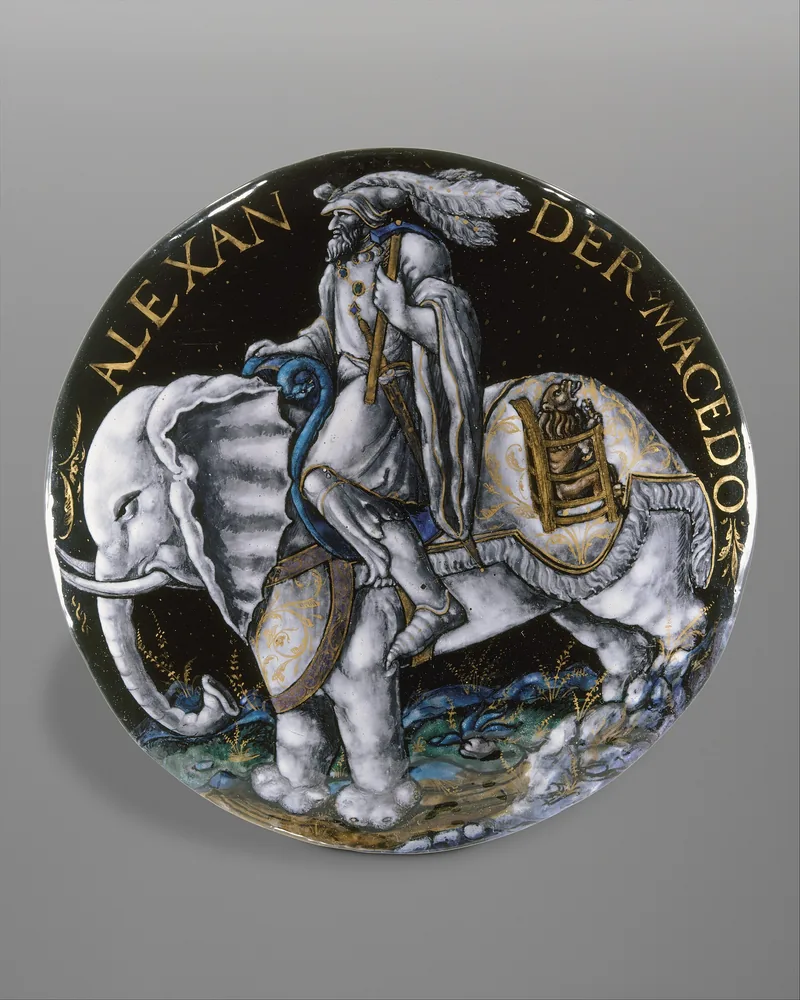
6.24 Alexander the Great and his muleteer reached the same state in death, since either they were taken up into the same seed principles of the universe or they were scattered alike into atoms.
6.25 Remember how many things happen in each of us at the very same instant, in both body and soul. Then you will not be surprised if far more things—or rather, everything that happens—exist at once within the single, all-embracing whole that we call the universe.
6.26 If someone asks you how the name Antoninus6 is spelled, would you strain yourself pronouncing each letter? What, then, if they get angry? Would you get angry in return? Would you not calmly count off each letter in turn? So here too, remember that every duty is made up of a number of parts. Attend to these and carry out the task before you methodically, without agitation or answering annoyance with annoyance.
6.27 How cruel it is not to let people follow their impulse toward what seems fitting and beneficial to them. Yet in a way you do refuse them this when you resent their wrongdoing, since they are certainly being drawn toward what they take to be fitting and beneficial to themselves. “But that isn’t so.” Then teach them and show them, without resentment.
6.28 Death is rest from the impact of sensation, from being pulled like a puppet by impulse, from the course of thought, and from service to the flesh.
6.29 It is shameful for your soul to give up first in a life where your body has not given up.
6.30 Watch that you do not turn into a Caesar7c or take on that dye, for it happens. So keep yourself simple, good, uncorrupted, dignified, unaffected, a friend of justice, reverent toward the gods, kind, affectionate, and vigorous in doing what is right. Struggle to remain the person philosophy wanted to make you. Revere the gods; protect people. Life is short. The one fruit of life on earth is a pious disposition and acts for others.
In everything, be a pupil of Antoninus Pius. Remember his firmness in actions guided by reason, his evenness in everything, his piety, the serenity of his face, his gentleness, his freedom from vanity, his eagerness to apprehendd the facts. How he would let nothing pass without first examining it thoroughly and understanding it clearly; how he bore unjust criticism without criticizing in return; how he was never in a hurry and never accepted slanders; how precisely he examined character and actions, without faultfinding, timidity, suspicion, or sophistry. How little he needed for lodging, bedding, clothing, food, and service; how hardworking and long-suffering he was; how he could stay in the same place until evening, his frugal diet leaving him no need even to empty his bowels outside his usual time. And his steadiness and constancy in friendship; his tolerance of people who spoke freely in opposing his views, and his pleasure when anyone showed him something better; his reverence for the gods without superstition—so that your final hour may find you with as clear a conscience as his.
6.31 Come to your senses and call yourself back. Once you have woken again and realized that dreams were troubling you, look at the things before you, awake again, as you looked at those dreams.
6.32 I am made of a little body and a soul. To this little body everything is indifferent,e since it cannot make distinctions; to the thinking part, however, everything is indifferent except its own activities, and those are all up to it. Yet even among these it concerns itself only with the present, since its future and past activities are themselves already indifferent things.
6.33 Painf is not against nature for the hand or the foot, as long as the foot does a foot’s work and the hand a hand’s. So pain is not against nature for a human being as such either, as long as he does a human being’s work. And if it is not against his nature, it is not bad for him either.
6.34 How much pleasure robbers, sexual degenerates,g father-beaters, and tyrants have enjoyed!
6.35 Do you not see how common craftsmen adapt themselves to laypeople up to a point, yet still hold fast to the principlesh of their craft and refuse to abandon them? Is it not terrible if the architect and the doctor show more respect for the principles of their own craft than a human being does for his own reason, which he shares with the gods?
6.36 Asia8 and Europe9 are corners of the universe; the whole sea a drop in the universe; Mount Athos10 a little clod in the universe; the whole of the present a point in eternity. Everything is small, easily changed, vanishing. Everything comes from there, starting from that ruling part common to all, or following as a consequence. So the lion’s gaping jaws, poison, and every harmful thing, like thorns and mud, are by-products of those majestic and beautiful things. Do not imagine, then, that they are alien to what you revere; think instead of the source of all things.
6.37 Whoever has seen what exists now has seen everything that has happened from eternity and everything that will happen without end, since all things are of the same kind and the same form.
6.38 Often think of how all things in the universe are connected and related to one another. For in a way, everything is intertwined, and in this respect everything is friendly to everything else, since one thing follows another through tensile motion,i shared vital breath, and the unity of substance.
6.39 Fit yourself to the circumstances allotted to you, and love the people whose lot you share—but truly.
6.40 Every instrument, tool, or vessel is in good condition if it does what it was made for, although its maker is absent. But in things held together by nature, the power that made them remains within them; so you should respect it all the more and consider that, if your condition and conduct follow its wishes, everything goes as you wish. In this way, too, the affairs of the whole go as it wishes.j
6.41 If you count anything outside your choice as good or bad for you, then when that bad thing happens or that good thing eludes you, you are bound to blame the gods and hate whoever causes—or you suspect will cause—the loss or misfortune. And we do much wrong because we attach importance to these things. But if we judge only what is up to us to be good or bad, no cause remains for accusing a god or taking an enemy’s stand against another person.
6.42 We all work together toward one result, some knowingly and with understanding, others without knowing, just as Heraclitus,11 I think, says that even people asleep are workers and fellow workers in what happens in the universe. Each contributes in a different way, and even someone who complains and tries to resist and undo what happens contributes abundantly, since the universe needed such a person too. All that remains, then, is to understand which group you place yourself in. For the one who governs all things will certainly make good use of you and accept you as one of those working together and helping; but do not become a part like the line the philosopher Chrysippus12 mentions, the cheap, ridiculous line in the play.
6.43 Does the sun13 claim to do the work of the rain, or Asclepius the work of the Fruit Bearer? And what of each star? Are they not different, yet working together toward the same end?
6.44 If the gods have deliberated about me and what is to happen to me, they have deliberated well, since it is not easy even to conceive of an ill-advised god. And what cause could prompt them to harm me? What would they or the whole, which they chiefly care for, gain from it? But if they have not deliberated about me individually, they have certainly deliberated about the common concerns, and I ought to welcome and cherish what happens to me as a consequence of those.
But suppose they deliberate about nothing at all—it is impious to believe that, or else let us stop sacrificing, praying, swearing oaths, and doing all the other things we do on each occasion as though the gods were present and living among us. If, then, they deliberate about none of our concerns, I can deliberate about myself, and it is for me to consider what benefits me. What benefits each thing is what is in line with its own constitution and nature, and my nature is rational and civic. As Antoninus, my city and homeland is Rome; as a human being, the universe. So only what benefits these cities is good for me.
6.45 Whatever happens to each individual benefits the whole; that would be enough. But if you watch closely, you will generally see this too: whatever benefits one human being benefits other human beings as well. Here, though, take “benefits” in the more common sense, applied to neutral things.k
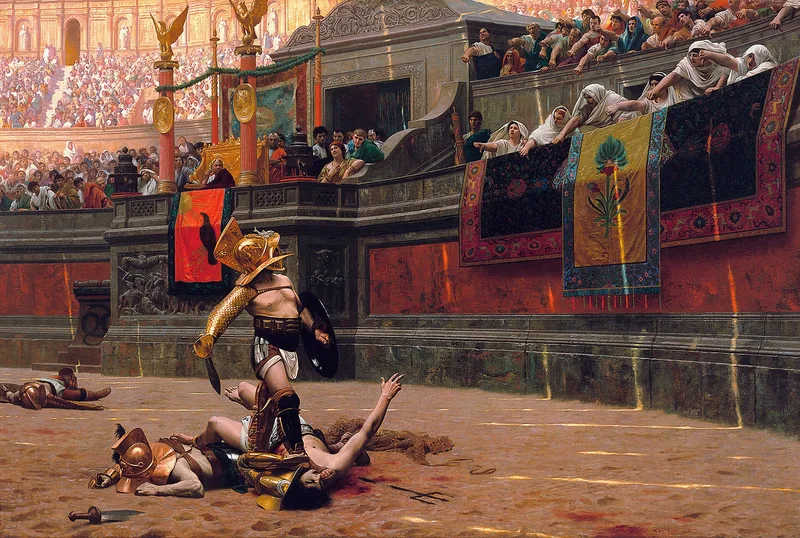
6.46 Just as you are sick of what goes on in the amphitheater14 and such places, because you keep seeing the same things and their sameness makes the sight tiresome, experience the whole of life that way. For everything, up and down, is the same and comes from the same things. How much longer, then?
6.47 Keep thinking of all the people who have died, of every kind, every occupation, every nation, taking the thought down even to Philistion,15 Phoebus, and Origanion. Turn now to the other groups. We must pass over to where so many formidable speakers are, so many dignified philosophers—Heraclitus, Pythagoras,16 Socrates—so many heroes of earlier times, so many generals and tyrants of later times, and beside them the astronomers Eudoxus and Hipparchus, the mathematician Archimedes, and other keen, great-hearted, hardworking, cunning, headstrong characters, and mockers of this very human life, perishable and short-lived, like Menippus and all such people. Think how long all these have lain dead. What is terrible in this for them? And what for those whose names are never mentioned at all? One thing here is worth much: to live out your life in truth and justice, well disposed toward liars and the unjust.
6.48 When you want to cheer yourself, think of the good qualities of those you live with: one person’s energy, another’s modesty, another’s generosity, and some other quality in someone else. For nothing cheers us so much as the likenesses of excellences showing in the characters of those around us and coming together in as great a number as possible. That is why you should keep them ready to hand.
6.49 You are not upset that you weigh so many pounds17 instead of three hundred, are you? The same goes for having so many years to live and no more. For just as you accept the amount of substance allotted to you, so accept the time.
6.50 Try to persuade them, but act even against their wishes when the principles of justice direct you that way. If, however, someone uses force to stand in your way, turn to contentment and freedom from distress, and use the obstacle to exercise another excellence. And remember that your impulse was subject to a reservation, and that your desire was not for the impossible. What, then, did you desire? An impulse of this kind. And you achieve that: the things we were moved toward are coming about.l
6.51 A lover of fame thinks his own good lies in someone else’s activity, a lover of pleasure in his own sensations, and a person with sense in his own action.
6.52 You can refrain from forming an opinion about this and keep your soul undisturbed, since things themselves have no natural power to produce our judgments.
6.53 Train yourself to attend without distraction to what someone else says, and, as far as you can, enter the speaker’s soul.
6.54 What does not benefit the swarm does not benefit the bee.
6.55 If sailors spoke ill of me while I was steering, or the sick while I was treating them, would I attend to anything except how I myself could do what keeps those on board safe or benefits the health of those in my care?m
6.56 How many who came into the universe with me have already left.
6.57 To people with jaundice18 honey seems bitter, to those bitten by a rabid animal water seems terrifying, and to little children a little ball seems beautiful. Why, then, am I angry? Or do you think a false belief has less force than bile in someone with jaundice and poison in someone bitten by a rabid animal?
6.58 No one will stop you from living in line with the reason of your own nature; nothing will happen to you against the reason of universal nature.
6.59 What sort of people they want to please, for what sort of gains, and through what sort of actions. How soon time will cover everything, and how much it has already covered.

