11.1 The properties of the rational soul: it sees itself, analyzes itself, makes itself whatever it wishes, itself reaps the fruit it bears—for others reap the fruit of plants and the equivalent in animals—and reaches its own goal at whatever point life ends. In dancing, acting and the like, an interruption leaves the whole performance unfinished, but the soul, at every stage and wherever it is stopped, makes its purpose complete and sufficient for itself, so that it can say, “I have what is mine in full.”
It also ranges through the whole universe and the void around it, surveys its shape, reaches into the infinity of time, and embraces and considers the periodic cosmic regenerationa of all things. And it sees that those who come after us will see nothing new, and those before us saw nothing more, but that in a way someone aged forty, with any sense at all, has seen everything that has happened and will happen, because it all takes the same forms.
Other properties of a rational soul: loving those around it, truthfulness, self-respect, and valuing nothing above itself—which is also a property of law. So right reason and the reason of justice are no different.
11.2 You will despise a delightful song if you break the melody into individual notes and ask yourself about each, “Is this stronger than I am?”—for you will be ashamed. The same goes for dancing, if you do this with each movement or pose, and for the combat sport of pankration.1 In general, then, apart from excellence and what comes from excellence, remember to turn to the individual parts and, by dividing things up, come to despise them. Apply the same approach to the whole of life.
11.3 What a soul: ready, if it must now be released from the body, either to be extinguished, scattered or remain together! But let this readiness come from its own judgment, not from sheer defiance like that of the Christians,2b but thoughtfully and with dignity, so as to convince someone else too, without theatrics.
11.4 I have done something for the community; so I have benefited. Keep this thought always ready to hand, and never stop.
11.5 What is your craft? Being good. And how can you do this well except through principles about the nature of the whole and about the distinctive constitution of a human being?
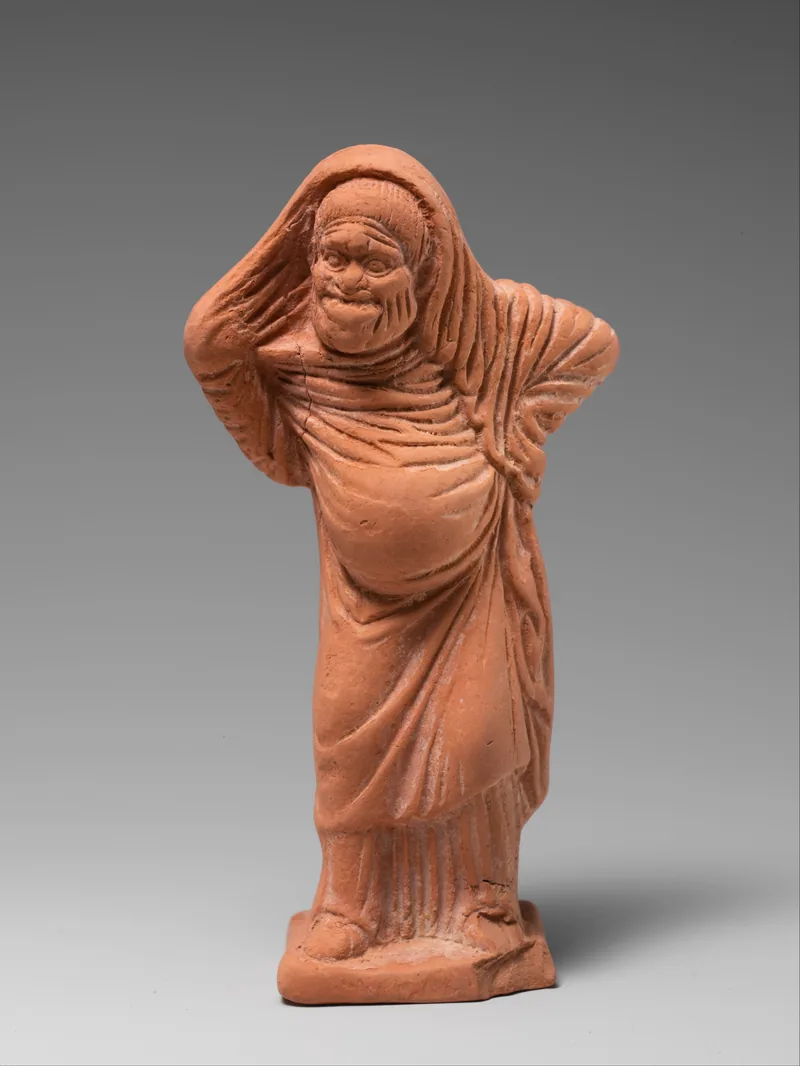
11.6 Tragedies were staged first, to remind us of what happens, that these things naturally happen this way, and that you should not resent on the larger stage what delights you on the stage. For you see that things must reach this conclusion, and that even those who cry, “Ah, Cithaeron!”3 endure them. And the playwrights say some useful things, especially this:
“But if the gods have neglected me and my two children, there is a reason for this too”;4
and again:
“For we should not be angry with events”;5
and:
“To harvest life like an ear full of grain”6—
and many others like these.
After tragedy came Old Comedy,7 with a freedom of speech that taught a lesson and, through its very bluntness, gave a useful reminder to be free of vanity; Diogenes the Cynic8 also used this kind of frank speech for a similar purpose.c After this came Middle Comedy,9 and finally New Comedy, which gradually slipped into a display of skill in imitation: consider what purpose they were brought in to serve. That even these writers say some useful things is no secret, but what aim did the whole undertaking of this kind of poetry and playwriting have in view?
11.7 How clearly it strikes you that no other circumstances in life are as well suited to practicing philosophy as those you happen to be in now.
11.8 A branch cut off from the branch beside it cannot help being cut off from the whole tree too. In just the same way, a person who breaks away from one other person has fallen away from the entire community. Someone else cuts off a branch, but a person separates himself from his neighbor by hating him and turning away, unaware that he has also cut himself off from the whole commonwealth. Yet there is this gift from Zeus, who brought the community together: we can grow back together with our neighbor and once again help complete the whole. But repeated separations of this kind make it hard for the part that breaks away to reunite and return to its former state. And in general, a branch that has grown with the tree from the start and remained united with its life is unlike one grafted back after being cut off, whatever the gardeners say. Grow on the same bush, but do not hold the same beliefs.d
11.9 Just as those who oppose your progress according to right reason will be unable to turn you away from sound action, so do not let them dislodge your goodwill toward them. But be equally watchful on both counts, not only in keeping your judgment and actions steady, but also in being gentle toward those who try to obstruct you or are otherwise annoyed with you. For getting angry with them is as much a weakness as abandoning your action and giving in out of fear: both are equally deserters, the one who shrinks back and the one who becomes estranged from someone who is his kin and friend by nature.
11.10 “No nature is inferior to a craft.”10 For crafts imitate the natures of things. If so, the most perfect nature, which embraces all the rest, would not fall short of the resourcefulness of a craft. But all crafts make inferior things for the sake of superior ones; so does universal nature. This is where justice comes from, and on justice the other forms of excellence rest, for what is just will not be preserved if we either treat neutral things as importante or are easily deceived, hasty and changeable.
11.11 The things whose pursuit and avoidance disturb you do not come to you, but in a way you go to them yourself.f So at least let your judgment about them be still: they too will stay still, and you will not be seen either pursuing or avoiding.
11.12 The sphere of the soul keeps its own shape when it neither stretches toward anything nor contracts inward, neither coils up nor collapses, but shines with the light by which it sees the truth in everything and in itself.g
11.13 Will someone scorn me? That is for him to see to. But I will see to it that I am not found doing or saying anything that deserves scorn. Will he hate me? That is for him to see to. But I will be friendly and well disposed toward everyone, ready to show even him what he has overlooked, without reproaching him or making a show of putting up with him, but sincerely and kindly, like the statesman Phocion11 in that story—if he was not pretending. For this is how things must be inside: the gods should see a person who feels no resentment or distress at anything. After all, what harm is there for you if you are now doing what suits your own nature and accepting what is timely now for the nature of the whole, as a person intent on bringing about the common good by one means or another?
11.14 They despise one another and fawn on one another; they want to stand above one another and grovel before one another.
11.15 How rotten and counterfeit the man who says, “I have decided to be straightforward with you.” What are you doing, man? You should not announce this in advance. It will show; it ought to be written on your forehead. It rings out at once in the voice, shows at once in the eyes, just as the beloved knows everything at once from a lover’s glance. A straightforward, good man should be just like a man who reeks, so that anyone who comes to stand beside him notices at once, whether he wants to or not. But an affectation of straightforwardness is a dagger.h Nothing is more shameful than a wolf’s friendship.12 Avoid this above all. A man’s goodness, straightforwardness and goodwill show in his eyes and do not escape notice.
11.16 The power to live the best possible life is in the soul, if you are indifferent to indifferent things. You will be indifferent if you examine each of them both in its parts and as a whole, remembering that none of them creates in us an opinion about itself or comes to us: they stay still, while we form judgments about them and write them, so to speak, in ourselves. We can leave them unwritten, and if one slips in unnoticed, we can erase it at once. Remember also that this kind of vigilance will last only a short time, and then life will be over. But why be troubled when these things turn out differently?i For if they are in line with nature, take joy in them and let them be easy for you; if they are against nature, seek what is in line with your own nature and hurry toward it, even if it is held in low esteem, for everyone is excused for seeking his own good.
11.17 Where each thing has come from, what each is made of, what it changes into, what it will be like when it has changed, and how it will suffer no harm.
11.18 First: what my relation to them is, and that we were born for one another, and, from another point of view, that I was born to lead them, like a ram over a flock or a bull over a herd. But go back to the starting point: if not atoms, then nature governs the whole; if so, inferior things exist for superior ones, and superior ones for one another.
Second: what they are like at table, in bed and elsewhere; above all, what constraints their beliefs impose on them, and with what vanity they do these very things.
Third: if they are doing these things rightly, you should not be annoyed; if wrongly, they are clearly acting unwillingly and in ignorance. For just as every soul is deprived of truth unwillingly, so it is unwillingly deprived of treating each person as he deserves. At any rate, they resent being called unjust, unfeeling, greedy or, in a word, wrongdoers toward their neighbors.
Fourth: you too do many things wrong and are like them; even if you refrain from some wrongs, you still have the disposition to commit them, though cowardice, a craving for approval or some such vice keeps you from similar wrongs.
Fifth: you have not even established whether they are doing wrong, for many things are done with a particular purpose in view, and in general you need to learn a great deal before you can pronounce with certainty on someone else’s action.
Sixth: when you are deeply resentful or distressed, remember that human life lasts only a moment, and before long we will all be laid out dead.
Seventh: it is not their actions that trouble us—those lie within their own ruling parts—but our opinions. Remove these, then, and be willing to abandon the judgment that something is terrible, and your anger is gone. How do you remove them? By reflecting that this brings you no shame.j For unless what is shameful is the only evil, you too must do many things wrong and become a robber and all the rest.
Eighth: how much worse the consequences of anger and grief over such things are than the things themselves that anger and grieve us.
Ninth: goodwill is invincible if it is genuine, not a grin or an act. For what will the most insolent man do to you if you maintain your goodwill toward him and, if the occasion arises, gently advise him and take the time to teach him better at the very moment he is trying to hurt you? “Don’t, child. We were born for something else. I certainly will not be harmed, but you are being harmed, child.”k And show him tactfully and in general terms that this is so, that even bees do not do this, nor any creatures that naturally live in groups. But do this neither ironically nor reproachfully, but affectionately and without bitterness in your soul, not as though lecturing or so that a bystander will admire you, but addressing him alone, even if others are standing around.l
Remember these nine points as gifts you have received from the Muses,13 and at last begin to be a human being, while you are alive. But guard as carefully against flattering them as against getting angry with them; both are antisocial and lead to harm. Keep this ready when angry: losing your temper is not manly, whereas gentleness and mildness are more masculine just as they are more human, and strength, sinews and courage belong to the gentle man, not the resentful and discontented one. For the nearer this comes to freedom from passion,m the nearer it comes to power. Just as grief marks weakness, so does anger: both the grieving man and the angry man have been wounded and have given in.
But if you wish, take a tenth gift too, from the leader of the Muses:14 expecting bad people not to do wrong is madness, for it aims at the impossible. But allowing them to treat others that way while expecting them not to wrong you is unfeeling and tyrannical.
11.19 Keep a constant watch above all for four ways the ruling part goes astray, and erase them when you catch them, saying in each case: “This mental image is unnecessary”; “This breaks up the community”; “You do not mean what you are about to say”—for count saying what you do not mean among the most absurd things. The fourth calls for this self-reproach: “This shows the more divine part in you defeated and bowing before the less honored, mortal part—the body—and its rough or smooth movements.”no
11.20 Your bit of breath and all the fire mingled in you, though naturally tending upward, are nevertheless held here within the compound in obedience to the ordering of the whole. And all the earth and water within you, though tending downward, have nonetheless been raised up and stand in a position not naturally their own. So even the elements obey the whole: once stationed somewhere by force, they stay until the whole once again sounds the signal for their dissolution.
Is it not dreadful, then, that the intelligent part of you alone should disobey and resent its own place? Yet nothing is forced on it; it is ordered to do only what is in line with its own nature. Still it will not bear this and goes in the opposite direction. For the movement toward injustice, self-indulgence, anger, grief and fear is simply a departure from nature. And when the ruling part resents anything that happens, then too it abandons its own place: it is made for piety and reverence for the gods no less than for justice. For these too are forms of good fellowship, or rather, take precedence over just actions.
11.21 “Anyone who does not always have one and the same goal in life cannot be one and the same person throughout his life.”15 This is not enough unless you also add what that goal ought to be. For just as people do not share one opinion about everything that most people regard, in one way or another, as good, but only about certain things, namely those that concern the community, so you must also set yourself a goal directed toward community and civic life. After all, whoever directs all his impulses toward this goal will make all his actions consistent, and in that respect will always be the same.
11.22 The mountain mouse and the house mouse,16 and the house mouse’s panic and scurrying.p
11.23 Socrates also called popular beliefs “Lamias,”17 terrors for children.
11.24 At public spectacles, the Spartans18 put the seats for visitors in the shade, but sat anywhere themselves.
11.25 Socrates to King Perdiccas,19 on not visiting him: “So that I do not perish in the worst possible way,” he said—that is, receive a kindness and be unable to return it.
11.26 In the writings of the Epicureans20 there was a precept: keep reminding yourself of someone from earlier times who practiced excellence.q
11.27 The Pythagoreans:21 look at the sky at dawn, so that we remember those bodies that always do their work along the same courses and in the same way, and their order, their purity and their nakedness; for no star has a veil.
11.28 What Socrates was like with a sheepskin tied around his waist, when his wife Xanthippe22 took his cloak and went out, and what Socrates said to his friends when they were embarrassed and withdrew on seeing him dressed like that.
11.29 In writing and reading, you will not lead until you have been led.r Much more so in life.
11.30 You are a slave; you have no say.23s
11.31 And my dear heart laughed.24
11.32 And they will find fault with excellence, speaking harsh words.25
11.33 Asking for a fig in winter is madness; the same goes for asking for your child when your child is no longer granted to you.26
11.34 “When you kiss your child tenderly,” Epictetus said, “you should say inwardly, ‘Tomorrow you may die.’”27
“Those are ill-omened words.”28
“Nothing that signifies a work of nature is ill-omened,” he said, “or reaping ears of grain is ill-omened too.”
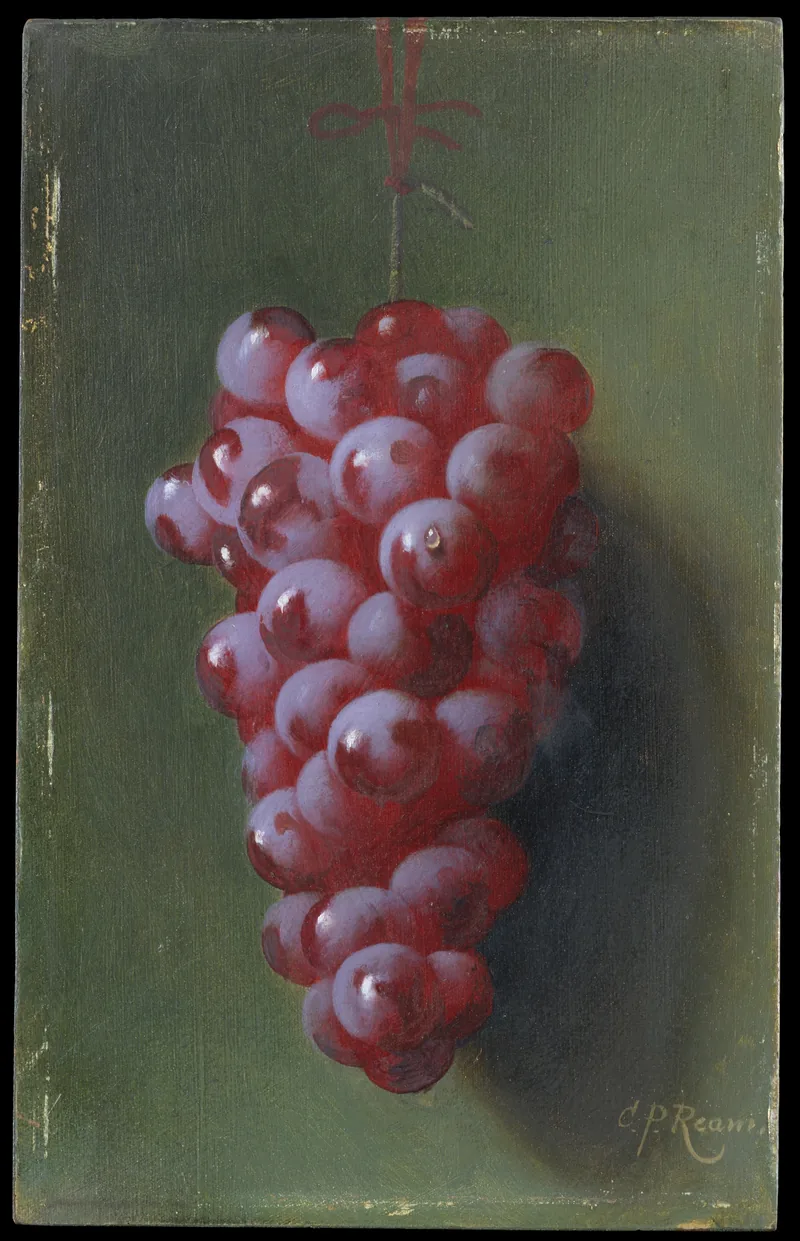
11.35 An unripe grape, a ripe grape, a raisin: all changes, not into nonexistence, but into what does not exist now.29
11.36 “No one can steal your choice.”t Epictetus’s saying.
11.37 “You must find a method for giving assent,” he said, “and, in the area of impulses, keep careful watch, so that they come with a reservation,u so that they serve the community, so that they fit the worth of their objects; and abstain entirely from desire while directing aversion at nothing that is not up to us.”
11.38 “The contest, then,” he said, “is not about something trivial, but about whether we are mad or not.”30
11.39 Socrates used to say, “What do you want? To have the souls of rational beings or of irrational ones?”31
“Of rational beings.”
“What kind of rational beings? Sound ones or bad ones?”
“Sound ones.”
“Then why do you not look for them?”
“Because we have them.”
“Then why do you fight and disagree?”