12.1 Everything you hope to reach by a roundabout route can be yours now, if you do not deny it to yourself. That means leaving the whole past behind, entrusting the future to providence, and directing only the present toward piety and justice: piety, so that you love what is allotted to you, for nature brought it to you and you to it; justice, so that you speak the truth freely and without evasion, and act lawfully and as each case deserves. Let neither another person’s wickedness, opinion, or words hinder you, nor even the sensations of the scrap of flesh that has grown around you; for the part that suffers will see to that.
So whenever you come to the point of departure, if you leave everything else behind, honor only your ruling part and the divine within you, and fear never having begun to live in line with nature rather than someday ceasing to live, you will be a person worthy of the universe that gave you birth. You will cease to be a stranger in your homeland, to marvel at everyday events as though they were unexpected, and to depend on this or that.
12.2 The god sees all ruling parts stripped of their material vessels, husks, and filth, for with his own mind alone he touches only what has flowed and been channeled from him into them. If you too make a habit of doing this, you will rid yourself of much distraction. For will someone who does not look at the enclosing scraps of flesh really busy himself looking at clothes, houses, fame, and such trappings and stage scenery?
12.3 You are made up of three things: a little body, a little breath, and mind. The first two are yours only insofar as you must care for them; only the third is yours in the strict sense. If you separate from yourself—that is, from your thought—all that others do or say, all that you yourself have done or said, all that troubles you about the future, all that happens beyond your choice to the little body around you or the little breath bound up with you, and all that the eddy swirling outside sweeps along, your power of mind is left to live freely on its own, pure and detached from everything bound together by fate, doing what is just, willing what happens, and speaking the truth. If, I say, you separate from this ruling part what clings to it through attachment, and the times ahead and behind, and make yourself like the sphere of the philosopher Empedocles,1
“round, rejoicing in encircling solitude,”
and practice living only the life you are living—that is, the present—you will be able to live out what remains until your death undisturbed, kindly, and at peace with your own daimon.
12.4 I have often wondered how each person loves himself more than anyone else, yet values his own opinion of himself less than other people’s. At any rate, if a god stood over someone, or a sensible teacher, and ordered him to think or consider nothing in private without immediately saying it out loud, he would not endure it for even one day. We have that much more respect for our neighbors and whatever they may think of us than for ourselves.
12.5 How could the gods, who arranged everything well and with kindness toward humankind, have overlooked just this: that some people—even thoroughly good people, who have, as it were, made so many agreements with the divine and become very close to it through pious deeds and sacred rites—once dead, never exist again but are extinguished forever? If this really is how things stand, be sure that if things ought to have been different, the gods would have made them so. For if it were just, it would also have been possible, and if it were in line with nature, nature would have brought it about. So let their not returning—if they do not return—assure you that their return was not required. For you can see for yourself that in raising this question you are arguing a point of justice with the god; yet we would not argue this way with the gods if they were not supremely good and just. If they are, they would not have allowed anything in the ordering of the universe to be neglected unjustly and irrationally.
12.6 Practice even what you think you cannot do. After all, the left hand, though useless at other tasks for lack of practice, holds the reins2 more firmly than the right, because it has practiced this.
12.7 What state death should find you in, in both body and soul; the shortness of life; the immensity of time behind and ahead; the frailty of all matter.
12.8 To see the causal elements stripped of their husks; the aims of actions; what pain is, what pleasure is, what death is, what fame is; who is responsible for his own lack of leisure; how no one is hindered by another; that everything is judgment.
12.9 And in using your principles, you must be like an unarmed fighter,3 not a gladiator: the gladiator puts down and picks up the sword he uses,a while the other always has his hand and need only clench it.
12.10 See things for what they are, dividing them into matter, cause, and aim.
12.11 What power a person has to do only what the god will praise, and to accept everything the god allots him.b
12.12 Blame neither the gods, for they do nothing wrong, willingly or unwillingly, nor people, for they do wrong only unwillingly; so blame no one.
12.13 How ridiculous, and what a stranger, is the person who marvels at anything that happens in life.
12.14 Either the necessity of fate and an order that cannot be broken, or providence that can be appeased, or an unguided jumble of chance. If, then, necessity cannot be broken, why resist? If providence can be appeased, make yourself worthy of divine help. If it is a jumble without a ruler, be glad that amid such tossing waves you have within you a ruling mind of your own; and if the waves carry you away, let them carry away your scrap of flesh, your little breath, and the rest, for they will not carry away your mind.
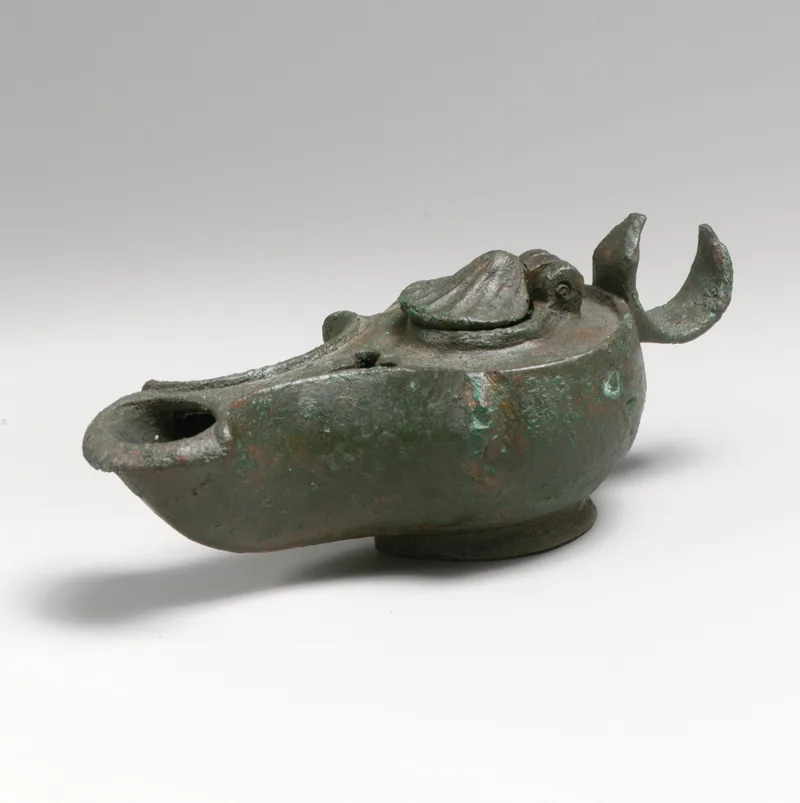
12.15 Or does the light of a lamp shine without losing its brightness until it goes out, while the truth, justice, and self-control in you will go out before you do?
12.16 When someone gives you the impression that he has done wrong: how do I know that this is wrong? And even if he has done wrong, he has condemned himself, and so this is like clawing his own face.
Someone who does not want a bad person to do wrong is like someone who does not want a fig tree to have sap in its figs, babies to cry, a horse to neigh, or any other necessary thing to happen. For what is the bad person to do, with a disposition like that? So if you are so keen, cure his disposition.
12.17 If it is not your duty, do not do it; if it is not true, do not say it. For your impulse should always be 12.18 to examine each thing—exactly what it is that gives you an impression—and lay it open, dividing it into the cause, the material, the aim, and the time within which it must cease to exist.c
12.19 Recognize at last that you have within you something better and more divine than the things that cause your passions and, in a word, pull your strings. What is my thought now? Fear? Suspicion? Craving? Something else like that?
12.20 First: do nothing at random or without an aim. Second: direct what you do toward no other end than one that serves the community.
12.21 Soon you will be no one, nowhere, and nothing you now see will exist, nor anyone now alive; for it is in the nature of everything to change, alter, and perish, so that other things may come into being in turn.
12.22 Everything is judgment, and judgment is up to you. So remove your judgment whenever you wish, and there is stillness, as when you round a headland: everything steady, a bay without a wave.
12.23 Any single activity that ends at the right time suffers no harm merely by ending, nor does the person who performed the action suffer any harm merely because it has ended. So too, if the whole made up of all our actions—life—ends at the right time, it suffers no harm merely by ending, nor is the person who has brought this sequence to an end at the right time any worse off. Nature sets the time and the limit: sometimes one’s own nature, when death comes in old age, but always the nature of the whole, through the changes in whose parts the entire universe stays young and vigorous. Everything that benefits the whole is always beautiful and timely. So the ending of life is no evil for anyone, because it is no disgrace, if indeed it is beyond choice and does not work against the community; but it is a good if indeed it is timely for the whole, benefits it, and is carried along with it. For that is how a person is carried by the godd: he is carried along the same course as the god and, in his purpose, toward the same ends.
12.24 You must keep these three things ready. First, in your actions, consider whether you act neither at random nor otherwise than Justice4 herself would act, and in what happens from outside, consider that it comes either by chance or by providence, and neither should chance be blamed nor providence accused.
Second: what each thing is like from seed until it receives a soul, and from receiving a soul until it gives its soul back; what it is compounded from and what it dissolves into.
Third: if you were suddenly lifted into the air and looked down on human affairs in all their variety, you would despise them, seeing at the same time how many beings inhabit the air and the upper sky around us. And however often you were lifted up, you would see the same things: their sameness, their brief duration. This is what conceit rests on.
12.25 Throw your judgment out; you are safe. Who, then, is stopping you from throwing it out?
12.26 Whenever something weighs on you, you have forgotten that everything happens in line with the nature of the whole; that the wrong done belongs to someone else; and, besides this, that everything that happens has always happened this way, will happen this way, and is happening this way everywhere now. You have forgotten how close the kinship is between a human being and the entire human race, for it is a sharing not of a little blood or seed but of mind. You have also forgotten that each person’s mind is a god and has flowed from there; that nothing is anyone’s own, but your little child, your little body, and your little soul itself have come from there; that everything is judgment; and that each person lives only in the present and loses only this.
12.27 Keep recalling those who were furious over something, those at the very peak of fame, misfortune, hatred, or fortunes of any kind. Then pause: where is all that now? Smoke and ash and a story—or not even a story. Let all such things come to mind together: Fabius Catullinus5 at his country estate, Lusius Lupus6e in his gardens, Stertinius7 at Baiae, the emperor Tiberius8 at Capri, Velius Rufus,9 and, in general, every self-important attachment to anything; how worthless everything we strain after is; and how much more philosophical it is, with the material you are given, simply to show yourself just, self-controlled, and obedient to the gods. For conceit smoldering under cover of freedom from conceitf is the most unbearable of all.
12.28 To those who ask, “Where, after all, have you seen the gods, or how have you grasped that they exist, that you revere them so?” First, they are even visible to our eyes.10 Then again, I have not seen my own soul either, yet I honor it. So it is with the gods: from my repeated experience of their power, I grasp that they exist and revere them.
12.29 Life is kept safe by seeing each thing through and through for what it is—what is material in it and what is causal—and by doing what is just and speaking the truth with your whole soul. What remains but to enjoy living, joining one good thing to another without leaving even the smallest gap?
12.30 One light from the sun, even if walls, mountains, and countless other things divide it. One common substance, even if countless bodies with their own qualities divide it. One soul, even if countless natures and their individual boundaries divide it. One intelligent soul, even if it seems to be separate. So the other parts of what I have mentioned, such as breaths and underlying bodies, lack sensation and any affinity for one another—though even these are held together by what unites them and draws them in the same direction—whereas thought reaches out to its own kind in its own way and unites with it, and its fellow feeling remains undivided.
12.31 What are you after? Breathing? Or sensation? Impulse? Growth? Then ceasing to grow? Using your voice? Thinking? Which of these seems worth longing for? If each is easy to despise, move on to the last thing: following reason and the god. But valuing those things, resenting it if death deprives you of them, conflicts with this.g
12.32 What a tiny share of infinite, immense time is allotted to each of us, for it vanishes into eternity so quickly; what a tiny share of all substance; what a tiny share of the whole soul; and what a tiny clod of the whole earth you crawl on. Keeping all this in mind, think nothing great except acting as your own nature leads you, and undergoing what the common nature brings.
12.33 What use does the ruling part make of itself? For this is everything. The rest—whether subject to choice or beyond choice—is dead things and smoke.
12.34 The strongest spur to contempt for death is that even those who judge pleasure a good and pain an evil have nevertheless held death in contempt.11
12.35 For anyone to whom only what is timely is good, to whom performing more actions in line with right reason is the same as performing fewer, and to whom it makes no difference whether he observes the universe for a longer or shorter time, death holds no terror either.
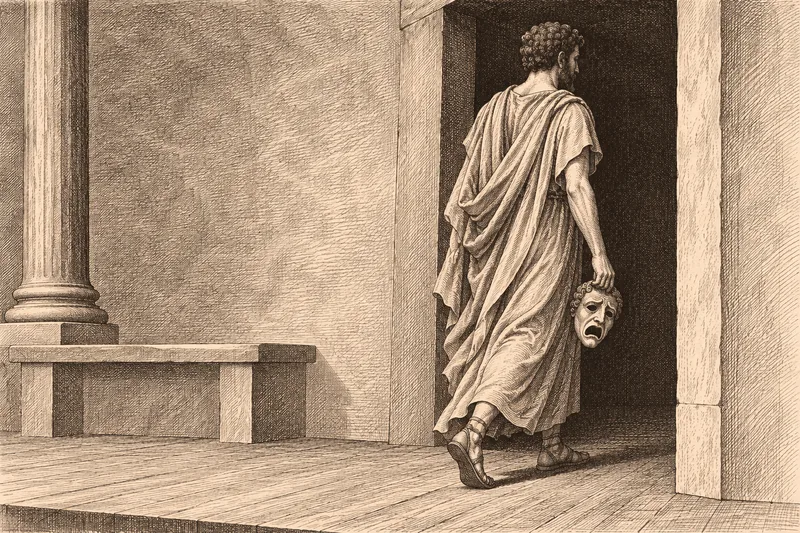
12.36 Man, you have lived as a citizen in this great city; what difference does it make to you whether for five years or three? For what the laws lay down is equal for everyone. So what is terrible about being dismissed from the city, not by a tyrant or an unjust judge, but by the nature that brought you into it, as if a praetor12 who had hired a comic actor were to dismiss him from the stage?
“But I have not spoken all five acts,13 only three.”
“You are right. Yet in life, three acts make the whole play. For the one who decides what is complete is the one responsible for your coming together then and your dissolution now; you are responsible for neither. Leave, then, with good will, for the one who dismisses you has good will too.”