Sanskrit text, ed. Ludwik Sternbach (1963) · 1 min read
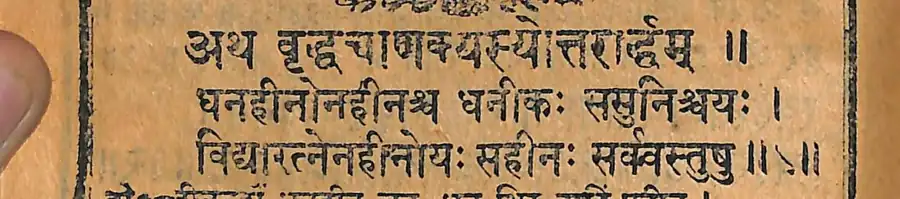
1 धनहीनो न हीनश्च धनिकः स सुनिश्चयात् ।विद्यारत्नेन यो हीनः स हीनः सर्ववस्तुषु ॥ १ ॥1
Show original scansSternbach 1963, p. 58Bombay printing, 1925–26, p. 71Mathura printing, 1914, p. 58Tap a scan to enlarge it. Scans: Internet Archive (Digital Library of India; eGangotri, CC0).
3 सुखार्थी चेत्त्यजेद्विद्यां विद्यार्थी चेत्त्यजेत्सुखम् ।सुखार्थिनः कुतो विद्या कुतो विद्यार्थिनः सुखम् ॥ ३ ॥2
Show original scansSternbach 1963, p. 58Bombay printing, 1925–26, p. 72Mathura printing, 1914, p. 58Tap a scan to enlarge it. Scans: Internet Archive (Digital Library of India; eGangotri, CC0).
4 कवयः किं न पश्यन्ति किं न कुर्वन्ति योषितः ।मद्यपाः किं न जल्पन्ति किं न भक्षन्ति वायसाः ॥ ४ ॥3
Show original scansSternbach 1963, p. 59Bombay printing, 1925–26, p. 72Mathura printing, 1914, p. 59Tap a scan to enlarge it. Scans: Internet Archive (Digital Library of India; eGangotri, CC0).
5 रङ्कं करोति राजानं राजानं रङ्कमेव च ।धनिनं निर्धनं चैव निर्धनं धनिनं विधिः ॥ ५ ॥
Show original scansSternbach 1963, p. 59Bombay printing, 1925–26, p. 72Mathura printing, 1914, p. 59Tap a scan to enlarge it. Scans: Internet Archive (Digital Library of India; eGangotri, CC0).
Show original scansSternbach 1963, p. 59Bombay printing, 1925–26, p. 73Mathura printing, 1914, p. 59Tap a scan to enlarge it. Scans: Internet Archive (Digital Library of India; eGangotri, CC0).
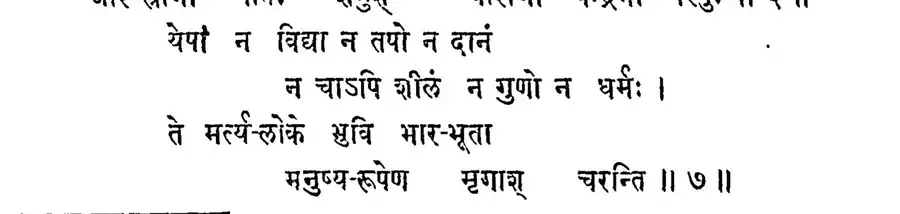
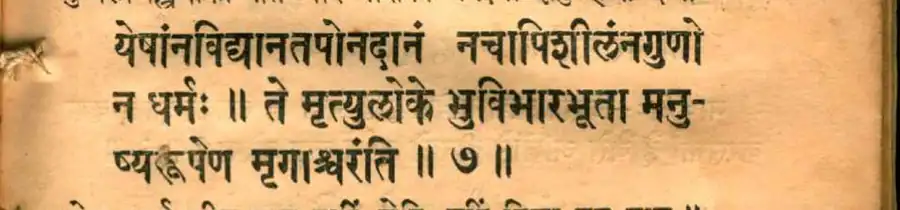
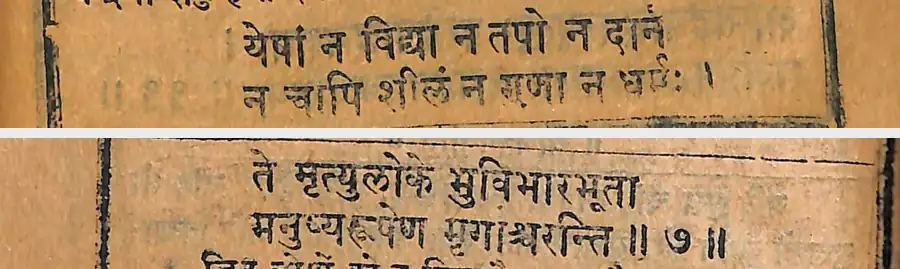
7 येषां न विद्या न तपो न दानंन चापि शीलं न गुणो न धर्मः ।ते मर्त्यलोके भुवि भारभूतामनुष्यरूपेण मृगाश्चरन्ति ॥ ७ ॥
Show original scansSternbach 1963, p. 59Bombay printing, 1925–26, p. 73Mathura printing, 1914, pp. 59–60Tap a scan to enlarge it. Scans: Internet Archive (Digital Library of India; eGangotri, CC0).
8 अन्तः सारविहीनानामुपदेशो न जायते ।मलयाचलसंसर्गान्न वेणुश्चन्दनायते ॥ ८ ॥
Show original scansSternbach 1963, p. 60Bombay printing, 1925–26, p. 73Mathura printing, 1914, p. 60Tap a scan to enlarge it. Scans: Internet Archive (Digital Library of India; eGangotri, CC0).
9 यस्य नास्ति स्वयं प्रज्ञा शास्त्रं तस्य करोति किम् ।लोचनाभ्यां विहीनस्य दर्पणः किं करिष्यति ॥ ९ ॥
Show original scansSternbach 1963, p. 60Bombay printing, 1925–26, p. 74Mathura printing, 1914, p. 60Tap a scan to enlarge it. Scans: Internet Archive (Digital Library of India; eGangotri, CC0).
10 दुर्जनं सज्जनं कर्तुमुपायो न हि भूतले ।अपानं शतधा धौतं न श्रेष्ठमिन्द्रियं भवेत् ॥ १० ॥
Show original scansSternbach 1963, p. 60Bombay printing, 1925–26, p. 74Mathura printing, 1914, p. 60Tap a scan to enlarge it. Scans: Internet Archive (Digital Library of India; eGangotri, CC0).
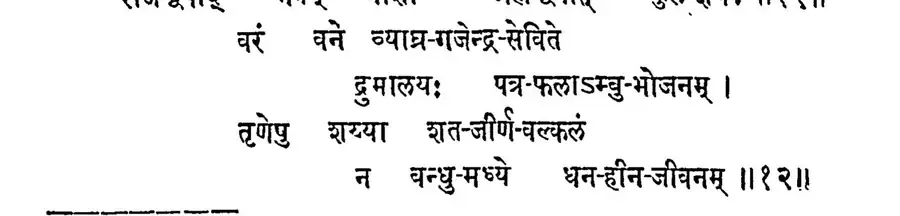
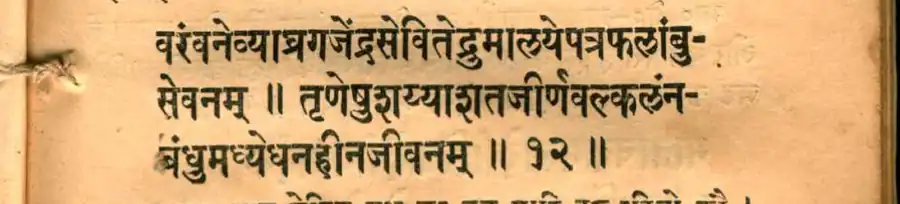
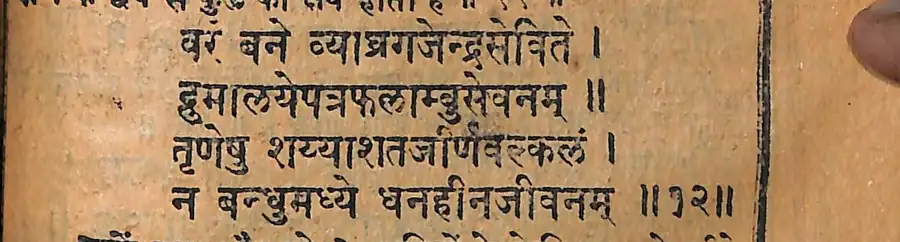
11 आत्मद्वेषाद्भवेन्मृत्युः परद्वेषाद्धनक्षयः ।राजद्वेषाद्भवेन्नाशो ब्रह्मद्वेषात्कुलक्षयः ॥ ११ ॥printings differ
Show original scansSternbach 1963, p. 60Bombay printing, 1925–26, p. 75Mathura printing, 1914, p. 60Tap a scan to enlarge it. Scans: Internet Archive (Digital Library of India; eGangotri, CC0).
Show original scansSternbach 1963, p. 60Bombay printing, 1925–26, p. 75Mathura printing, 1914, p. 61Tap a scan to enlarge it. Scans: Internet Archive (Digital Library of India; eGangotri, CC0).
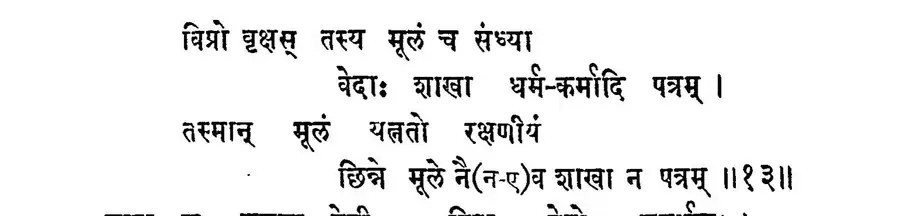
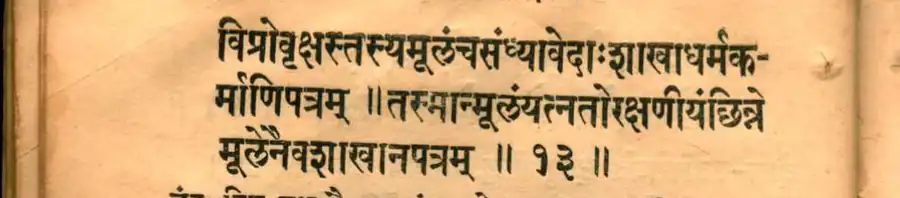
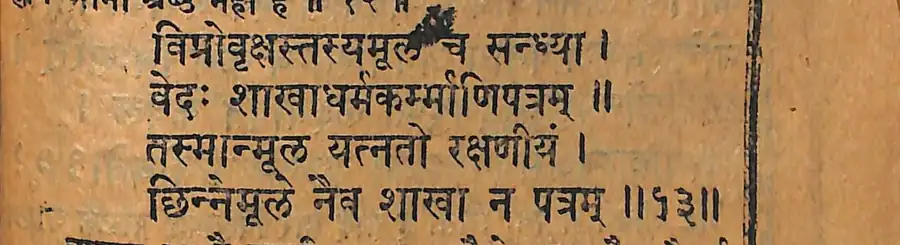
13 विप्रो वृक्षस्तस्य मूलं च संध्यावेदाः शाखा धर्मकर्मादि पत्रम् ।तस्मान्मूलं यततो रक्षणीयंछिन्ने मूले नैव शाखा न पत्रम् ॥ १३ ॥
Show original scansSternbach 1963, p. 61Bombay printing, 1925–26, p. 76Mathura printing, 1914, p. 61Tap a scan to enlarge it. Scans: Internet Archive (Digital Library of India; eGangotri, CC0).
14 माता च कमला देवी पिता देवो जनार्दनः ।बान्धवा विष्णुभक्ताश्च स्वदेशो भुवनत्रयम् ॥ १४ ॥
Show original scansSternbach 1963, p. 61Bombay printing, 1925–26, p. 76Mathura printing, 1914, p. 4Tap a scan to enlarge it. Scans: Internet Archive (Digital Library of India; eGangotri, CC0).
15 एकवृक्षसमारूढा नाना वर्णा विहंगमाः ।प्रभाते दिक्षु दशसु का तत्र परिवेदना ॥ १५ ॥4
Show original scansSternbach 1963, p. 61Bombay printing, 1925–26, p. 76Mathura printing, 1914, p. 62Tap a scan to enlarge it. Scans: Internet Archive (Digital Library of India; eGangotri, CC0).
Show original scansSternbach 1963, p. 62Bombay printing, 1925–26, p. 77Mathura printing, 1914, p. 62Tap a scan to enlarge it. Scans: Internet Archive (Digital Library of India; eGangotri, CC0).
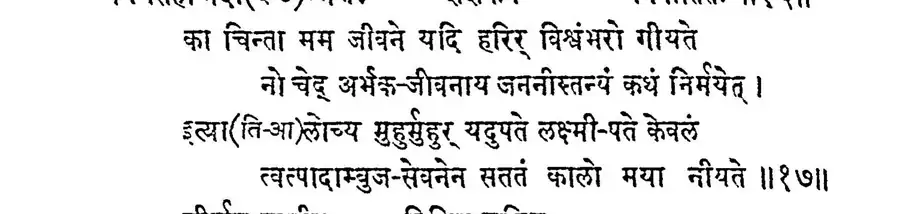
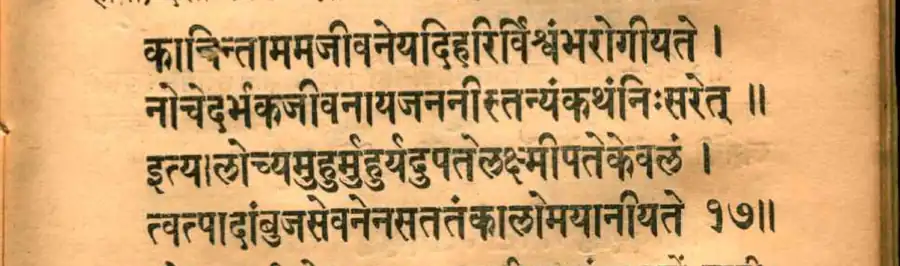
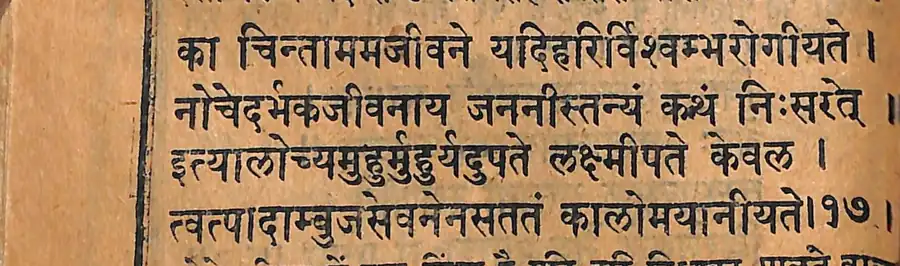
17 का चिन्ता मम जीवने यदि हरिर्विश्वंभरो गीयतेनो चेदर्भकजीवनाय जननीस्तन्यं कथं निर्मयेत् ।इत्यालोच्य मुहुर्मुहुर्यदुपते लक्ष्मीपते केवलंत्वत्पादाम्बुजसेवनेन सततं कालो मया नीयते ॥ १७ ॥printings differ
Show original scansSternbach 1963, p. 62Bombay printing, 1925–26, p. 77Mathura printing, 1914, p. 62Tap a scan to enlarge it. Scans: Internet Archive (Digital Library of India; eGangotri, CC0).
Show original scansSternbach 1963, p. 62Bombay printing, 1925–26, p. 78Mathura printing, 1914, p. 63Tap a scan to enlarge it. Scans: Internet Archive (Digital Library of India; eGangotri, CC0).
Show original scansSternbach 1963, p. 63Bombay printing, 1925–26, p. 78Mathura printing, 1914, p. 63Tap a scan to enlarge it. Scans: Internet Archive (Digital Library of India; eGangotri, CC0).
Show original scansSternbach 1963, p. 63Bombay printing, 1925–26, p. 79Mathura printing, 1914, p. 63Tap a scan to enlarge it. Scans: Internet Archive (Digital Library of India; eGangotri, CC0).
Notes
Bombay printing of 1925: धनहीनोनहीनश्च धनिकः स सुनिश्चयः ॥ / विद्यारत्नेनयोहीनः सहीनःसर्ववस्तुषु ॥ १ ॥. Mathura printing of 1914: धनहीनोनहीनश्च धनीकः ससुनिश्चयः । / विद्यारत्नेनहीनोयः सहीनः सर्ववस्तुषु ॥ १ ॥. Both printings keep “he is rich.” Where this text adds “certainly,” they have a form that can mean “a firm conviction” or describe someone as “firm in his resolve.” The 1914 printing also switches the order of “who” and “lacks” in “who lacks the jewel of learning.”↩
Bombay printing of 1925: सुखार्थीचेत्त्यजेद्विद्यांविद्यार्थीचेत्त्यजेत्सुखम् ॥ / सुखार्थिनःकुतोविद्यासुखंविद्यार्थिनः कुतः ३ ॥. Mathura printing of 1914: सुखार्थीचत्यजेद्विद्या विद्यार्थीचत्यजेत्सुखम् । / सुखार्थिनःकुतोविद्याः सुखंविद्यार्थिनःकुतः ॥ ३ ॥. Both printings move “where from?” to the end of the question about a student’s comfort. The 1914 printing also replaces both instances of “if” with “and,” gives “branches of learning” for “learning” in the first question, and uses an awkward form of “learning” after “give up.”↩
Bombay printing of 1925: कवयःकिंनपश्यंति किं न कुर्वंतियोषितः ॥ / मद्यपाः किंनजल्पंतिकिंनखादन्तिवायसाः ॥४॥. The Mathura printing of 1914 has the same words. Both printings use another word for “eat” in the question “What will crows not eat?”↩
Bombay printing of 1925: एकवृक्षसमारूढानानावर्णाविहंगमाः ॥ / प्रभातेदिक्षुदशसुयांतिकापरिदेवना ॥ १५ ॥. Mathura printing of 1914 (its 10.14): एकवृक्षसमारूढा नानावर्णविहंगमाः । / प्रभातेदिक्षुदशसु कातत्रपरिवेदना ॥ १४ ॥. The 1925 printing adds “they go” in the ten directions, drops “there,” and asks “why lament?” for “what grief is there in that?” The 1914 printing joins “birds of various colours” into one expression. The birds are described alike.↩
Bombay printing of 1925: बुद्धिर्यस्यबलंतस्य निर्बुद्धेश्च कुतोबलम् ॥ / वनेसिंहोमदोन्मत्तोजंबुकेननिपातितः ॥१६॥. The Mathura printing of 1914 has the same words as this text. The 1925 printing says a “jackal” brought down the lion. This text and the 1914 printing say a “hare.”↩
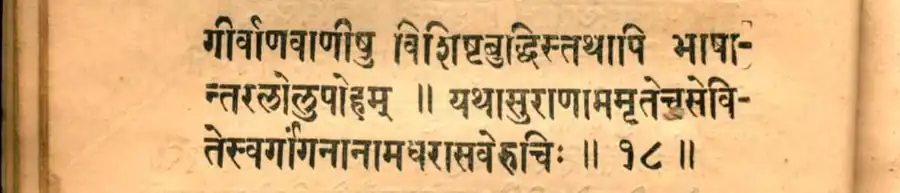
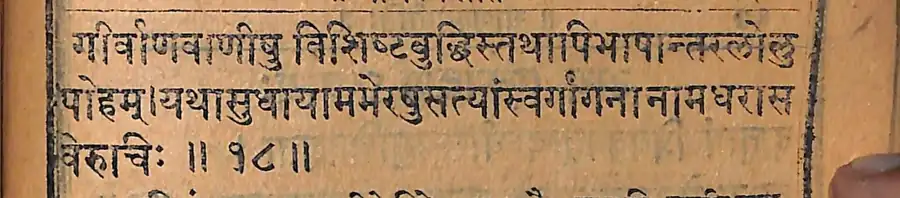
Bombay printing of 1925: गीर्वाणवाणीषु विशिष्टबुद्धिस्तथापि भाषा- / न्तरलोलुपोहम् ॥ यथासुराणाममृतेचसेवि- / तेस्वर्गांगनानामधरासवेरुचिः ॥ १८ ॥. Mathura printing of 1914: गीर्वाणवाणीषु विशिष्टबुद्धिस्तथापिभाषान्तरलोलु / पोहम्।यथासुधायाममरेषुसत्यांस्वर्गांगनानामधरास / वेरुचिः ॥ १८ ॥. Both printings have the full word for “another language” in “I am eager for another language,” where this text has a shorter, less clear form. For “though the gods have nectar,” the 1925 printing says “and when the gods have tasted nectar.” The 1914 printing says “when nectar is there among the immortals,” using other words for “nectar” and “gods.”↩
Where the printings differ
Where the three printings of the Sanskrit disagree in meaning: the words of each, a literal rendering, and the printed page.
Verse 11Both older printings make hatred of close associates, rather than hatred of oneself, the cause of death.Sternbach 1963 (our text)आत्मद्वेषाद्भवेन्मृत्युःātmadveṣād bhaven mṛtyuḥ“death arises from hatred of oneself”The whole verse in this printing: Hatred of oneself causes death, hatred of others causes loss of money, hatred of the king causes ruin, and hatred of Brahmins causes the family’s destruction.Bombay printing, 1925–26आप्तद्वेषाद्भवेन्मृत्युःāptadveṣād bhaven mṛtyuḥ“death arises from hatred of close associates”The whole verse in this printing: Hatred of one’s close associates causes death, hatred of others causes loss of money, hatred of the king causes ruin, and hatred of Brahmins causes the family’s destruction.Mathura printing, 1914the same as the Bombay printingSternbach 1963, p. 60Bombay printing, 1925–26, p. 75Mathura printing, 1914, p. 60Tap a page to enlarge it. Scans: Internet Archive (Digital Library of India; eGangotri, CC0).↩
Verse 16Bombay replaces the hare that brings down the lion with a jackal.Sternbach 1963 (our text)शशकेनśaśakena“by a hare”The whole verse in this printing: Whoever has intelligence has strength; where can someone without intelligence find strength? In the forest, a lion maddened with pride was brought down by a hare.Bombay printing, 1925–26जंबुकेनjaṃbukena“by a jackal”The whole verse in this printing: Whoever has intelligence has strength; where can someone without intelligence find strength? In the forest, a lion maddened with pride was brought down by a jackal.Mathura printing, 1914the same as SternbachSternbach 1963, p. 62Bombay printing, 1925–26, p. 77Mathura printing, 1914, p. 62Tap a page to enlarge it. Scans: Internet Archive (Digital Library of India; eGangotri, CC0).↩
Verse 17Both older printings ask how mother's milk would flow out instead of how Hari would create it.Sternbach 1963 (our text)निर्मयेत्nirmayet“would create”The whole verse in this printing: Why should I worry about my livelihood if Hari is praised as the sustainer of the world; otherwise, how would he create a mother’s milk to keep a baby alive? Thinking this over again and again, O lord of the Yadus, O husband of Lakshmi, I continually spend my time only in serving your lotus feet.Bombay printing, 1925–26निःसरेत्niḥsaret“would flow out”The whole verse in this printing: Why should I worry about my livelihood if Hari is praised as the sustainer of the world; otherwise, how would a mother’s milk flow out to keep a baby alive? Thinking this over again and again, O lord of the Yadus, O husband of Lakshmi, I continually spend my time only in serving your lotus feet.Mathura printing, 1914the same as the Bombay printingSternbach 1963, p. 62Bombay printing, 1925–26, p. 77Mathura printing, 1914, p. 62Tap a page to enlarge it. Scans: Internet Archive (Digital Library of India; eGangotri, CC0).↩
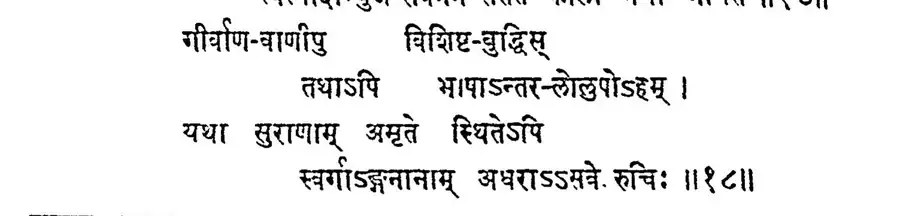
Verse 18Bombay says nectar has been consumed instead of merely being available, while Mathura uses synonymous words for Sternbach's sense.Sternbach 1963 (our text)अमृते स्थितेऽपिamṛte sthite 'pi“even when nectar is present”The whole verse in this printing: I have a keen understanding of the gods’ language, yet I long for other languages, just as the gods, even when nectar is available, have a taste for the wine of heavenly women’s lips.Bombay printing, 1925–26अमृतेचसेवितेamṛte ca sevite“and when nectar has been consumed”The whole verse in this printing: I have a keen understanding of the gods’ language, yet I long for other languages, just as the gods, even after drinking nectar, have a taste for the wine of heavenly women’s lips.Mathura printing, 1914सुधायाममरेषु सत्यांsudhāyām amareṣu satyāṃ“when nectar is present among the immortals”The whole verse in this printing: I have a keen understanding of the gods’ language, yet I long for other languages, just as the gods, even when nectar is available, have a taste for the wine of heavenly women’s lips.Sternbach 1963, p. 62Bombay printing, 1925–26, p. 78Mathura printing, 1914, p. 63Tap a page to enlarge it. Scans: Internet Archive (Digital Library of India; eGangotri, CC0).↩
Sanskrit text, ed. Ludwik Sternbach (1963). Internet Archive scans of Sternbach's edition (Digital Library of India) and of the 1925 and 1914 printings (archive.org, archive.org, archive.org). The ancient verses are in the public domain; the editor's notes and apparatus are not reproduced.