Sanskrit text, ed. Ludwik Sternbach (1963) · 1 min read
1 अर्थनाशं मनस्तापं गृहे दुश्चरितानि च ।वञ्चनं चापमानं च मतिमान्न प्रकाशयेत् ॥ १ ॥1printings differ
Show original scansSternbach 1963, p. 41Bombay printing, 1925–26, p. 47Mathura printing, 1914, p. 39Tap a scan to enlarge it. Scans: Internet Archive (Digital Library of India; eGangotri, CC0).
2 धनधान्यप्रयोगेषु विद्यासंग्रहणेषु च ।आहारे व्यवहारे च त्यक्तलज्जः सुखी भवेत् ॥ २ ॥2
Show original scansSternbach 1963, p. 41Bombay printing, 1925–26, p. 47Mathura printing, 1914, p. 39Tap a scan to enlarge it. Scans: Internet Archive (Digital Library of India; eGangotri, CC0).
3 संतोषामृततृप्तानां यत्सुखं शान्तचेतसाम् ।न च तद्धनलुब्धानामितश्चेतश्च धावताम् ॥ ३ ॥3
Show original scansSternbach 1963, p. 41Bombay printing, 1925–26, p. 48Mathura printing, 1914, p. 40Tap a scan to enlarge it. Scans: Internet Archive (Digital Library of India; eGangotri, CC0).
4 संतोषस्त्रिषु कर्तव्यः स्वदारे भोजने धने ।त्रिषु चैव न कर्तव्योऽध्ययने तपदानयोः ॥ ४ ॥4printings differ
Show original scansSternbach 1963, p. 42Bombay printing, 1925–26, p. 48Mathura printing, 1914, p. 40Tap a scan to enlarge it. Scans: Internet Archive (Digital Library of India; eGangotri, CC0).
5 विप्रयोर्विप्रवह्न्योश्च दंपत्योः स्वामिभृत्ययोः ।अन्तरेण न गन्तव्यं हलस्य वृषभस्य च ॥ ५ ॥
Show original scansSternbach 1963, p. 42Bombay printing, 1925–26, p. 49Mathura printing, 1914, p. 41Tap a scan to enlarge it. Scans: Internet Archive (Digital Library of India; eGangotri, CC0).
6 पादाभ्यां न स्पृशेदग्निं गुरुं ब्राह्मणमेव च ।नैव गां न कुमारीं च न वृद्धं न शिशुं तथा ॥ ६ ॥
Show original scansSternbach 1963, p. 42Bombay printing, 1925–26, p. 49Mathura printing, 1914, p. 41Tap a scan to enlarge it. Scans: Internet Archive (Digital Library of India; eGangotri, CC0).
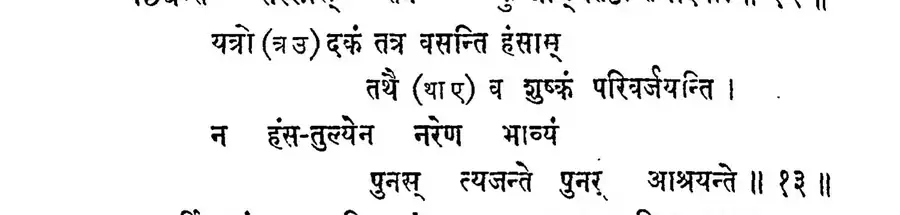
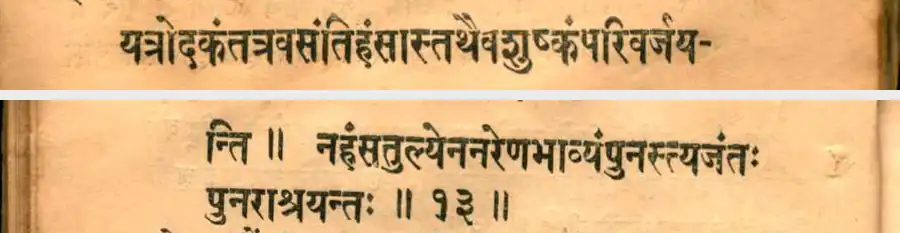
Show original scansSternbach 1963, p. 43Bombay printing, 1925–26, p. 49Mathura printing, 1914, p. 41Tap a scan to enlarge it. Scans: Internet Archive (Digital Library of India; eGangotri, CC0).
Show original scansSternbach 1963, p. 43Bombay printing, 1925–26, p. 50Mathura printing, 1914, p. 41Tap a scan to enlarge it. Scans: Internet Archive (Digital Library of India; eGangotri, CC0).
Show original scansSternbach 1963, p. 43Bombay printing, 1925–26, p. 50Mathura printing, 1914, p. 42Tap a scan to enlarge it. Scans: Internet Archive (Digital Library of India; eGangotri, CC0).
10 अनुलोमेन बलिनं प्रतिलोमेन दुर्जनम् ।आत्मतुल्यबलं शत्रुं विनयेन बलेन वा ॥ १० ॥printings differ
Show original scansSternbach 1963, p. 43Bombay printing, 1925–26, p. 50Mathura printing, 1914, p. 42Tap a scan to enlarge it. Scans: Internet Archive (Digital Library of India; eGangotri, CC0).
Show original scansSternbach 1963, p. 44Bombay printing, 1925–26, p. 51Mathura printing, 1914, p. 42Tap a scan to enlarge it. Scans: Internet Archive (Digital Library of India; eGangotri, CC0).
Show original scansSternbach 1963, p. 44Bombay printing, 1925–26, p. 51Mathura printing, 1914, p. 43Tap a scan to enlarge it. Scans: Internet Archive (Digital Library of India; eGangotri, CC0).
Show original scansSternbach 1963, p. 44Bombay printing, 1925–26, pp. 51–52Mathura printing, 1914, p. 97Tap a scan to enlarge it. Scans: Internet Archive (Digital Library of India; eGangotri, CC0).
14 उपार्जितानां वित्तानां त्याग एव हि रक्षणम् ।तडागोदरसंस्थानां परीवाह इवाम्भसाम् ॥ १४ ॥7
Show original scansSternbach 1963, p. 44Bombay printing, 1925–26, p. 52Mathura printing, 1914, p. 44Tap a scan to enlarge it. Scans: Internet Archive (Digital Library of India; eGangotri, CC0).
15 यस्यार्थास्तस्य मित्राणि यस्यार्थास्तस्य बान्धवाः ।यस्यार्थः स पुमाँल्लोके यस्यार्थः स च जीवति ॥ १५ ॥8
Show original scansSternbach 1963, p. 45Bombay printing, 1925–26, p. 52Mathura printing, 1914, p. 44Tap a scan to enlarge it. Scans: Internet Archive (Digital Library of India; eGangotri, CC0).
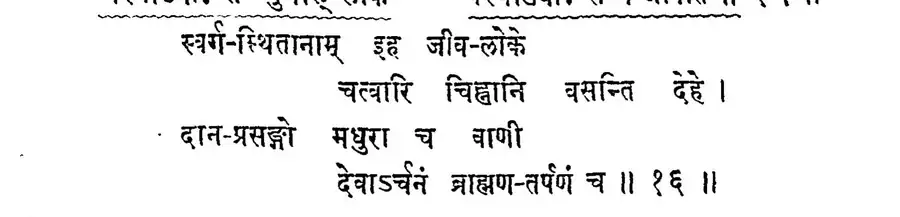
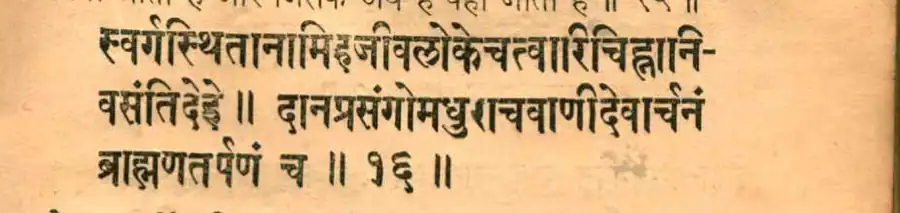
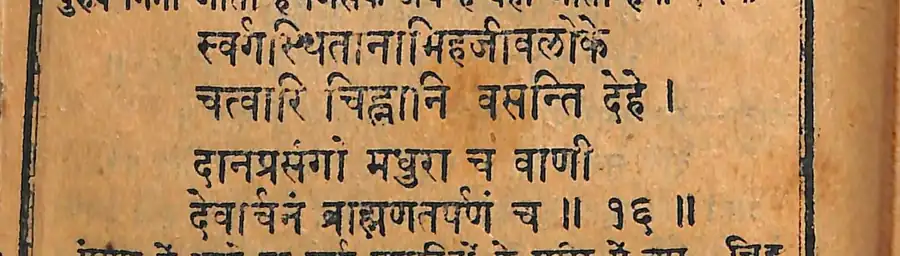
16 स्वर्गस्थितानामिह जीवलोकेचत्वारि चिह्नानि वसन्ति देहे ।दानप्रसङ्गो मधुरा च वाणीदेवार्चनं ब्राह्मणतर्पणं च ॥ १६ ॥
Show original scansSternbach 1963, p. 45Bombay printing, 1925–26, p. 53Mathura printing, 1914, p. 44Tap a scan to enlarge it. Scans: Internet Archive (Digital Library of India; eGangotri, CC0).
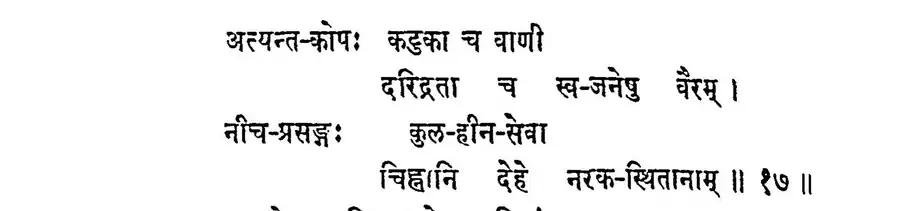
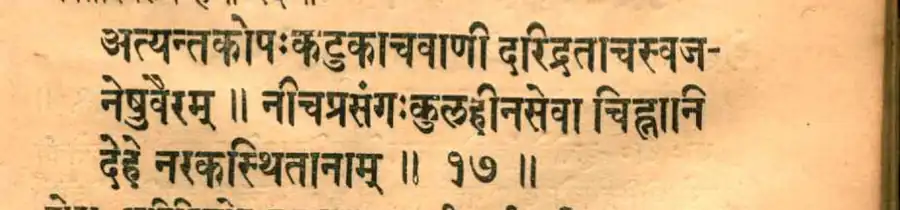
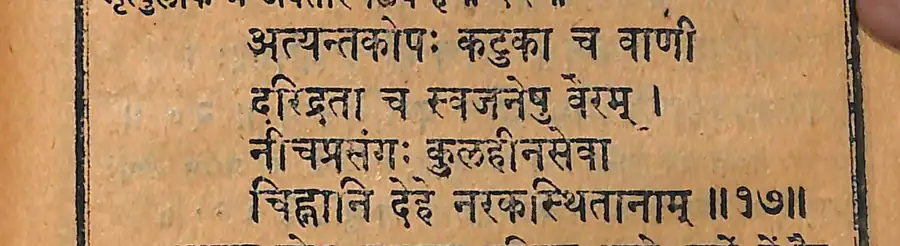
17 अत्यन्तकोपः कटुका च वाणीदरिद्रता च स्वजनेषु वैरम् ।नीचप्रसङ्गः कुलहीनसेवाचिह्नानि देहे नरकस्थितानाम् ॥ १७ ॥
Show original scansSternbach 1963, p. 46Bombay printing, 1925–26, p. 53Mathura printing, 1914, p. 45Tap a scan to enlarge it. Scans: Internet Archive (Digital Library of India; eGangotri, CC0).
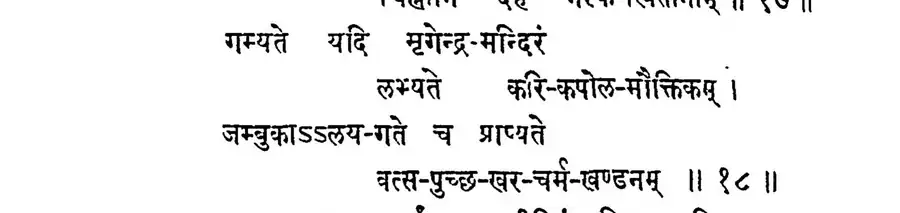
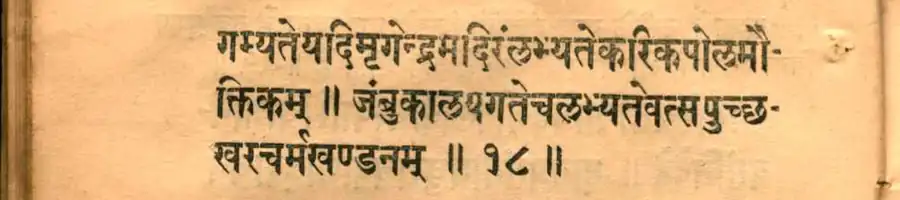
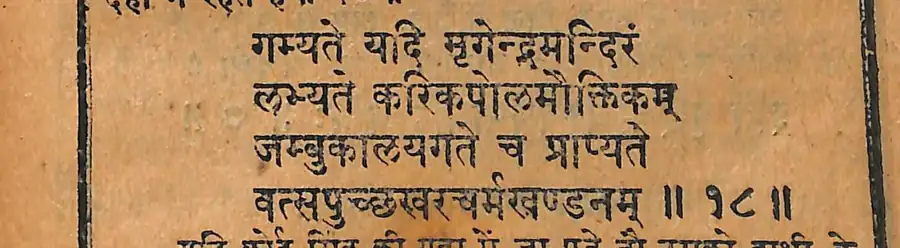
18 गम्यते यदि मृगेन्द्रमन्दिरंलभ्यते करिकपोलमौक्तिकम् ।जम्बुकालयगते च प्राप्यतेवत्सपुच्छखरचर्मखण्डनम् ॥ १८ ॥
Show original scansSternbach 1963, p. 46Bombay printing, 1925–26, p. 54Mathura printing, 1914, p. 45Tap a scan to enlarge it. Scans: Internet Archive (Digital Library of India; eGangotri, CC0).
19 शुनः पुच्छमिव व्यर्थं जीवितं विद्यया विना ।न गुह्यगोपने शक्तं न च दंशनिवारणे ॥ १९ ॥
Show original scansSternbach 1963, p. 46Bombay printing, 1925–26, p. 54Mathura printing, 1914, p. 45Tap a scan to enlarge it. Scans: Internet Archive (Digital Library of India; eGangotri, CC0).
20 वाचः शौचं च मनसः शौचमिन्द्रियनिग्रहः ।सर्वभूते दया शौचं एतच्छौचं परार्थिनाम् ॥ २० ॥9
Show original scansSternbach 1963, p. 46Bombay printing, 1925–26, p. 54Mathura printing, 1914, p. 46Tap a scan to enlarge it. Scans: Internet Archive (Digital Library of India; eGangotri, CC0).
21 पुष्पे गन्धं तिले तैलं काष्ठेऽग्निं पयसि घृतम् ।इक्षौ गुडं तथा देहे पश्यात्मानं विवेकतः ॥ २१ ॥
Show original scansSternbach 1963, p. 47Bombay printing, 1925–26, p. 55Mathura printing, 1914, p. 46Tap a scan to enlarge it. Scans: Internet Archive (Digital Library of India; eGangotri, CC0).
Notes
Bombay printing of 1925: अर्थनाशंमनस्तापंगृहिणीचरितानि च ॥ / नीचवाक्यंचापमानंमतिमान्नप्रकाशयेत् ॥ १ ॥. The Mathura printing of 1914 has the same words. Both printings give “one’s wife’s conduct” for “misdeeds at home” and “a vulgar person’s words” for “deception.” They also drop the last “and” in the list of things to keep private.↩
The Bombay printing of 1925 gives this verse twice, as its 7.2 and again as its 12.21.↩
Bombay printing of 1925: सन्तोषामृततृप्तानांयत्सुखंशांतिरेवच ॥ / नचतद्धनलुब्धानामितश्चेतश्चधावताम् ॥ ३ ॥. The Mathura printing of 1914 has the same words. This text describes “the happiness of those whose minds are at peace.” Both printings speak of “happiness and peace itself,” naming two things enjoyed by those who are content.↩
The Bombay printing of 1925 gives this verse twice, as its 7.4 and again as its 13.19.↩
Bombay printing of 1925: शकटंपंचहस्तेनदशहस्तेनवाजिनम् । / हस्तिनंतुसहस्रेणदेशत्यागेनदुर्जनम् ॥ ७ ॥. Mathura printing of 1914: शकटं पंचहस्तेन दशहस्तेनवाजिनम् । / हस्तींहस्तसहस्रेण देशत्यागेनदुर्जनः ॥ ७ ॥. For an elephant this text gives “a hundred cubits.” The 1925 printing says “but a thousand,” leaving the unit understood. The 1914 printing specifies “a thousand cubits.” Its endings for “elephant” and “wicked man” fit the list awkwardly.↩
Bombay printing of 1925: हस्तीह्यंकुशमात्रेणवाजीहस्तेनताड्यते । / शृंगीलकुटहस्तेनखड्गहस्तेनदुर्जनः ॥ ८ ॥. Mathura printing of 1914: हस्ती अंकुशमात्रेण बाजी हस्तेनताड्यते । / शृंगी लगुडहस्तेन खड्गहस्तेनदुर्जनः ॥ ८ ॥. Both printings give “with the goad alone” for “with goad in hand.” The 1925 printing adds “indeed” and uses another form of the word for the “club” used on a horned animal.↩
Bombay printing of 1925: उपार्जितानांवित्तानांत्यागेनैवहिरक्षणम् ॥ / तडागोदरसंस्थानांपरिस्रवइवांभसाम् ॥ १४ ॥. Mathura printing of 1914: उपार्जितानां वित्तानां त्यागएवहिरक्षणम् । / तडागोदरसंस्थानां परिस्रवइवांभसाम् ॥ १४ ॥. Both printings liken water leaving a pond to an “outflow” or “seepage” where this text has “overflow.” The 1925 printing also says wealth is protected “by giving it away” where this text says “giving it away is its protection.”↩
The Bombay printing of 1925 gives this verse twice, as its 6.5 and again as its 7.15.↩
Bombay printing of 1925: वाचांशौचंचमनसःशौचमिन्द्रियनिग्रहः ॥ / सर्वभूतदयाशौचमेतच्छौचंपरार्थिनाम् ॥ २० ॥. The Mathura printing of 1914 has the same words. Both printings speak of purity “of words” where this text says “of speech.” They also put “compassion for all beings” into one expression. The meaning is the same.↩
Where the printings differ
Where the three printings of the Sanskrit disagree in meaning: the words of each, a literal rendering, and the printed page.
Verse 1Both older printings replace misconduct in the home with the wife's conduct and replace deception with base speech.Sternbach 1963 (our text)गृहे दुश्चरितानि ; वञ्चनंgṛhe duścaritāni ; vañcanaṃ“misconduct in the home; deception”The whole verse in this printing: A sensible person should not reveal loss of money, mental distress, misconduct at home, deception, or humiliation.Bombay printing, 1925–26गृहिणीचरितानि ; नीचवाक्यंgṛhiṇīcaritāni ; nīcavākyaṃ“the wife's conduct; base speech”The whole verse in this printing: A sensible person should not reveal loss of money, mental distress, his wife’s conduct, base speech, or humiliation.Mathura printing, 1914गृहिणी चरितानि ; नीचवाक्यंgṛhiṇī caritāni ; nīcavākyaṃ“the wife's conduct; base speech”The whole verse in this printing: A sensible person should not reveal loss of money, mental distress, his wife’s conduct, base speech, or humiliation.Sternbach 1963, p. 41Bombay printing, 1925–26, p. 47Mathura printing, 1914, p. 39Tap a page to enlarge it. Scans: Internet Archive (Digital Library of India; eGangotri, CC0).↩
Verse 4Both older printings replace austerity with recitation among the activities in which one should remain unsatisfied.Sternbach 1963 (our text)तपदानयोःtapadānayoḥ“in austerity and giving”The whole verse in this printing: One should be content with three things: one’s own wife, food, and money; one should not be content with three things: study, austerity, and giving.Bombay printing, 1925–26जपदानयोःjapadānayoḥ“in recitation and giving”The whole verse in this printing: One should be content with three things: one’s own wife, food, and money; one should not be content with three things: study, recitation, and giving.Mathura printing, 1914the same as the Bombay printingSternbach 1963, p. 42Bombay printing, 1925–26, p. 48Mathura printing, 1914, p. 40Tap a page to enlarge it. Scans: Internet Archive (Digital Library of India; eGangotri, CC0).↩
Verse 7Both older printings increase the distance from an elephant from one hundred cubits to one thousand.Sternbach 1963 (our text)हस्तिनं शतहस्तेनhastinaṃ śatahastena“an elephant, by a hundred cubits”The whole verse in this printing: Keep five cubits away from a cart, ten cubits from a horse, a hundred cubits from an elephant, and leave the country to avoid a wicked person.Bombay printing, 1925–26हस्तिनंतुसहस्रेणhastinaṃ tu sahasreṇa“and an elephant, by a thousand”The whole verse in this printing: Keep five cubits away from a cart, ten cubits from a horse, a thousand cubits from an elephant, and leave the country to avoid a wicked person.Mathura printing, 1914हस्तींहस्तसहस्रेणhastīṃ hastasahasreṇa“an elephant, by a thousand cubits”The whole verse in this printing: Keep five cubits away from a cart, ten cubits from a horse, a thousand cubits from an elephant, and leave the country to avoid a wicked person.Sternbach 1963, p. 43Bombay printing, 1925–26, p. 49Mathura printing, 1914, p. 41Tap a page to enlarge it. Scans: Internet Archive (Digital Library of India; eGangotri, CC0).↩
Verse 8Both older printings say the elephant is struck with a goad alone instead of by someone holding a goad.Sternbach 1963 (our text)अङ्कुशहस्तेनaṅkuśahastena“by one holding a goad”The whole verse in this printing: An elephant is struck by someone holding a goad, a horse with the hand, a horned animal by someone holding a stick, and a wicked person by someone holding a sword.Bombay printing, 1925–26ह्यंकुशमात्रेणhy aṅkuśamātreṇa“indeed with a goad alone”The whole verse in this printing: An elephant is struck with a goad alone, a horse with the hand, a horned animal by someone holding a stick, and a wicked person by someone holding a sword.Mathura printing, 1914अंकुशमात्रेणaṅkuśamātreṇa“with a goad alone”The whole verse in this printing: An elephant is struck with a goad alone, a horse with the hand, a horned animal by someone holding a stick, and a wicked person by someone holding a sword.Sternbach 1963, p. 43Bombay printing, 1925–26, p. 50Mathura printing, 1914, p. 41Tap a page to enlarge it. Scans: Internet Archive (Digital Library of India; eGangotri, CC0).↩
Verse 10Bombay replaces the wicked person with the weak person as the one to oppose.Sternbach 1963 (our text)दुर्जनम्durjanam“a wicked person”The whole verse in this printing: Deal with a strong person by going along with him, a wicked person by opposing him, and an enemy of equal strength through humility or force.Bombay printing, 1925–26दुर्बलम्durbalam“a weak person”The whole verse in this printing: Deal with a strong person by going along with him, a weak person by opposing him, and an enemy of equal strength through humility or force.Mathura printing, 1914the same as SternbachSternbach 1963, p. 43Bombay printing, 1925–26, p. 50Mathura printing, 1914, p. 42Tap a page to enlarge it. Scans: Internet Archive (Digital Library of India; eGangotri, CC0).↩
Sanskrit text, ed. Ludwik Sternbach (1963). Internet Archive scans of Sternbach's edition (Digital Library of India) and of the 1925 and 1914 printings (archive.org, archive.org, archive.org). The ancient verses are in the public domain; the editor's notes and apparatus are not reproduced.