Show original scansSternbach 1963, p. 54Bombay printing, 1925–26, p. 64Mathura printing, 1914, p. 53Tap a scan to enlarge it. Scans: Internet Archive (Digital Library of India; eGangotri, CC0).
2 परस्परस्य मर्माणि ये भाषन्ते नराधमाः ।त एव विलयं यान्ति वल्मीकोदरसर्पवत् ॥ २ ॥
Show original scansSternbach 1963, p. 54Bombay printing, 1925–26, p. 64Mathura printing, 1914, p. 53Tap a scan to enlarge it. Scans: Internet Archive (Digital Library of India; eGangotri, CC0).
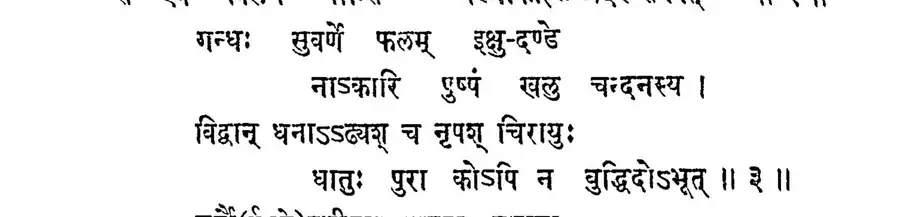
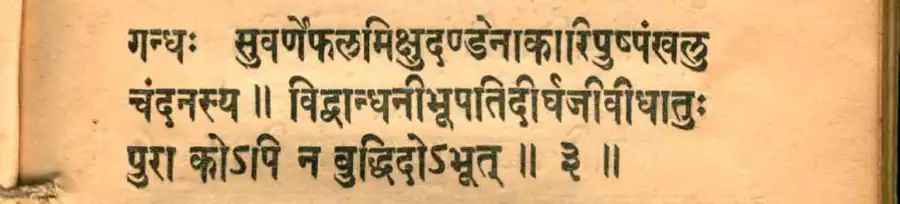
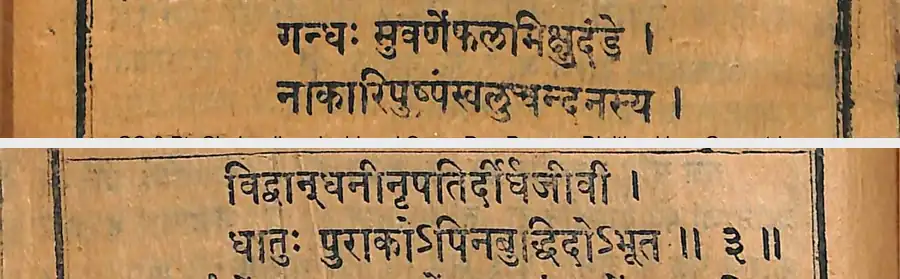
3 गन्धः सुवर्णे फलमिक्षुदण्डेनाकारि पुष्पं खलु चन्दनस्य ।विद्वान्धनाढ्यश्च नृपश्चिरायुःधातुः पुरा कोऽपि न बुद्धिदोऽभूत् ॥ ३ ॥2
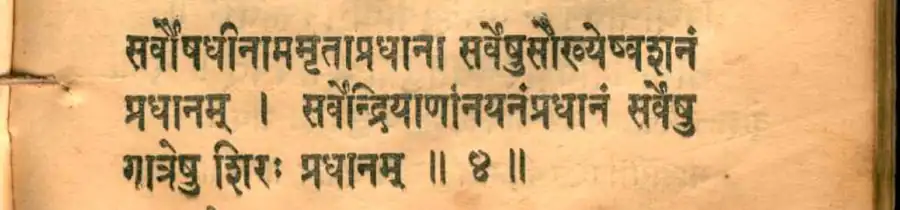
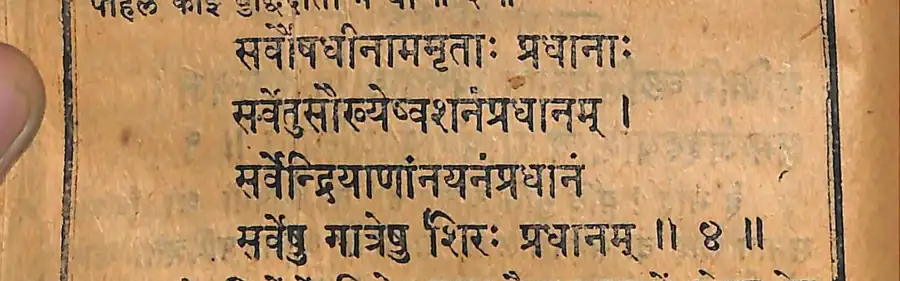
Show original scansSternbach 1963, p. 54Bombay printing, 1925–26, p. 65Mathura printing, 1914, pp. 53–54Tap a scan to enlarge it. Scans: Internet Archive (Digital Library of India; eGangotri, CC0).
Show original scansSternbach 1963, p. 54Bombay printing, 1925–26, p. 65Mathura printing, 1914, p. 54Tap a scan to enlarge it. Scans: Internet Archive (Digital Library of India; eGangotri, CC0).
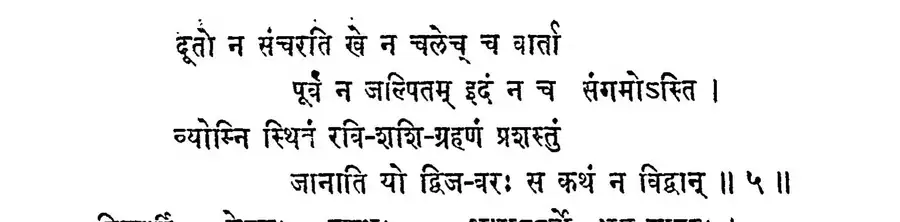
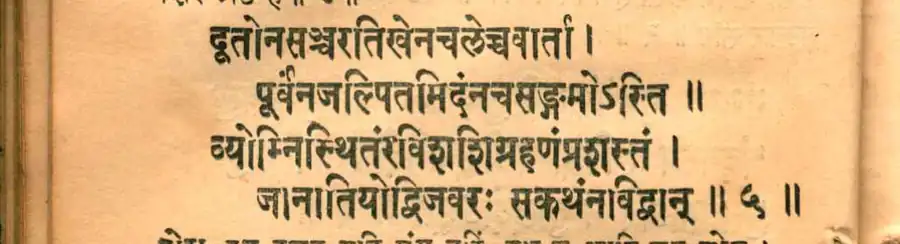
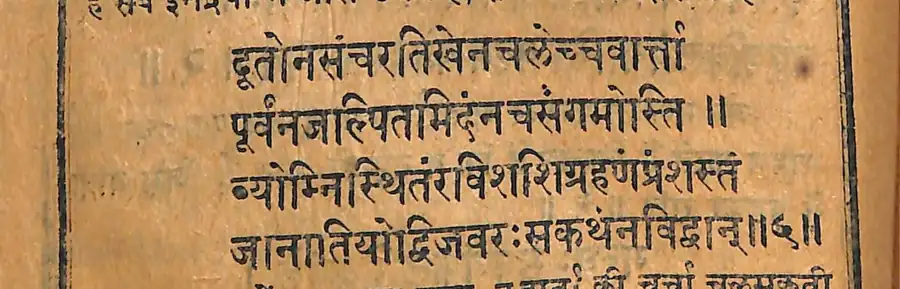
5 दूतो न संचरति खे न चलेच्च वार्तापूर्वं न जल्पितमिदं न च संगमोऽस्ति ।व्योम्नि स्थितं रविशशिग्रहणं प्रशस्तुंजानाति यो द्विजवरः स कथं न विद्वान् ॥ ५ ॥printings differ
Show original scansSternbach 1963, p. 55Bombay printing, 1925–26, p. 66Mathura printing, 1914, p. 54Tap a scan to enlarge it. Scans: Internet Archive (Digital Library of India; eGangotri, CC0).
6 विद्यार्थी सेवकः पान्थः क्षुधार्तो भयकातरः ।भाण्डारी प्रतीहारी च सप्त सुप्तान्प्रबोधयेत् ॥ ६ ॥
Show original scansSternbach 1963, p. 55Bombay printing, 1925–26, p. 66Mathura printing, 1914, p. 55Tap a scan to enlarge it. Scans: Internet Archive (Digital Library of India; eGangotri, CC0).
7 अहिं नृपं च शार्दूलं किटिं च बालकं तथा ।परश्वानं च मूर्खं च सप्त सुप्तान्न बोधयेत् ॥ ७ ॥
Show original scansSternbach 1963, p. 55Bombay printing, 1925–26, p. 67Mathura printing, 1914, p. 55Tap a scan to enlarge it. Scans: Internet Archive (Digital Library of India; eGangotri, CC0).
9 यस्मिन्रुष्टे भयं नास्ति तुष्टे नैव धनागमः ।निग्रहोऽनुग्रहो नास्ति स रुष्टः किं करिष्यति ॥ ९ ॥
Show original scansSternbach 1963, p. 56Bombay printing, 1925–26, p. 67Mathura printing, 1914, p. 55Tap a scan to enlarge it. Scans: Internet Archive (Digital Library of India; eGangotri, CC0).
10 निर्विषेणापि सर्पेण कर्तव्या महती फणा ।विषमस्तु न चाप्यस्तु फणाटोपो भयंकरः ॥ १० ॥printings differ
Show original scansSternbach 1963, p. 56Bombay printing, 1925–26, p. 68Mathura printing, 1914, p. 56Tap a scan to enlarge it. Scans: Internet Archive (Digital Library of India; eGangotri, CC0).
11 प्रातर्द्यूतप्रसङ्गेन मध्याह्ने स्त्रीप्रसङ्गतः ।रात्रौ चौर्यप्रसङ्गेन कालो गच्छत्यधीमताम् ॥ ११ ॥printings differ
Show original scansSternbach 1963, p. 56Bombay printing, 1925–26, p. 68Mathura printing, 1914, p. 56Tap a scan to enlarge it. Scans: Internet Archive (Digital Library of India; eGangotri, CC0).
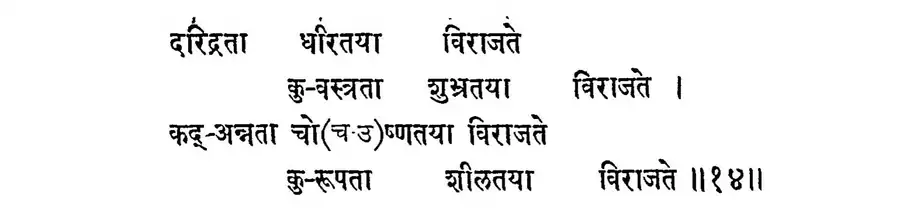
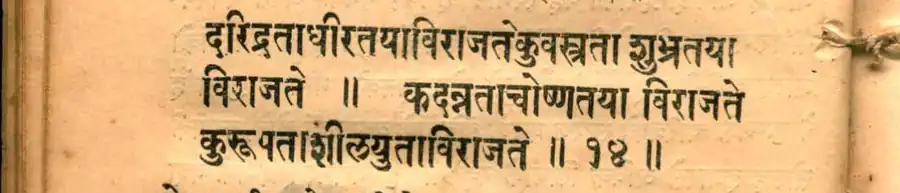
Show original scansSternbach 1963, p. 56Bombay printing, 1925–26, p. 69Mathura printing, 1914, p. 57Tap a scan to enlarge it. Scans: Internet Archive (Digital Library of India; eGangotri, CC0).
13 इक्षुदण्डास्तिलाः शूद्राः कान्ता हेम च मेदिनी ।चन्दनं दधि ताम्बूलं मर्दनं गुणवर्धनम् ॥ १३ ॥
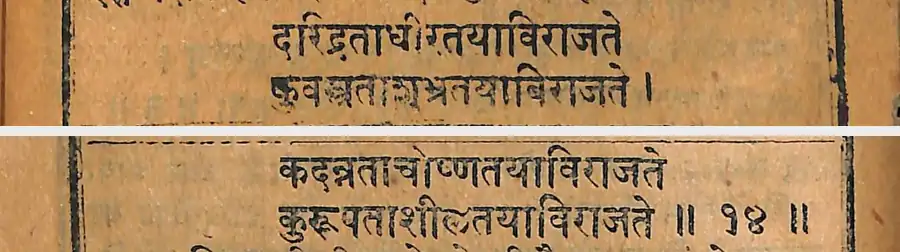
Show original scansSternbach 1963, p. 56Bombay printing, 1925–26, p. 70Mathura printing, 1914, p. 57Tap a scan to enlarge it. Scans: Internet Archive (Digital Library of India; eGangotri, CC0).
Show original scansSternbach 1963, p. 57Bombay printing, 1925–26, p. 70Mathura printing, 1914, pp. 57–58Tap a scan to enlarge it. Scans: Internet Archive (Digital Library of India; eGangotri, CC0).
Notes
Bombay printing of 1925: मुक्तिमिच्छसिचेत्तातविषयान्विषवत्त्यज ॥ / क्षमार्जवदयाशौचंसत्यंपीयूषवत्पिब ॥ १ ॥. The Mathura printing of 1914 has the same words. Both printings give “purity” for “contentment” and group it with “patience, honesty and compassion” in one expression. Where this text says to “cherish” these virtues and truth “like nectar,” both say to “drink” them.↩
Bombay printing of 1925: गन्धः सुवर्णेफलमिक्षुदण्डेनाकारिपुष्पंखलु / चंदनस्य ॥ विद्वान्धनीभूपतिर्दीर्घजीवीधातुः / पुरा कोऽपि न बुद्धिदोऽभूत् ॥ ३ ॥. Mathura printing of 1914: गन्धः सुवर्णेफलमिक्षुदंडे । / नाकारिपुष्पंखलुचन्दनस्य । / विद्वान्धनीनृपतिर्दीर्घजीवी । / धातुः पुराकोऽपिनबुद्धिदोऽभूत ॥ ३ ॥. Both printings use other words for “wealthy,” “king” and “long-lived.” Each uses its own word for “king,” and both drop “and” between the wealthy scholar and the long-lived king. The sense is the same.↩
Where the printings differ
Where the three printings of the Sanskrit disagree in meaning: the words of each, a literal rendering, and the printed page.
Verse 1Both older printings replace contentment with purity and tell the reader to drink these virtues instead of cultivating them.Sternbach 1963 (our text)तोषं ; भजtoṣaṃ ; bhaja“contentment; cultivate”The whole verse in this printing: If you want liberation, my dear, give up sense pleasures as you would poison; embrace forgiveness, straightforwardness, compassion, contentment, and truth like nectar.Bombay printing, 1925–26शौचं ; पिबśaucaṃ ; piba“purity; drink”The whole verse in this printing: If you want liberation, my dear, give up sense pleasures as you would poison; drink forgiveness, straightforwardness, compassion, purity, and truth like nectar.Mathura printing, 1914शौच ; पिबśauca ; piba“purity; drink”The whole verse in this printing: If you want liberation, my dear, give up sense pleasures as you would poison; drink forgiveness, straightforwardness, compassion, purity, and truth like nectar.Sternbach 1963, p. 54Bombay printing, 1925–26, p. 64Mathura printing, 1914, p. 53Tap a page to enlarge it. Scans: Internet Archive (Digital Library of India; eGangotri, CC0).↩
Verse 5Both older printings describe the eclipse as celebrated or auspicious instead of describing the ability to proclaim it.Sternbach 1963 (our text)प्रशस्तुंpraśastuṃ“to proclaim”The whole verse in this printing: No messenger travels in the sky, no news passes, this was not spoken of beforehand, and there is no meeting; how is that excellent Brahmin not learned, who knows how to announce an eclipse of the sun or moon taking place in the sky?Bombay printing, 1925–26प्रशस्तंpraśastaṃ“praised, auspicious”The whole verse in this printing: No messenger travels in the sky, no news passes, this was not spoken of beforehand, and there is no meeting; how is that excellent Brahmin not learned, who knows the auspicious eclipse of the sun or moon taking place in the sky?Mathura printing, 1914the same as the Bombay printingSternbach 1963, p. 55Bombay printing, 1925–26, p. 66Mathura printing, 1914, p. 54Tap a page to enlarge it. Scans: Internet Archive (Digital Library of India; eGangotri, CC0).↩
Verse 8Both older printings replace half-studied Vedas with Vedas studied for gain or meaning.Sternbach 1963 (our text)अर्धाधीताश्चardhādhītāś ca“and half-studied”The whole verse in this printing: Those twice-born men who have half studied the Vedas and eat Shudras’ food—what can they do, like snakes without venom?Bombay printing, 1925–26अर्थाधीताश्चarthādhītāś ca“and studied for gain or meaning”The whole verse in this printing: Those twice-born men who have studied the Vedas for gain (?) and eat Shudras’ food—what can they do, like snakes without venom?Mathura printing, 1914the same as the Bombay printingSternbach 1963, p. 55Bombay printing, 1925–26, p. 67Mathura printing, 1914, p. 55Tap a page to enlarge it. Scans: Internet Archive (Digital Library of India; eGangotri, CC0).↩
Verse 10Mathura replaces the display of the snake's hood with a more general imposing display, while Bombay uses a synonym for hood.Sternbach 1963 (our text)फणाटोपोphaṇāṭopo“display of the hood”The whole verse in this printing: Even a snake without venom should spread its hood wide; whether or not it has venom, the display of the hood is frightening.Bombay printing, 1925–26फटाटोपोphaṭāṭopo“display of the hood”The whole verse in this printing: Even a snake without venom should spread its hood wide; whether or not it has venom, the display of the hood is frightening.Mathura printing, 1914घटाटोपोghaṭāṭopo“imposing display”The whole verse in this printing: Even a snake without venom should spread its hood wide; whether or not it has venom, an imposing display is frightening.Sternbach 1963, p. 56Bombay printing, 1925–26, p. 68Mathura printing, 1914, p. 56Tap a page to enlarge it. Scans: Internet Archive (Digital Library of India; eGangotri, CC0).↩
Verse 11Both older printings attribute this use of time to the wise instead of the unwise and replace involvement in theft with association with or talk of thieves. Our translation follows the older printings here (“of the wise”), as most manuscripts do according to Sternbach’s own notes.Sternbach 1963 (our main text)चौर्यप्रसङ्गेन ; कालो गच्छत्यधीमताम्cauryaprasaṅgena ; kālo gacchaty adhīmatām“through involvement in theft; time passes for the unwise”The whole verse in this printing: The time of the unwise passes in gambling in the morning, association with women at noon, and involvement in theft at night.Bombay printing, 1925–26चोरप्रसंगेन ; कालोगच्छतिधीमताम्coraprasaṅgena ; kālo gacchati dhīmatām“through association with (or talk of) thieves; time passes for the wise”The whole verse in this printing: The time of the wise passes in gambling in the morning, association with women at noon, and association with thieves at night.Mathura printing, 1914 (followed here)चौरप्रसंगेन ; कालोगच्छतिधीमताम्cauraprasaṅgena ; kālo gacchati dhīmatām“through association with (or talk of) thieves; time passes for the wise”The whole verse in this printing: The time of the wise passes in gambling in the morning, association with women at noon, and association with thieves at night.Sternbach 1963, p. 56Bombay printing, 1925–26, p. 68Mathura printing, 1914, p. 56Tap a page to enlarge it. Scans: Internet Archive (Digital Library of India; eGangotri, CC0).↩
Sanskrit text, ed. Ludwik Sternbach (1963). Internet Archive scans of Sternbach's edition (Digital Library of India) and of the 1925 and 1914 printings (archive.org, archive.org, archive.org). The ancient verses are in the public domain; the editor's notes and apparatus are not reproduced.