Sanskrit text, ed. Ludwik Sternbach (1963) · 1 min read
1 दातृत्वं प्रियवक्तृत्वं धीरत्वमुचितज्ञता ।अभ्यासेन न लभ्यन्ते चत्वारः सहजा गुणाः ॥ १ ॥
Show original scansSternbach 1963, p. 64Bombay printing, 1925–26, p. 79Mathura printing, 1914, p. 64Tap a scan to enlarge it. Scans: Internet Archive (Digital Library of India; eGangotri, CC0).
Show original scansSternbach 1963, p. 64Bombay printing, 1925–26, p. 80Mathura printing, 1914, p. 64Tap a scan to enlarge it. Scans: Internet Archive (Digital Library of India; eGangotri, CC0).
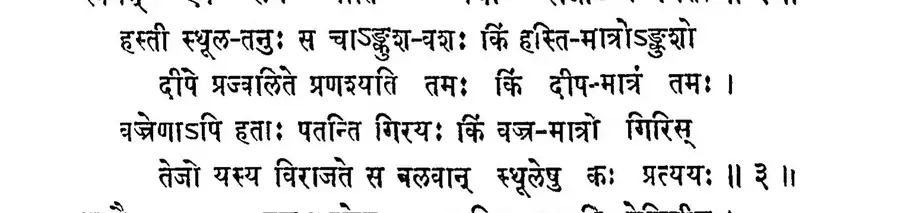
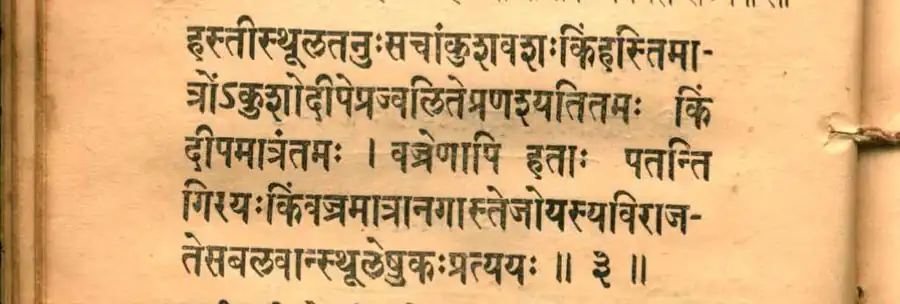
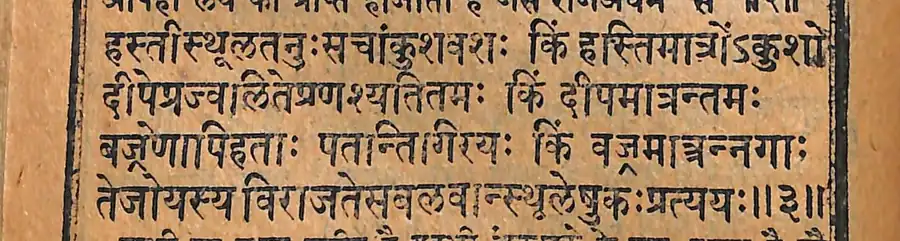
3 हस्ती स्थूलतनुः स चाङ्कुशवशः किं हस्तिमात्रोऽङ्कुशोदीपे प्रज्वलिते प्रणश्यति तमः किं दीपमात्रं तमः ।वज्रेणापि हताः पतन्ति गिरयः किं वज्रमात्रो गिरिस्तेजो यस्य विराजते स बलवान्स्थूलेषु कः प्रत्ययः ॥ ३ ॥
Show original scansSternbach 1963, p. 64Bombay printing, 1925–26, p. 80Mathura printing, 1914, p. 64Tap a scan to enlarge it. Scans: Internet Archive (Digital Library of India; eGangotri, CC0).
Show original scansSternbach 1963, p. 64Bombay printing, 1925–26, p. 81Mathura printing, 1914, p. 65Tap a scan to enlarge it. Scans: Internet Archive (Digital Library of India; eGangotri, CC0).
5 गृहासक्तस्य नो विद्या नो दया मांसभोजिनः ।द्रव्यलुब्धस्य नो सत्यं स्त्रैणस्य न पवित्रता ॥ ५ ॥
Show original scansSternbach 1963, p. 65Bombay printing, 1925–26, p. 81Mathura printing, 1914, p. 65Tap a scan to enlarge it. Scans: Internet Archive (Digital Library of India; eGangotri, CC0).
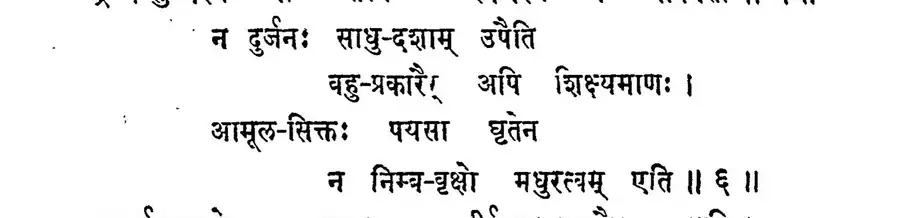
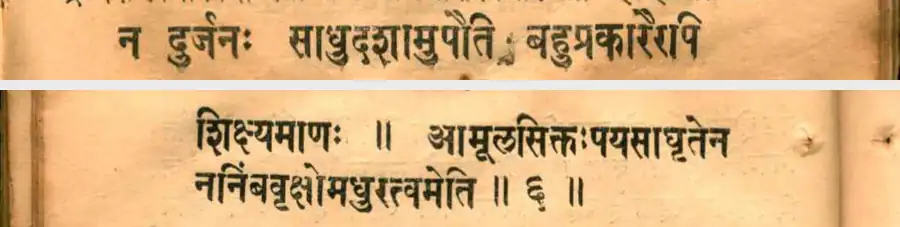
6 न दुर्जनः साधुदशामुपैतिबहुप्रकारैरपि शिक्ष्यमाणः ।आमूलसिक्तः पयसा घृतेनन निम्बवृक्षो मधुरत्वमेति ॥ ६ ॥
Show original scansSternbach 1963, p. 65Bombay printing, 1925–26, pp. 81–82Mathura printing, 1914, p. 65Tap a scan to enlarge it. Scans: Internet Archive (Digital Library of India; eGangotri, CC0).
7 अन्तर्गतमलो दुष्टस्तीर्थस्नानशतैरपि ।न शुध्यति यथा भाण्डं सुराया दाहितं च सत् ॥ ७ ॥
Show original scansSternbach 1963, p. 65Bombay printing, 1925–26, p. 82Mathura printing, 1914, p. 65Tap a scan to enlarge it. Scans: Internet Archive (Digital Library of India; eGangotri, CC0).
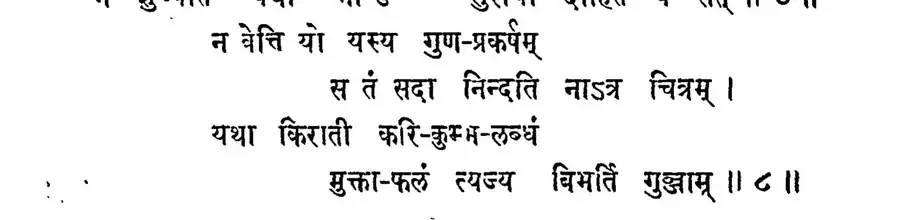
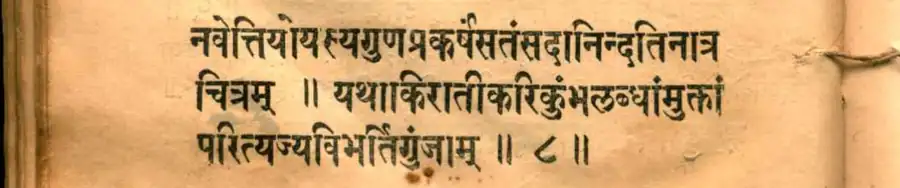
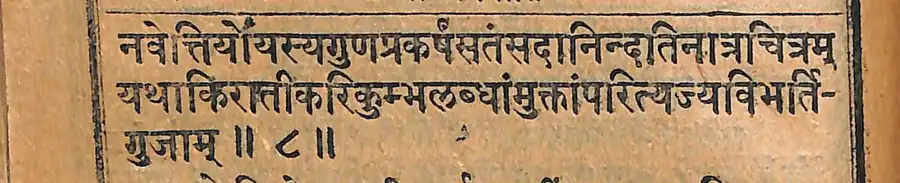
8 न वेत्ति यो यस्य गुणप्रकर्षम्स तं सदा निन्दति नात्र चित्रम् ।यथा किराती करिकुम्भलब्धंमुक्ताफलं त्यज्य बिभर्ति गुञ्जाम् ॥ ८ ॥
Show original scansSternbach 1963, p. 65Bombay printing, 1925–26, p. 82Mathura printing, 1914, p. 66Tap a scan to enlarge it. Scans: Internet Archive (Digital Library of India; eGangotri, CC0).
Show original scansSternbach 1963, p. 66Bombay printing, 1925–26, p. 83Mathura printing, 1914, p. 66Tap a scan to enlarge it. Scans: Internet Archive (Digital Library of India; eGangotri, CC0).
10 काम क्रोधं तथा लोभं स्वादु शृङ्गारकौतुके ।अतिनिद्रातिसेवे च विद्यार्थी ह्यष्ट वर्जयेत् ॥ १० ॥
Show original scansSternbach 1963, p. 66Bombay printing, 1925–26, p. 83Mathura printing, 1914, p. 66Tap a scan to enlarge it. Scans: Internet Archive (Digital Library of India; eGangotri, CC0).
11 अकृष्टफलमूलेन वनवासरतः सदा ।कुरुतेऽहरहः श्राद्धमृषिर्विप्रः स उच्यते ॥ ११ ॥
Show original scansSternbach 1963, p. 66Bombay printing, 1925–26, p. 84Mathura printing, 1914, p. 66Tap a scan to enlarge it. Scans: Internet Archive (Digital Library of India; eGangotri, CC0).
12 एकाहारेण संतुष्टः षट्कर्मनिरतः सदा ।ऋतुकालाभिगामी च स विप्रो द्विज उच्यते ॥ १२ ॥
Show original scansSternbach 1963, p. 66Bombay printing, 1925–26, p. 84Mathura printing, 1914, p. 67Tap a scan to enlarge it. Scans: Internet Archive (Digital Library of India; eGangotri, CC0).
13 लौकिके कर्मणि रतः पशूनां परिपालकः ।वाणिज्यकृषिकर्ता यः स विप्रो वैश्य उच्यते ॥ १३ ॥
Show original scansSternbach 1963, p. 66Bombay printing, 1925–26, p. 84Mathura printing, 1914, p. 67Tap a scan to enlarge it. Scans: Internet Archive (Digital Library of India; eGangotri, CC0).
14 लाक्षादितैलनीलीनां कुसुम्भमधुसर्पिषाम् ।विक्रेता मद्यमांसानां स विप्रः शूद्र उच्यते ॥ १४ ॥
Show original scansSternbach 1963, p. 66Bombay printing, 1925–26, p. 85Mathura printing, 1914, p. 67Tap a scan to enlarge it. Scans: Internet Archive (Digital Library of India; eGangotri, CC0).
15 परकार्यविहन्ता च दाम्भिकः स्वार्थसाधकः ।छली द्वेषी मृदुः क्रूरो विप्रो मार्जार उच्यते ॥ १५ ॥
Show original scansSternbach 1963, p. 67Bombay printing, 1925–26, p. 85Mathura printing, 1914, p. 67Tap a scan to enlarge it. Scans: Internet Archive (Digital Library of India; eGangotri, CC0).
16 वापीकूपतडागानामारामसुरवेश्मनाम् ।उच्छेदने निराशङ्कः स विप्रो म्लेच्छ उच्यते ॥ १६ ॥
Show original scansSternbach 1963, p. 67Bombay printing, 1925–26, p. 86Mathura printing, 1914, p. 68Tap a scan to enlarge it. Scans: Internet Archive (Digital Library of India; eGangotri, CC0).
17 देवद्रव्यंगुरुद्रव्यं परदाराभिमर्षणम् ।निर्वाहः सर्वभूतेषु विप्रश्चाण्डाल उच्यते ॥ १७ ॥
Show original scansSternbach 1963, p. 67Bombay printing, 1925–26, p. 86Mathura printing, 1914, p. 68Tap a scan to enlarge it. Scans: Internet Archive (Digital Library of India; eGangotri, CC0).
Notes
Bombay printing of 1925: कलौदशसहस्राणिविष्णुस्त्यक्ष्यतिमेदिनीम् ॥ / तदर्द्धेजाह्नवीतोयं तदर्द्धेग्रामदेवताः ॥ ४ ॥. Mathura printing of 1914: कलौदशसहस्राणि हरिस्त्यजतिमेदिनीम् । / तदर्द्धंजाह्नवीतोयं तदर्द्धंग्रामदेवताः ॥ ४ ॥. Both printings give “ten thousand years” for “at ten thousand years” and “village deities” for “the village deity.” The 1925 printing says “Vishnu will leave” for “Hari leaves,” naming the same god. The 1914 printing twice gives “half that time” for “at half that time.”↩
Bombay printing of 1925: येतुसंवत्सरंपूर्णंनित्यंमौनेनभुञ्जते ॥ / युगकोटिसहस्रान्ते पूज्यंतेस्वर्गविष्टपे ॥ ९ ॥. Mathura printing of 1914: येतुसंवत्सरम्पूर्णं नित्य मौनेन भुञ्जते । / युगकोटिसहस्रं तैःस्वर्गलोकेमहीयते ॥ ९ ॥. Both printings begin “those who eat” for “one who eats.” For “is honoured in heaven for ten billion ages,” the 1925 printing says “they are worshipped in heaven at the end of that span.” The 1914 printing keeps the duration but ends awkwardly with “by them” and “is honoured.”↩
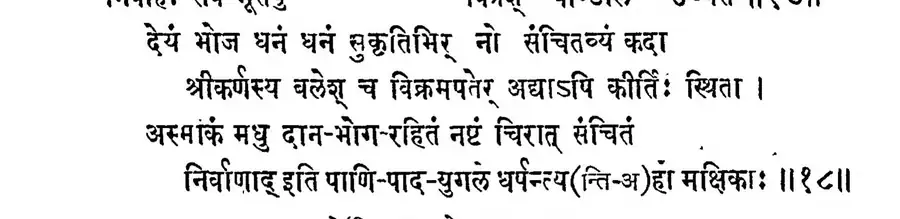
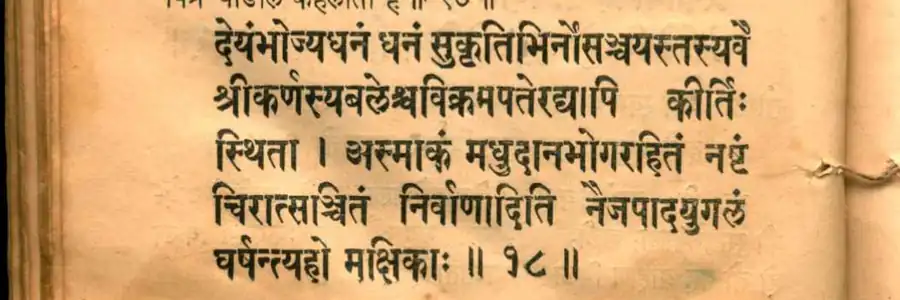
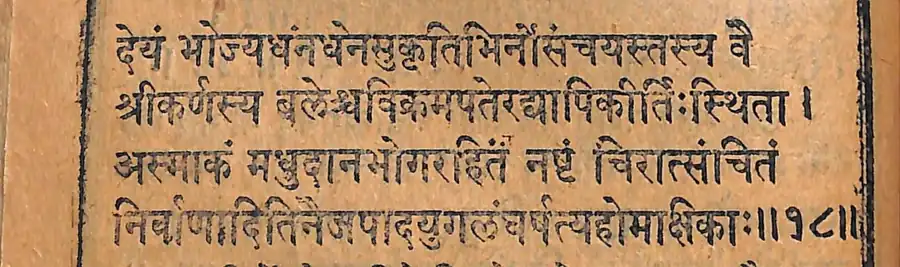
Bombay printing of 1925: देयंभोज्यधनं धनं सुकृतिभिर्नोसञ्चयस्तस्यवै / श्रीकर्णस्यबलेश्चविक्रमपतेरद्यापि कीर्तिः / स्थिता । अस्माकं मधुदानभोगरहितं नष्टं / चिरात्सञ्चितं निर्वाणादिति नैजपादयुगलं / घर्षन्त्यहो मक्षिकाः ॥ १८ ॥. Mathura printing of 1914: देयं भोज्यधनंधनसुकृतिभिर्नोसंचयस्तस्य वै / श्रीकर्णस्य बलेश्चविक्रमपतेरद्यापिकीर्तिःस्थिता । / अस्माकं मधुदानभोगरहितं नष्टं चिरात्संचितं / निर्वाणादितिनैषपादयुगलंघर्षन्त्यहोमाक्षिकाः॥१८॥. Both printings give “wealth for enjoyment” for “O Bhoja, wealth,” and “indeed no hoarding it” for “never to be hoarded.” For “hands and feet,” the 1925 printing has “their own feet.” The 1914 printing’s wording around “wealth,” “good people” and “feet” is unclear. It also spells the word for “bees” with a long first vowel (माक्षिकाः for मक्षिकाः).↩
Where the printings differ
Where the three printings of the Sanskrit disagree in meaning: the words of each, a literal rendering, and the printed page.
Verse 2Bombay says a kingdom perishes through unrighteousness, and Mathura may refer to a king’s ruin through unrighteousness; Sternbach says a king perishes through following another’s duty.Sternbach 1963 (our text)यथा राजान्यधर्मतःyathā rājānyadharmataḥ“as a king (perishes) through another's duty”The whole verse in this printing: Whoever abandons his own group and seeks refuge in another meets his own ruin, like a king through following another’s duty.Bombay printing, 1925–26यथाराज्यमधर्मतःyathā rājyam adharmataḥ“as a kingdom (perishes) through unrighteousness”The whole verse in this printing: Whoever abandons his own group and seeks refuge in another meets his own ruin, like a kingdom through unrighteousness.Mathura printing, 1914यथाराजन्यधर्म्मतःyathā rājany adharmmataḥ“as in a king’s case, through unrighteousness (reading uncertain)”The whole verse in this printing: Whoever abandons his own group and seeks refuge in another meets his own ruin, like a king through unrighteousness (?).Sternbach 1963, p. 64Bombay printing, 1925–26, p. 80Mathura printing, 1914, p. 64Tap a page to enlarge it. Scans: Internet Archive (Digital Library of India; eGangotri, CC0).↩
Verse 9Bombay places heavenly honour at the end of a thousand crore ages instead of granting it for that duration, while Mathura's wording about who is honoured is grammatically irregular.Sternbach 1963 (our text)युगकोटिसहस्रं तु स्वर्गलोके महीयतेyugakoṭisahasraṃ tu svargaloke mahīyate“for a thousand crore ages he is honoured in heaven”The whole verse in this printing: Whoever eats in silence every day for a full year is honoured in heaven for ten billion ages.Bombay printing, 1925–26युगकोटिसहस्रान्ते पूज्यंतेस्वर्गविष्टपेyugakoṭisahasrānte pūjyante svargaviṣṭape“at the end of a thousand crore ages they are worshipped in heaven”The whole verse in this printing: Those who eat in silence every day for a full year are honoured in heaven at the end of ten billion ages.Mathura printing, 1914युगकोटिसहस्रं तैःस्वर्गलोकेमहीयतेyugakoṭisahasraṃ taiḥ svargaloke mahīyate“for a thousand crore ages, by them, he is honoured in heaven (grammatically irregular)”The whole verse in this printing: Those who eat in silence every day for a full year—by them (?) it is lived in honour in heaven for ten billion ages.Sternbach 1963, p. 66Bombay printing, 1925–26, p. 83Mathura printing, 1914, p. 66Tap a page to enlarge it. Scans: Internet Archive (Digital Library of India; eGangotri, CC0).↩
Verse 18Both older openings replace the address to Bhoja with wording about wealth for enjoyment, and their ending replaces hands and feet with a pair of feet.Sternbach 1963 (our text)देयं भोज धनं धनं ; पाणिपादयुगलंdeyaṃ bhoja dhanaṃ dhanaṃ ; pāṇipādayugalaṃ“O Bhoja, wealth, wealth is to be given; pair of hands and feet”The whole verse in this printing: O Bhoja, good people should give away wealth, never hoard it; the fame of noble Karna, Bali, and King Vikrama still endures. Alas, the bees rub their hands and feet in despair (?), saying, “Our honey, collected over a long time without being given or enjoyed, is lost.”Bombay printing, 1925–26देयंभोज्यधनं धनं ; नैजपादयुगलंdeyaṃ bhojyadhanaṃ dhanaṃ ; naijapādayugalaṃ“wealth for enjoyment, wealth is to be given (syntax awkward); their own pair of feet”The whole verse in this printing: Good people should give away wealth meant for enjoyment, and it should not be hoarded; the fame of noble Karna, Bali, and King Vikrama still endures. Alas, the bees rub their own pair of feet in despair (?), saying, “Our honey, collected over a long time without being given or enjoyed, is lost.”Mathura printing, 1914देयं भोज्यधनंधनैः ; नैषपादयुगलंdeyaṃ bhojyadhanaṃ dhanaiḥ ; naiṣapādayugalaṃ“wealth for enjoyment is to be given, with wealth (syntax irregular); pair of feet (modifier corrupted)”The whole verse in this printing: Good people should give away wealth meant for enjoyment with wealth (?), and it should not (?) be hoarded; the fame of noble Karna, Bali, and King Vikrama still endures. Alas, the bees rub their own (?) pair of feet in despair (?), saying, “Our honey, collected over a long time without being given or enjoyed, is lost.”Sternbach 1963, p. 67Bombay printing, 1925–26, p. 86Mathura printing, 1914, p. 68Tap a page to enlarge it. Scans: Internet Archive (Digital Library of India; eGangotri, CC0).↩
Sanskrit text, ed. Ludwik Sternbach (1963). Internet Archive scans of Sternbach's edition (Digital Library of India) and of the 1925 and 1914 printings (archive.org, archive.org, archive.org). The ancient verses are in the public domain; the editor's notes and apparatus are not reproduced.